
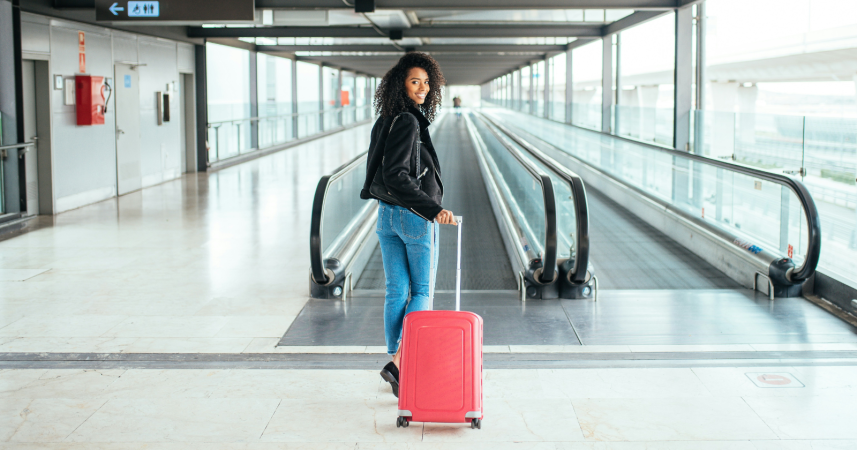
The difference between chaos and competence at the airport? A pre-decided pouch and a calm sense of control.

Add VegOut to your Google News feed. 
There’s a moment when airports stop feeling like chaos and start feeling like a system you can surf.
You’re not lucky. You’re prepared. You’ve learned where the friction hides—and how to slip past it with a smile.
If you’re wondering whether you’ve crossed that threshold, here’s my gut check: these eight shortcuts don’t feel sneaky or stressful anymore. They feel…obvious.
Let’s roll.
1. You treat your phone like mission control
I don’t print boarding passes unless a kiosk forces me. Everything lives in my phone’s wallet, and the airline app stays pinned to my home screen.
Why? Push notifications beat staring at a departure board. If the gate changes while you’re in line for coffee, you’ll know before the crowd starts migrating like geese.
I keep a simple preflight routine:
-
24 hours out: check in and add the pass to my wallet.
-
Morning of: enable “critical alerts” for the airline app and turn off battery savers that block notifications.
-
At the airport: watch the app for swaps in gates, delays, and standby movement.
It’s not glamorous—but it’s the difference between hustling and strolling.
2. Your security game is set long before the queue
I learned this the hard way, fumbling a laptop with one hand while rescuing a lip balm that tried to escape from my jacket pocket. Now, what feels obvious:
-
Keep a small, see-through pouch for “pocket stuff” (watch, keys, lip balm, coins). It goes in the tray in one motion.
-
Slip-on shoes or laces pre-loosened.
-
Liquids bag sits at the top of the carry-on, not buried under sweaters.
-
If you travel even a few times a year, status shortcuts pay rent: TSA PreCheck and, for international trips, Global Entry. As the TSA says, PreCheck keeps “shoes, belts and light jackets on” and devices in your bag—time and stress you never get back otherwise.
Here’s the psychological bit: confident travelers reduce “micro-decisions” at bottlenecks. Every choice—Which pocket is my ID in? Where’s my laptop?—adds drag. Pre-decide, then glide.
3. You pick the right line, not the shortest one
I used to beeline for the shortest queue. Then I started watching composition, not length.
-
Avoid lines with families corralling strollers (no shade—just realism).
-
Pick a lane with frequent flyers who look practiced: backpack, slip-ons, laptop-ready stance.
-
If there’s a checkpoint farther down the terminal, walk to it. A five-minute walk that saves fifteen in line is a win.
As the behavioral scientist Dan Ariely has noted, we routinely underestimate the pain of waiting compared to the value of walking—our brains treat movement as progress. So I walk, then breeze.
4. Your personal item is a “clear bag” in disguise
I keep a soft, top-zip tote that opens wide and stands up on its own. Inside: pouches by function—tech (chargers, battery, earbuds), comfort (eye mask, socks), health (meds, sanitizer, lip balm), and work (Kindle/notebook/pen). Color-coded tabs make it muscle memory.
Why this matters at airports: you can reach anything without doing the archaeological dig that ends with your sweater on the floor.
Need your ID? Bam. Need a charger? Bam. When your things have a home, you move like someone who belongs everywhere.
Travel hack I love: keep a tiny extension cord (three outlets, short tail) in the tech pouch. If all you can find is a single awkward outlet behind a pillar, you become a hero and charge everything.
5. You board later—but on purpose
We’ve all seen the zone-one scrum that looks like a preseason tryout. I board in the last half of my zone unless I need overhead space for a roller bag. Why? Fewer bodies in the aisle equals less stop-and-go.
Here’s how this shortcut stays “short”:
-
Put essentials in your personal item (under seat) so you don’t need the overhead mid-boarding.
-
If you’re carrying on a big bag and your zone’s boarding, go—but don’t sprint. Smooth > frantic.
-
Flying a tight connection? Ask the gate agent for a “late inbound” note on your record. They’ll often seat you closer to the front or flag you for priority deplaning.
Confidence isn’t about being first on the plane. It’s about being ready the second you step on.
6. You map the terminal like a local
Before I fly through a new airport, I glance at the terminal map in the airline app or on the airport website. Two minutes now saves twenty later.
What I look for:
-
Which security checkpoint puts me nearest my gate?
-
Where are the water refill stations, quieter restrooms, and any walking corridors for stretching?
-
Is there a train between terminals—and how frequently does it run?
I file away one habit: if my gate is in a packed cluster, I walk one or two clusters over for a calmer seat, then return ten minutes before boarding. The gate agents announce changes; your app confirms. Let the crowd have the chairs with armrests locked in a tug-of-war with everyone’s shoulders. You’ll be sipping water in peace.
7. Your passport, ID, and visas have a “default location”
Ever watched someone pat all their pockets like they’re trying to put out a fire? I used to be that person. Now my ID and passport live in the same sleeve of the same wallet, every time. When I’m done, they go back there immediately—even if I’m juggling coffee and a bagel.
Two small upgrades that feel like superpowers:
-
A brightly colored passport wallet (easy to spot in a dark tote).
-
A digital backup: clear photos of your ID and passport in an encrypted notes app or secure cloud. It won’t replace the real thing at a checkpoint, but it’s invaluable if anything goes missing.
For U.S. citizens returning from abroad, Mobile Passport Control can also cut lines at select airports, no enrollment required. I submit while taxiing to the gate, then follow the signs. It’s not always faster—but when it is, it’s golden.
8. You keep energy—not time—at the center
Time hacks are nice. Energy hacks are essential.
Here’s what “obvious” looks like when you’ve learned your body:
-
You carry a refillable bottle and know where to refill it. Hydration beats that post-takeoff headache.
-
You bring protein-forward snacks you actually like (jerky, nuts, hummus packs). Airport food lines are a gamble; your snack bag isn’t.
-
You dress in layers. Cab rides lie, terminals chill, planes swing from sauna to tundra.
-
You have a “delay kit”: sleep mask, earplugs, spare underwear, toothbrush, tiny moisturizer. If a delay strands you, you’re not the one panic-buying socks at a newsstand.
Writer James Clear puts it simply: “You do not rise to the level of your goals. You fall to the level of your systems”. At the airport, systems are everything. Build yours once; reap the calm indefinitely.
The quick-start checklist I wish someone gave me
-
Enroll in TSA PreCheck (and Global Entry if you go international).
-
Put boarding passes in your phone wallet; enable airline app alerts.
-
Pre-pack a liquids bag and a pocket-pouch; keep both at the top of your carry-on.
-
Choose security lines by people, not length.
-
Use a structured personal item with pouches; stash an extension cord.
-
Board when it serves you, not your ego.
-
Skim terminal maps before you fly; sit a gate away from the crowd.
-
Protect your energy with water, snacks, layers, and a delay kit.
If you’re nodding along because this all feels obvious, congrats—you’re the calm in the concourse. If it doesn’t yet, pick two habits to adopt on your next trip. Airports reward systems, not heroics.
And that calm, confident traveler you admire? She’s just someone who decided to make smart the default.
Safe travels. I’ll see you in the short line.












