The missed exits and soggy sandwiches? Those were the parts that made it unforgettable.
There’s a special kind of nostalgia that shows up when you scroll past a photo of a sun-bleached boardwalk or a faded motel sign and your brain goes, I can smell the sunscreen and the car air freshener.
If you grew up middle class, you probably learned early that vacation wasn’t about luxury. It was about togetherness, creativity, and squeezing joy out of a tank of gas and a cooler full of juice boxes.
I used to think those trips were “less than” because they weren’t glamorous. Now, I realize they were where I learned budgeting, patience, and how to find fun without a concierge. So let’s take a little memory drive, shall we?
1. The interstate motel with the humming ice machine
If your childhood vacations started with a trunk Tetris session (suitcases, cooler, swim bag, mystery tote) and ended at a two-story motel with doors that opened to the parking lot, you’re among friends.
You remember the rattle of the ice machine, the thrill of the free channel guide, and the way the pool turned your hair a shade greener by August.
Middle-class families turn these places into headquarters. Mom spreads out maps (before phone GPS, we trusted the laminated ones), Dad times the next day’s departure “to beat traffic,” and you beg to swim “just five more minutes.”
No spa. No turndown service. Yet somehow, everything you needed.
2. National park pullouts and picnic trunks
We didn’t necessarily book the lodge with the grand fireplace.
We pulled into scenic overlooks, hopped out for the view, and ate lunch with our feet on the bumper. The picnic: sandwiches in wax paper, grapes rolling around the cooler, and a sleeve of cookies that always vanished on the drive to the next trailhead.
Those parking-lot picnics taught me abundance isn’t a price tag—it’s a shared vista, a thermos of lemonade, and a family photo where half the heads are cut off but nobody cares. To this day, a trail map in my pocket feels like home.
3. Beach boardwalk towns with funnel cake dust on your shirt
Myrtle Beach, Ocean City, Virginia Beach, Santa Cruz—pick your coast, the details rhyme.
You start the day with a sandy PB&J, end it with salt in your hair, and wedge an oversized prize from the claw machine between the suitcases for the ride home.
There’s a particular middle-class magic to these boardwalks: mini-golf that glows in blacklight, arcades that turn quarters into an hour of sibling rivalry, and souvenir shops stocked with shells glued to anything that’ll hold still.
You learn to love simple pleasures: a cheap boogie board can provide an entire afternoon of joy.
4. Gatlinburg, pancake houses, and the Great Smokies
If your family headed for the mountains instead of the beach, there’s a good chance you met the Smokies.
Gatlinburg and Pigeon Forge deliver that specific blend of nature + novelty: hiking by day, putt-putt and pancake stacks by night.
You might not have sprung for the bear-themed cabin with the hot tub, but you absolutely conquered a mile of souvenir emporiums and at least one old-timey photo booth.
What sticks isn’t how fancy it was—it’s how full your lungs felt on those early-morning trails, and how the sky cracked open at sunset while you licked soft-serve off your wrist.
5. Orlando… but off-site and on a budget
We didn’t always stay “on property.” We stayed at the place with free breakfast, a shuttle that may or may not arrive on time, and a pool shaped like a kidney.
We knew the hacks: pack snacks, pick one big park day, and spend the rest discovering the free stuff—resort monorail rides, hotel lobbies with live music, fireworks visible from a random parking lot.
A lot of middle-class kids learned their first lessons in trade-offs here. Do we ride again or beat the crowd to the parade? Do we buy the $12 lemonade or refill the water bottle? You figure out your priorities. You make a plan.
And you still have fun—because you decided that was the point.
6. Washington, D.C. and the power of “free admission”
If your parents loved the phrase “educational trip,” you’ve walked the marble of the National Mall until your feet buzzed.
The magic of D.C. for middle-class families: those Smithsonian museums with $0 on the ticket price. You can spend a day with dinosaurs, rockets, or Dorothea Lange photographs and pay only for lunch (and maybe a commemorative penny from the press machine).
I remember staring up at the Lincoln Memorial and feeling small in a good way. D.C. proved that budget-friendly doesn’t mean second-rate—it can mean awe, curiosity, and a gift shop where you buy a $5 postcard and treasure it for years.
7. Niagara Falls and the blue poncho shuffle
Another classic: a passport stamp (or at least a border check) you could reach by minivan. If you grew up middle class, the splurge was the boat that took you into the mist.
The rest of the time, you walked until your socks were damp, craned your neck with everyone else, and clung to the railing as if the spray might sweep you away.
It’s not just the falls you remember—it’s the kitsch around it: wax museums, haunted houses, and the diner where your fries arrived in a paper-lined basket. Niagara teaches a timeless truth: ordinary moments near extraordinary things feel extraordinary too.
8. KOA campgrounds, cabinettes, and the art of the cheap s’more
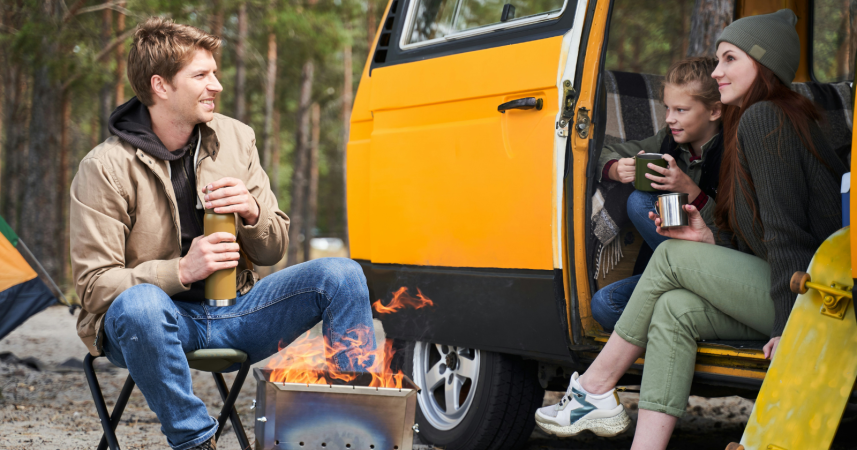
Some families had RVs; others had tents; many landed in those rustic little cabins with a porch swing and a grill out front.
The best part? There’s something for everyone: a pool for the kids, a laundry room for the parents, and a camp store with exactly one of whatever you forgot.
Learning to set up camp as a kid is a masterclass in teamwork. Someone stakes the tent. Someone arranges the sleeping pads. Everyone negotiates who gets the outlet for charging. And when the stars snap into view, you realize the ceiling you’re sleeping under is better than any chandelier.
9. Lake towns where time moves at paddle-boat speed
The brand might vary—Finger Lakes, Ozarks, Adirondacks, Havasu—but the meandering joy is the same.
You spend mornings fishing off a dock with a crooked “No Diving” sign, afternoons renting a creaky paddle-boat, and evenings listening to screen doors slam as the scent of citronella floats by.
We didn’t need a yacht. We had sunburned noses, paperback novels with water-warped pages, and one radio station that came in fuzzy but clear enough for a singalong at dusk. It’s amazing what happens when there’s less to do and more to be.
10. The “free weekend” timeshare trip (and the grandparent getaway)
You know the drill: free breakfast, a “no-pressure” presentation, and two nights in a place with a kitchenette.
As a kid, I didn’t understand why my parents were suddenly enthusiastic about amenities like “washer/dryer in unit.” Now I get it. Comfort is a big deal when you’re making every dollar work.
And when in doubt, vacation meant visiting grandparents—because love is the original all-inclusive. The itinerary wrote itself: backyard sprinklers, church potlucks, and the world’s best strawberry shortcake served in bowls that matched nothing.
Those trips taught me that travel isn’t just about where; it’s about who.
A quick, honest note on imperfect trips (and a book I loved)
If these places made you smile, there’s a reason. They’re built on values that quietly shape us:
-
Resourcefulness. We learned to make a plan, pack snacks, and pivot when the weather or budget changed.
-
Curiosity. Free museums, ranger talks, and guided tours remind you the world is bigger than your street.
-
Contentment. When you measure a trip by laughter per mile instead of dollars per night, you win more often.
Lately, I’ve been thinking about how those scrappy, unpolished trips trained me to live with a little more grace for the mess of real life.
I’ve mentioned this before, but I recently read Rudá Iandê’s new book, “Laughing in the Face of Chaos: A Politically Incorrect Shamanic Guide for Modern Life”, and it landed deeply. His insights helped me name why these middle-class vacations feel so formative: they asked us to be real, not perfect—to work with what we had and still open our hearts to wonder.
One line I underlined (and underlined again) was: “When we let go of the need to be perfect, we free ourselves to live fully—embracing the mess, complexity, and richness of a life that's delightfully real.”
The book inspired me to stop editing out the chaotic parts of my stories—the missed exits, the soggy sandwiches, the missed monorail—and see how often those are the exact ingredients that make a memory stick.
If you’re craving a practical nudge to meet life with more humor, resilience, and self-trust, I recommend checking out Rudá Iandê’s book.
I don’t share many reading recs, but this one felt like a companion for anyone who grew up learning to do more with less—and wants to turn that skill into an everyday kind of grounded joy.
Final thoughts
So what can we do with that nostalgia now?
First, reclaim it on purpose. Plan a day that channels the old playbook: pick a spot within driving distance, pack a cooler, print a map for fun, and make the pit stops the point. Let the kids (or your inner kid) plan one activity under $20. Put the phone away for an hour and count license plates like we used to.
Second, mix in meaning. Stop at a farmer’s market on the way, introduce yourself to a park ranger, or ask a local where they’d take a friend who’s visiting for the first time. It’s a small thing, but those micro-connections make the day feel bigger—and they don’t cost a cent.
Third, practice the travel mindset at home. Curiosity is portable. Try the “tourist in your town” exercise: one new café, one new trail, one free museum, and one conversation with someone who loves this place for a reason you haven’t discovered yet.
Finally, let the old stories teach new skills. If you’re tackling a money goal, remember the ingenuity your family showed on those trips. If you’re building healthier habits, borrow the structure of a travel day: a simple plan, a little spontaneity, and a reason to step outside. Small changes repeated consistently beat grand intentions that never leave the driveway.
When I think back to those vacations, I don’t remember the square footage of the room or the thread count on the sheets. I remember my dad’s elbow tan from driving. I remember my mom’s triumph when we found a picnic table in the shade. I remember the click of the hotel door and the treasure-hunt feeling of a new place that cost what we could afford.
Here’s the quiet gift of growing up middle class: you learn that joy is often a design challenge. Constraints become creativity. Plans become possibilities. And the open road, with all its budget hacks and blue ponchos and pancake stacks, becomes a kind of map for living—one you can unfold anytime you need to remember who you are.
If you’re feeling that pull to revisit one of these spots, follow it. Let the trip take you, even if it’s just for an afternoon.
The nostalgia isn’t really about the place. It’s about the person you were—and the resourceful, curious, content person you still are.
And if you want a wise, good-humored companion for the road? I’ll happily point you again to Rudá Iandê’s “Laughing in the Face of Chaos: A Politically Incorrect Shamanic Guide for Modern Life”—it nudged me to embrace the imperfect itinerary and enjoy the ride.