When you let the landscape lead, it always takes you somewhere deeper than the guidebook.
I love a big-name landmark as much as the next traveler—but I also know the hum of a tour bus can drown out the very awe we flew across the world to feel.
Below are the places that made me whisper “oh wow” out loud, the kinds of landscapes that rearrange your insides and send you home softer, braver, and more awake.
They’re remote, lightly trafficked, or easy to experience away from crowds—and every one rewards you for choosing the road a little less paved.
A quick note before we dive in: I’m not anti-people; I’m pro-presence. Or, as poet Mary Oliver reminded us, “attention is the beginning of devotion”—the more we truly pay attention, the more we care for what we see. (I link where it helps with context and planning.)
As noted by Mary Oliver scholars, that line closes her essay “Upstream,” and it’s a wonderful compass to carry in your pocket.
1. Lençóis Maranhenses, Brazil
Imagine an ocean of white dunes brushed into ripples by the wind—and then picture those dunes cradling thousands of rain-fed lagoons, each one a different shade of turquoise.
The trick to avoiding crowds is timing: hike or 4x4 in at sunrise or late afternoon and aim for the season when the pools are fullest (roughly May–September). Once you’re there, keep your map loose—half the magic is choosing a ridge, climbing it, and finding your very own lagoon on the other side.
Float. Watch terns skitter the surface. Let the silence recalibrate your nervous system.
How to keep it secret: Stay in Barreirinhas or Atins, book a local guide with a small vehicle, and ask for lesser-known lagoons. Pack out every wrapper, even the tiny ones.
2. Raja Ampat, Indonesia
You don’t need to be a diver to feel the pulse of this archipelago.
Even snorkeling from a homestay jetty can look like dropping into a living kaleidoscope—soft corals, reef fish, mantas if you’re lucky. Marine life here is staggeringly biodiverse, which is exactly why slow travel matters: choose a community-run homestay, avoid single-use plastics, and keep fins and hands well away from coral.
The reward? Those hushed blue hours before breakfast when the water’s glassy and the only sound is a kingfisher.
Presence practice: Let the reef set the pace. Float without chasing. Notice how quickly “I must see everything” softens into “I’m seeing enough.”
3. Tsingy de Bemaraha, Madagascar
If an alien architect built a cathedral from stone needles, it might look like Tsingy.
The limestone here has been sculpted into spires, slot canyons, and suspension-bridge traverses that make your heart beat in your throat—but in the best way.
Go with a local guide, move slowly, and spend as much time listening as climbing. This isn’t just geology; it’s a lesson in patience and scale. The rock teaches your feet where to go; the wind teaches your mind where to rest.
When to go: Dry season (roughly April–November) makes the routes safer and the park more accessible.
4. The Azores, Portugal
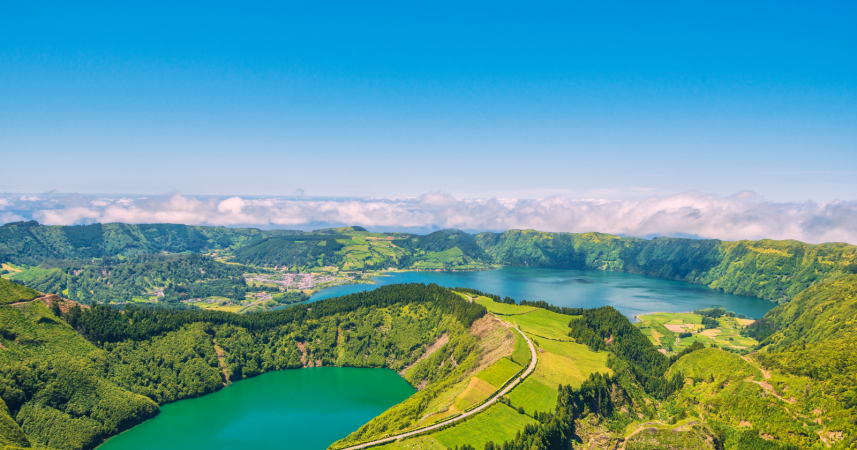
Nine volcanic islands in the middle of the Atlantic, and yet somehow the vibe is neighborly and low-key. My secret: base in Furnas on São Miguel. Hike crater rims in the morning, soak in iron-rich hot springs in the afternoon, and end the day with cozido stew slow-cooked in geothermal soil.
Skip the peak midday windows at Sete Cidades; instead, pack a headlamp and catch blue hour when the caldera is quiet and the light goes watercolor.
Small shift, huge payoff: Leave one entire day unscheduled. Drive until something tugs at you—steam rising from a hillside, a roadside stand. Practice being led, not pushing.
5. The Kimberley’s Bungle Bungle Range (Purnululu), Western Australia
From the air they look like a beehive city; on foot they feel like an ancient maze. The Bungle Bungle domes are banded with dark cyanobacterial crusts and orange sandstone, and walking among them is a masterclass in deep time.
Go at dawn when the stripes warm from gray to amber, and you might not see another soul until your thermos runs dry. The echo in Cathedral Gorge is the kind of sound that empties you before it fills you.
Pro tip: If you’re not flying in, check 4WD road conditions meticulously. Carry more water than you think you need.
6. Svalbard, high Arctic Norway
Svalbard teaches humility. The rules here are strict for good reason—polar bears have right of way, and the wilderness can turn on you without warning.
Book a small, locally guided trip and learn to love the pauses: the minutes you stop, engines off, to scan for wildlife and check ice. Those moments stretch time. If you go, read the safety guidance first and choose operators who prioritize distance and animal welfare; the best view is always the one that doesn’t disturb what you came to admire.
Mindset shift: Let weather be a partner, not a nuisance. Plans change often; awe blooms in the space flexibility creates.
7. The Marble Caves, Aysén, Chilean Patagonia
On a windy day, General Carrera Lake looks like it’s breathing—jade one second, sapphire the next. Carved by water over millennia, the Marble Caves hover right where color and stone start having a conversation.
Boats go out from Puerto Río Tranquilo; choose the first ride of the day, when the lake is calm and you can hear the water slap the cave walls. Even at “busy” times, it feels like you’ve slipped behind the curtain and found nature’s backstage.
Stay longer: The Aysén region rewards patience. Add a buffer day for weather and wander into the side valleys.
8. Ala-Kul Lake, Kyrgyzstan
Do you like earning a view? Ala-Kul makes you work for it—switchbacks, scree, altitude—and then throws down an alpine bowl so electric-blue you might laugh from the shock.
Break the trek into three relaxed days to dodge midday clusters and give your legs (and lungs) a fighting chance. Weather turns quickly; early starts mean you’ll often have the pass—and the panorama—to yourself. The tea in Altyn Arashan tastes better when you’ve arrived under your own steam.
Gear note: Pack light but bring real layers. The temp swing between valleys and passes can be dramatic.
9. Sossusvlei & Deadvlei, Namibia
Yes, you’ve seen the photos—skeleton trees on a salt pan, red dunes rising like waves. But photos don’t capture the quiet. Enter the park before dawn, climb a ridge as the first light knits shadows to flame, and then walk out onto Deadvlei once the early climbers peel off toward Big Daddy. Sit. Listen. The Namib is the world’s oldest desert, and no one rushing ever really meets it. Your legs will confirm the grandeur.
What matters: Not how many dunes you summit, but whether you let the stillness change your breathing.
How to keep these places breathtaking
-
Go earlier or later than “nice.” The prettiest light is also the most solitary. Dawn and late afternoon thin out even “known” places.
-
Shrink your radius. Walk twenty minutes off the obvious route. Sit for ten without moving. I’ve watched entire valleys empty while I was tying my boot.
-
Hire local—small and slow. People who live with a landscape know its moods. In the Arctic, especially, choose guides who visibly put wildlife first; it changes everything about the pace and the feeling of the trip.
-
Leave the place better. Pack out micro-trash, choose reef-safe sunscreen, refill your bottle, and resist the urge to trample for “the shot.”
A mindset that makes travel richer
Travel isn’t just logistics—it’s a way of relating to the world.
That’s why I keep circling back to Rudá Iandê’s work. Reading “Laughing in the Face of Chaos: A Politically Incorrect Shamanic Guide for Modern Life” recently nudged me to question the quiet perfectionism that can sneak into our adventures: the pressure to collect viewpoints, tick lists, and stage moments.
His insights reminded me that awe isn’t a commodity; it’s a relationship. The book inspired me to let the messy, delightfully real parts of travel count as the trip, not detours from it.
If that resonates, give the book a read—you might find, as I did, that your next journey begins before you even pack.
Three simple practices to try on your next trip
-
Ask: what do I want to feel here? Awe, stillness, grit, joy? Plan around that feeling—wake up earlier than you like, take the longer path, leave white space in your days.
-
Let one thing go wrong without fixing it. A missed turn, a surprise rainstorm, a closed gate—treat it as an invitation, not an obstacle. (I hear the book’s voice here again, reminding me that perfection isn’t the point.)
-
Pause before you photograph. Breathe in what’s actually happening. If a picture still helps you remember, great. If not, you’ve already taken the most important snapshot.
As the old traveler’s adage goes (and as my miles confirm), the more gently you arrive, the more a place reveals. That’s the real anti–tourist trap secret: presence beats popularity, every time.
And if you want a companion for cultivating that presence on and off the road, Rudá Iandê’s “Laughing in the Face of Chaos: A Politically Incorrect Shamanic Guide for Modern Life” is the kind of field guide you can tuck in your carry-on and keep close.