Most of my growth didn’t come from the plans I got right, but from the detours I didn’t see coming.

Add VegOut to your Google News feed. 
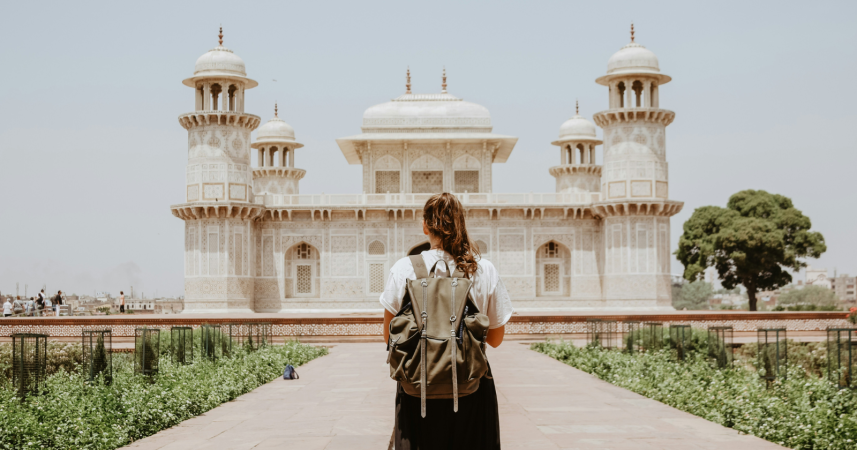
Solo travel looks glamorous on the grid—sunrise shots, perfect plates, that one-time-I-sat-next-to-a-chef-on-a-night-bus story.
But the truth? My best lessons didn’t come from the highlight reel. They came from the flops I wanted to forget.
I’ve traveled solo through 17 countries. I’ve cried in train stations, overpaid for taxis, lugged bags I had no business lifting, and spent nights talking to ceiling fans because I didn’t know how to connect with a single soul.
Those failures rewired how I move through the world—on the road and at home.
Here are eight of them, and what they taught me.
1. I overplanned my days and missed the point
My biggest early mistake was trying to run my trips like spreadsheets—down to the quarter-hour, no white space, every sight “optimized.”
It worked on paper and bombed in reality.
I remember a day in Kyoto when I hit six temples and noticed exactly none of them. I was so busy chasing the plan that I never landed in the place.
What shifted everything was the idea that itineraries should set direction, not dictate experience. Now I plan “anchors” (one must-see, one must-eat) and leave the rest open.
That slack time has become fertile ground for the good stuff: the café where the barista teaches me a local phrase, the park where I end up playing pickup chess with a retiree, the storm that forces me into a tiny museum I never would’ve found.
Try this: Plan 60%. Leave 40% unbooked. If you’re anxious, set a daily “north star” (one thing you’ll be satisfied to do). The rest is bonus.
As Seneca put it, “We suffer more often in imagination than in reality.”
The catastrophes I plotted with my spreadsheet rarely happened; the magic I never scheduled often did. Read the quote.
2. I packed for my fears instead of my needs
On my first multi-country trip, I brought a pharmacy, three “just-in-case” jackets, and shoes that deserved their own passport.
My bag weighed more than my self-awareness. Every staircase became a negotiation. Every cobblestone street, a full-body workout.
Overpacking wasn’t just inconvenient; it was a trust problem. I didn’t trust myself to improvise. I didn’t trust that most cities sell toothpaste. I didn’t trust strangers enough to ask for help if I needed something.
The fix wasn’t another clever packing list—it was reframing what I was packing.
I started packing for who I am (a runner who actually wears the same leggings twice) and what the trip demands (climate, culture, activities).
I also adopted a “one-in, one-out” rule: if I buy a sweater in Lisbon, something else leaves the bag.
Try this: Do a trial day. Load your bag, carry it around your neighborhood for 30 minutes, climb a flight of stairs, then ask yourself: “Would I pay to carry this every day?” If the answer is no, your back already voted.
3. I ignored my gut to be “polite”
There was the night I took a “shortcut” taxi because the driver promised the meter was “broken but fair.” It wasn’t.
There was the hostel I booked despite bad reviews because it was two dollars cheaper. Spoiler: I didn’t sleep.
Underneath both decisions was a script many of us—especially women—learn early: don’t be difficult. On the road, that script gets expensive, sometimes dangerous.
The correction wasn’t becoming cynical; it was letting my inner analyst and my intuition sit at the same table. I started creating micro-scripts for tricky moments so I could respond without overexplaining:
-
“No thanks, I’m all set,” then repeat once and walk.
-
“I’ll take a metered taxi only.”
-
“I’m meeting a friend around the corner.” (Even if the friend is past-me who knows better.)
Try this: Before you go, write three “polite but firm” lines for common pressure situations (taxis, tours, markets). Practice saying them out loud. Clarity is kind to you and others.
4. I assumed English would carry me
I’ve been that traveler who asked a bakery owner in rural France, in English, if a pastry had dairy—and got a confused smile and a random croissant.
My mistake wasn’t ignorance; it was entitlement. I expected to be accommodated.
Learning even 20 words changes everything. “Hello,” “please,” “thank you,” numbers, “I’m allergic to…,” “Is there a market nearby?” They’re keys. They open faces and doors. They signal respect.
Try this: Download an offline translation app and make a tiny phrase deck: 10 phrases for food, 5 for directions, 5 for kindness. Point, smile, try. People meet effort.
As Maya Angelou said, “Do the best you can until you know better. Then when you know better, do better.” That became my language policy. Read the quote.
5. I treated money like pure math
I used to be a financial analyst. You’d think I’d be immune to dumb money decisions.
Reader, no.
I got hit with unnecessary ATM fees because I didn’t tell my bank I was leaving.
I fell for dynamic currency conversion because the screen showed my home currency. I clung to a prepaid tour I wasn’t enjoying because, “I already paid.”
Money on the road is as psychological as it is numerical. DCC is designed to feel “safe,” but it often costs more.
Sunk costs are still sunk in Santorini. And “I’ll find a better rate later” is sometimes a story you tell your anxiety.
Try this:
• Always choose to be charged in the local currency.
• Tell your bank your travel dates and set withdrawal alerts.
• Use a daily envelope budget (physical or digital). When it’s gone, it’s gone.
• Have a $100 “grace fund” for mistakes. It keeps you from compounding errors with panic.
6. I tried to be invincible—and got sick
I once hiked all day in 95°F heat, then ate street food my stomach wasn’t ready for, then boarded an overnight bus.
I call this the “Triple Hubris.” My body filed an immediate complaint.
The deeper failure was refusing help. I didn’t want to “bother” anyone or “miss out” by resting.
It took a bout of food poisoning in Oaxaca for me to realize: health isn’t a side quest; it’s the main storyline.
Now I travel like an endurance runner, not a tourist on a timer. I hydrate obsessively. I build in recovery days. I treat sleep like a reservation I can’t cancel. And when I’m off, I say so.
Try this: Pre-pack a tiny “comfort kit” (electrolytes, anti-diarrheals, bandages, a rehydration plan). Schedule one deliberate lazy morning per week. If you’re nauseous, your itinerary can wait; your gut cannot.
7. I thought “solo” meant “go it alone”
My loneliest night was in a picture-perfect beach town where I spoke to no one for 24 hours. I’d worn “independence” like armor and confused it with isolation.
The fix wasn’t forcing small talk; it was building gentle on-ramps to connection. Free walking tours. Volunteer mornings at community gardens. Neighborhood running clubs. Cooking classes. Coworking cafés.
I started asking one question everywhere: “What’s one thing you love here?”
People lit up. I learned how locals use parks, where elders dance, which bakery sells the bread people drive across town to buy.
Try this: Put one “community touchpoint” on every city’s plan. If initiating feels hard, make it easier with context: “I’m new here—any suggestions?” or “I’m training for a 5k; any flat routes?”
8. I judged quickly and missed the story
I once wrote off a city in the first hour because the train station was chaotic.
I judged a hostel roommate as “standoffish” because she didn’t say hello—and later learned she was navigating a family emergency in a time zone 12 hours away.
Travel exposes our snap judgments. It also trains us to unlearn them.
When I started assuming complexity, my trips softened.
The man who cut me in line might be late to his second job. The café that “took forever” might be waiting on a delivery. The museum that felt underwhelming might be the only one of its kind keeping a story alive.
Try this: Delay your verdicts. Give places and people a 24-hour grace period. Pair critique with curiosity: “What else could be true here?” Ask one follow-up question before forming a conclusion.
What these failures changed in me
I used to think success was getting everything “right.” Travel taught me success is responding well when things go sideways.
Plans matter. Presence matters more. Budgets matter. Energy does too. Independence is powerful. Interdependence is richer.
Failures didn’t just make me a better traveler; they made me a better neighbor, colleague, and friend. I’m quicker to prepare and slower to panic.
I value rest without apology. I draw boundaries without long explanations. I expect good while protecting myself from the bad. I speak up sooner. I ask for help earlier. And I forgive myself faster.
If you’re about to travel solo—or you’re simply navigating a season of life that feels like a foreign country—consider these questions:
-
What would planning enough (not everything) look like this time?
-
Where am I carrying “just in case” that’s really “just in fear”?
-
What three sentences will I use to protect my energy?
-
How can I add one community touchpoint to my next week at home?
-
Where can I trade judgment for curiosity today?
“Mistakes are the portals of discovery,” James Joyce wrote.
I used to roll my eyes at lines like that. Then I missed a train in Italy, shared a plastic-bottled picnic with a grandmother who was also stranded, and got a history lesson I couldn’t have found in any guidebook.
She sent me off with a biscotti and a blessing. The trip I planned ended up smaller than the story we wrote together. Read the quote.
Travel will still hand me messes. That’s guaranteed. But these days, when a plan falls apart, I don’t take it as a verdict. I take it as an invitation.
And I pack lighter, leave earlier for trains, ask more questions, rest without guilt, and say “no thanks” like a complete sentence.
Failure didn’t ruin the journey. It taught me how to move through it with more grace.
What’s Your Plant-Powered Archetype?
Ever wonder what your everyday habits say about your deeper purpose—and how they ripple out to impact the planet?
This 90-second quiz reveals the plant-powered role you’re here to play, and the tiny shift that makes it even more powerful.
12 fun questions. Instant results. Surprisingly accurate.