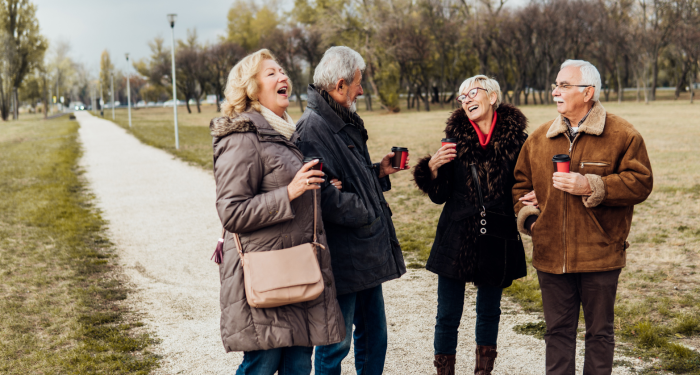
I used to chase itineraries; now I follow the scent of morning bread and the rhythm of a neighborhood.

Add VegOut to your Google News feed. 
If you’ve ever looked up from a city’s “must-see” list and thought, there has to be more, this one’s for you.
In my twenties, I booked trips like I was checking boxes.
Famous landmarks? Done. Viral cafes? Done.
But somewhere between a rushed photo in front of a monument and yet another souvenir shop, I realized I was leaving places without actually meeting them.
These days, I travel slower. I ask better questions. I plan around markets, morning walks, and conversations rather than lines and lists.
And I’ve noticed a pattern: people who’ve spent time in the eight countries below usually travel this way too.
They’ve practiced curiosity, not just consumption. They’ve grown out of tourist traps because they’ve grown into travelers.
As Mark Twain put it, “Travel is fatal to prejudice, bigotry, and narrow-mindedness.” When you’ve let a place remake your assumptions, the trinket shops naturally lose their shine.
Let’s get specific.
1. Japan
The first time I landed in Tokyo, I tried to do all of Japan in seven days.
Big mistake.
On my second trip, I slowed down. I spent a whole afternoon learning to queue for ramen the local way, bowed my thanks to a shopkeeper who wrapped my apples like small treasures, and rode a local train just to watch commuters read manga in companionable silence.
That’s when it clicked: Japan rewards patience.
The details—temple bells at dusk, the quiet choreography of an onsen, the smile when you attempt “arigatō”—ask for presence, not speed.
If you’ve traveled here and loved it, you’ve already outgrown the performative checklist.
You know the best memories are often unplanned: slipping into an izakaya, accepting whatever the chef sets down, discovering plant-forward dishes you can’t pronounce but won’t forget.
And you probably learned to separate “popular” from “meaningful.”
2. Portugal
Portugal is where I fell in love with slow mornings.
I lingered in a pastelaria with a tart and a newspaper I couldn’t fully read, then hopped a bus to a tiny Alentejo town where time stretched out like the plains.
Lisbon and Porto deserve the hype, but if you’ve ventured beyond them—to Évora’s bone chapel, a farm stay in the Minho, or a windswept cliff in the Algarve—you know the country’s true rhythm.
It’s not the tram bells or the fado bars (though both are wonderful).
It’s the neighborhood auntie who reminds you to eat before the wind picks up, the fisherman who tells you which tide brings in the sweetest seaweed, the cook who insists you try caldo verde and explains which greens her grandmother used.
Travelers who’ve grown beyond traps don’t chase every miradouro.
They pick a few, then spend the rest of the day in a grocery aisle comparing olive oils like it’s an art form.
3. Vietnam
Vietnam will change your pace.
One minute you’re crossing a street in Hanoi with scooters flowing around you like a river; the next, you’re standing in a quiet pagoda courtyard breathing in incense and possibility.
This is where I learned to ask people about their lives rather than their recommendations.
In Hue, an elderly vendor told me how to read the weather in the fragrance of the Perfume River.
In Hội An, a tailor taught me to notice both the fabric and the seam—“what you see and what holds it together.”
If you’ve explored beyond the standard loop—say, up to Hà Giang’s limestone peaks, into the Mekong’s floating rhythm, or simply down a small alley for breakfast—you already know how to ignore “Top 10” lists in favor of Top 1: the conversation in front of you.
Vietnam rewards you with layers of history, food that hums with herbs, and a daily reminder that context is everything.
4. Mexico
I used to think I knew Mexican food. Then I went to Oaxaca and realized I’d been reading the table of contents without opening the book.
Travelers who’ve grown out of traps tend to treat Mexico like a library.
They pick a region, not “Mexico,” and go deep—markets, moles, mezcal, murals. They listen. They let grandmothers and young chefs debate the right way to toast chilhuacle chiles.
They take a bus instead of a resort shuttle. If they visit the beach, they slip one town over, where fishermen mend nets and the produce stall sells epazote by the handful.
What changes in you here is your relationship to flavor and to origin.
You start asking, “Who grew this?” You start noticing how a tortilla feels warm in the palm long before it lands on the plate.
And you learn that authenticity isn’t a look; it’s a relationship.
5. Jordan
Yes, Petra is otherworldly. But Jordan really teaches you about hospitality.
I still remember a tea break in Wadi Rum.
A guide poured from a soot-stained kettle and asked me about my family, my work, my plans. I asked about his. We traded stories over sage tea while canyon swallows drew calligraphy in the sky.
If you’ve traveled here, you’ve likely practiced cultural listening: modest dress, a careful “shukran,” an understanding that an invitation for tea is a gift, not a marketing ploy.
You’ve learned to look beyond the postcard and into the pauses—desert quiet, mosaics in Madaba, the feeling of time stacked in layers at Jerash.
People who’ve outgrown traps don’t just take photos of the Treasury; they let the desert slow their thinking.
They leave with a deeper gratitude for shared meals and shared silence.
6. Georgia
Tbilisi’s balconies and bathhouses are charming, but it was a supra—a traditional feast—that recalibrated my sense of connection.
The tamada (toastmaster) raised a glass not to “fun times,” but to ancestors, to the land, to the neighbors who show up when the harvest runs late.
Travelers who’ve grown beyond the surface come to Georgia for the wine and stay for the values underneath it: patience, place, and the art of gathering.
They notice how a khachapuri can be both comfort food and a conversation starter.
They ride marshrutkas to mountain hamlets where a grandmother hands them a tomato still warm from the sun.
If you’ve loved Georgia, you’ve probably learned that travel maturity isn’t about how many stamps you collect.
It’s about how you hold a table—how you listen, toast, and show up.
7. Slovenia
Slovenia is tiny on the map and enormous in lessons. This is where I first planned a day around a forest.
I booked a farm stay, asked about compost like a weirdo (former analyst habits die hard), and watched a family turn yesterday’s scraps into today’s lunch.
Ljubljana’s riverfront gets busy, sure.
But if you’ve spent time in the Soča Valley, hiked near Triglav, or wandered the Karst for pršut and pears, you understand that Slovenia isn’t a checklist; it’s a case study in living lightly.
You start noticing bike lanes and water fountains. You refill your bottle happily. You choose restaurants that source nearby because it tastes better and it’s kinder.
Outgrowing traps often looks like this: choosing a greener option even when no one’s grading you.
Staying longer in one place so you can run a morning loop and figure out which bakery opens earliest.
8. Colombia
Colombia is a masterclass in reframing. The news headlines you grew up with don’t match the warmth of the welcome you actually receive.
That tension asks you to learn, to update your mental models, to weigh nuance over easy narratives.
In Medellín, I listened to a local guide talk about transformation with a steadiness that humbled me.
In the coffee region, I picked cherries alongside farmers who were—rightly—proud of their craft. In Bogotá, street art taught me a city’s unofficial syllabus.
If you’ve ventured beyond the obvious to the Pacific coast for whales, to Minca for cloud forest mornings, or simply into a neighborhood bakery for arepas just off the griddle, you know what it means to meet a country as it is, not as it’s been summarized.
Final thoughts
So what ties these countries together?
It’s not geography or trendiness.
It’s the way they reward curiosity, humility, and patience.
You can’t really “do” any of them. You let them do something to you.
As essayist Pico Iyer writes, “We travel, initially, to lose ourselves; and we travel, next, to find ourselves.”
When you’ve learned that lesson in places like these, you naturally stop optimizing for viral viewpoints and start optimizing for meaningful views.
Here are a few signs you’ve outgrown the trap-ish version of travel:
-
You’d rather have one long conversation than five quick photos.
-
You plan around markets, parks, and neighborhood cafes, not just major attractions.
-
You choose shoulder seasons and side streets.
-
You’re comfortable being uncomfortable—ordering what you can’t pronounce, getting a little lost, laughing at your own mistakes.
-
You leave room for rest and routine: a morning run, a notebook, a quiet hour at a cafe.
-
You try to match your footprint to your values—refilling water bottles, eating what’s in season, taking public transit when it makes sense.
And because VegOut readers often ask: yes, traveling this way is delicious.
Nearly everywhere above offers plant-forward joy if you know where to look. Japan’s shōjin ryōri temples and humble onigiri. Portugal’s caldo verde (ask for it without sausage and with extra greens). Vietnam’s herb-stacked rice plates and banana-flower salads. Mexico’s market soups and blue-corn tlacoyos. Jordan’s mezze tables—mutabbal, tabbouleh, falafel. Georgia’s pkhali spreads and bean-filled lobio. Slovenia’s mushroom foraging and buckwheat dishes. Colombia’s tropical fruit stalls and arepas de choclo.
A quick personal note. I used to “optimize” travel like I optimized spreadsheets—efficiency first. (Former financial analyst here.)
The day I stopped doing that, trips stopped feeling like work. I started noticing the way a city wakes up. I stopped rationing minutes and started inviting moments.
If you’ve traveled to any of the countries above and felt that shift, you’re already in on the secret: the richest parts of a place don’t shout. They whisper.
Your job is to slow down enough to hear them.
Final thought? Don’t wait to “earn” this kind of travel. You can bring this mindset anywhere—even to a popular city in high season.
Walk one block off the main drag. Ask the vendor about her favorite lunch. Follow your senses.
If there’s a line for the famous sandwich, but a grandmother is frying something fragrant on a side street, take the detour.
As Anthony Bourdain said, “The journey changes you.” Let it. And let that change be the thing you pack home.
What’s Your Plant-Powered Archetype?
Ever wonder what your everyday habits say about your deeper purpose—and how they ripple out to impact the planet?
This 90-second quiz reveals the plant-powered role you’re here to play, and the tiny shift that makes it even more powerful.
12 fun questions. Instant results. Surprisingly accurate.