I used to track quarterly returns. Now I track awe per hour, kindness on contact, curiosity recovered.
I’m not here to gatekeep travel or pretend there’s a single “right” way to see the world.
I do believe some places stretch your understanding of life so wide you come home a little different. Kinder, braver, more curious. Not because they’re Instagram-famous, but because they pull you out of autopilot and hand you a new lens.
As Marcel Proust wrote, “The real voyage of discovery consists not in seeking new landscapes, but in having new eyes".
Here are 12 destinations that do exactly that. If you’ve set foot in these places, you have touched edges of the world that most people never reach.
1. Varanasi, India
Varanasi is not a “checklist” city; it is a reckoning. Dawn on the ghats teaches you how closely life and death hold hands. You hear bells and smell incense and woodsmoke. Families bathe in the Ganges while cremation pyres burn nearby.
Is it confronting? Absolutely. It is also clarifying. Varanasi reorders your priorities. You realize that urgency can be sacred rather than frantic, and that there is a difference between busy and alive. I left with more tenderness for my days and fewer excuses for postponing them.
Try this: take one sunrise boat ride. Sit quietly. Listen more than you photograph. Afterward, ask yourself what you have been avoiding back home.
2. Kyoto, Japan
Kyoto is a masterclass in attention. The city whispers in wood and stone, moss and maple leaves. You learn to read seasons by the sound of your own footsteps: the crunch of autumn ginkgo, the squeak of winter snow.
Kyoto taught me the discipline of small rituals. Pour tea, take a breath, then answer the email. In a world addicted to novelty, the humble beauty of wabi-sabi feels radical. It is imperfect and impermanent, and that is exactly why it calms the mind. If you can slow down here, you can slow down anywhere.
3. Petra and Wadi Rum, Jordan
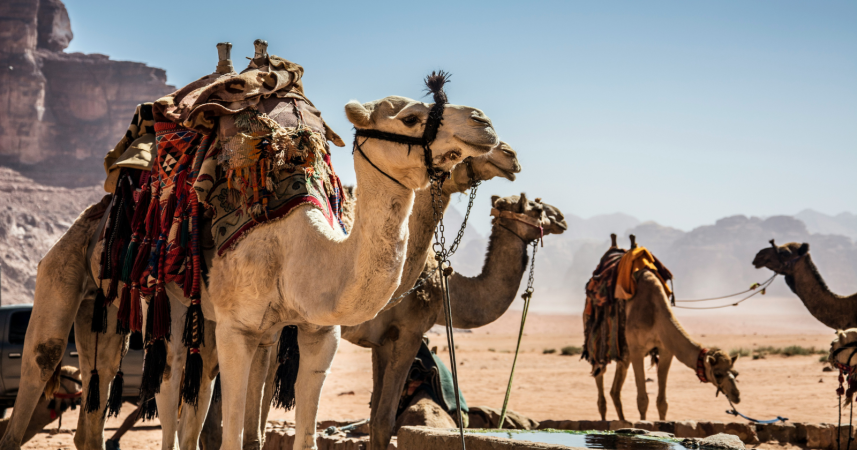
Petra proves that human hands can carve time into sandstone. The first glimpse of the Treasury through the Siq feels cinematic, yet the real gift arrives when you keep going. Hike to the Monastery. Get dusty. Then head south to Wadi Rum, where a Martian-red desert meets Bedouin hospitality and starlight that looks like spilled sugar.
Perspective shifts quickly under that sky. Problems shrink. Stories grow. At sunrise the dunes catch the light like melted copper. You finally hear silence and realize you have missed it.
4. The Okavango Delta, Botswana
Water writes the rules here. The Delta holds life in motion: elephants wading between papyrus islands, fish eagles calling from fever trees, mokoro canoes slicing mirror water. Conservation is not a buzzword. It is daily practice and respect.
I once watched a guide pause our boat to give hippos room to pass. No drama. Only patience. That moment rewired how I see leadership. It looked calm, situational, and quietly expert. In the Okavango you do not conquer nature. You coordinate with it.
5. Socotra, Yemen
Socotra looks like the planet sketched a new species of imagination. Dragon’s blood trees raise umbrella crowns to the sky. Chalk-white dunes tip into turquoise coves. The biodiversity humbles you from the moment you arrive.
The takeaway is not “go before everyone else does.” It is “protect what you touch.” Travel is not a trophy cabinet. It is a relationship. On Socotra the relationship is delicate enough that you feel protective as soon as you land.
6. Salar de Uyuni, Bolivia
Standing on the world’s largest salt flat feels like balancing on the edge of a thought. In the rainy season the Salar becomes a mirror so perfect that the horizon disappears. In the dry season hexagons spread to forever.
I visited during my spreadsheet era. Former financial analyst habits die slowly. Even I could not quantify what I felt. The Salar reminded me that awe is a metric worth tracking. Measure it, then make choices that create more of it.
Practical tip: wear layers, bring sunglasses, and do not underestimate the sun. It reaches places you did not know could burn.
7. Lofoten Islands, Norway
Lofoten reads like a love letter to harsh beauty. Jagged peaks rise straight from the sea. Fishing villages sit painted like toy blocks. In summer the midnight sun refuses to tuck you in. In winter the aurora turns a fjord into an electric ribbon.
Weather turns fast here, and that is part of the point. I learned to separate comfort from contentment. Yes, you may get wind-whipped and rain-damp. You may also feel intensely and unmistakably alive.
8. Lalibela, Ethiopia
The rock-hewn churches of Lalibela make time feel porous. You walk down into the earth and into a story that still unfolds. Pilgrims in white shawls pass by. Priests carry ancient crosses. Chants thread the dawn.
Spiritual or not, you sense the weight and warmth of continuity. It soothes the heart to remember we are not the first to ask big questions about meaning, and we will not be the last.
9. Raja Ampat, Indonesia
Raja Ampat holds some of the richest marine biodiversity on Earth. Slip below the surface and enter a kaleidoscope. Corals rise like cities. Manta rays cruise like zeppelins. Tiny mandarinfish blink neon secrets from the rubble.
Back on deck I thought about how the health of one reef depends on currents and caretaking upstream. The same idea applies to us. Your habits, what you consume, and who you support, ripple outward. “Leave it better” does not need to be grand. It needs to be consistent.
10. Torres del Paine, Chilean Patagonia
The wind here deserves its own passport stamp. It may shove you sideways, then reward you with a sky so clear that the granite towers feel close enough to tap. Glacier blues glow in the distance. Guanacos graze the steppe. Trails ask for equal parts grit and glory.
As a trail runner, Patagonia functions as truth serum for me. You cannot fake your way through switchbacks. Effort in, view out. When I return home and feel tempted to overcomplicate things, I remember that simple ratio and choose the next honest step.
Anthony Bourdain once said, “Travel isn’t always pretty. It isn’t always comfortable… But that’s okay. The journey changes you.”
Patagonia proves it in the best possible way.
11. Haida Gwaii, Canada
On Haida Gwaii, cedar is not a resource. It is a relative. You feel it in the carving sheds, the longhouses, and the guided stories that braid land, language, and lineage. The ocean adds a percussion of eagles and whales.
This is where I learned the difference between visiting and belonging. You can be a respectful guest who listens, learns, and spends money in ways that strengthen local stewardship. Your presence is never neutral. It always leaves a mark. Choose to make that mark additive.
12. Antarctica
The White Continent sits beyond any bucket list. Icebergs rise like cathedrals. Penguins create highways across snow. The silence stretches so wide that you can hear your thinking slow down. On ships and at research stations you meet scientists who spend months chasing tiny data points that tell planet-sized stories.
I remember journaling in the lounge with glove liners still on. My entry ended up as a single sentence: “Humility is a survival skill.” That line applies to a zodiac moving through brash ice, and it applies to a human trying to live well in a noisy era.
Maya Angelou wrote, “Perhaps travel cannot prevent bigotry, but by demonstrating that all peoples cry, laugh, eat, worry, and die, it can introduce the idea that if we try and understand each other, we may even become friends.”
If Antarctica gives you anything, it offers that exact softness stretched across a frozen horizon.
What these places share, and what they changed in me
Not every “epic” destination makes this list, and that is intentional. The thread that connects these 12 is not prestige. It is perspective. They invite you to do four things.
- Hold contradictions. Think of Varanasi with its grief and joy. Think of Kyoto with its ritual and spontaneity.
- Respect limits. Consider the Okavango with its patient pace. Consider Patagonia with its weather. Consider your own bandwidth.
- Practice reciprocity. Haida Gwaii asks for stewardship. Raja Ampat asks for vigilance.
- Expand time. Petra offers the long view. Lalibela offers continuity. Antarctica offers geological calm.
When I worked as a financial analyst, I measured success in quarterly returns. Travel rewired my dashboard. Now I track different KPIs: awe per hour, kindness on contact, curiosity recovered. The funny part is that these metrics improved my work too. I make clearer decisions when I remember my life is bigger than my inbox.
If you have been to these 12 places, you have not only banked miles. You have banked meaning.
If you have not, no stress. Start with one. Pick the place that scares you a little or quiets you a lot. Save slowly, plan thoughtfully, pack lightly, and go. You will return with what you cannot buy: context.
A few practical notes I wish someone had told me
- Go with questions rather than scripts. Ask locals what they wish visitors knew.
- Schedule margin. Awe rarely fits into a 10-minute window.
- Learn five phrases in the local language: hello, please, thank you, sorry, delicious.
- Track your “awe spikes.” Write down the moment, the feeling, and the tiny choice that made it possible, such as leaving early, saying yes to a detour, or staying an extra hour. Then recreate those choices back home.
Pico Iyer said, “We travel, initially, to lose ourselves; and we travel, next, to find ourselves.”
The best part is that you do not need to wait for a flight to practice that. Try becoming a beginner in your own city this week. Ride the bus to the end of the line. Eat at a family-run spot you have never noticed. Walk a new park at sunrise.
Travel is a technique for paying attention. These 12 destinations happen to be very good teachers.
What’s Your Plant-Powered Archetype?
Ever wonder what your everyday habits say about your deeper purpose—and how they ripple out to impact the planet?
This 90-second quiz reveals the plant-powered role you’re here to play, and the tiny shift that makes it even more powerful.
12 fun questions. Instant results. Surprisingly accurate.