Step off the plane in Morocco and you're immediately hit with sensory overload in the best possible way, where ancient souks thrive alongside contemporary art galleries.
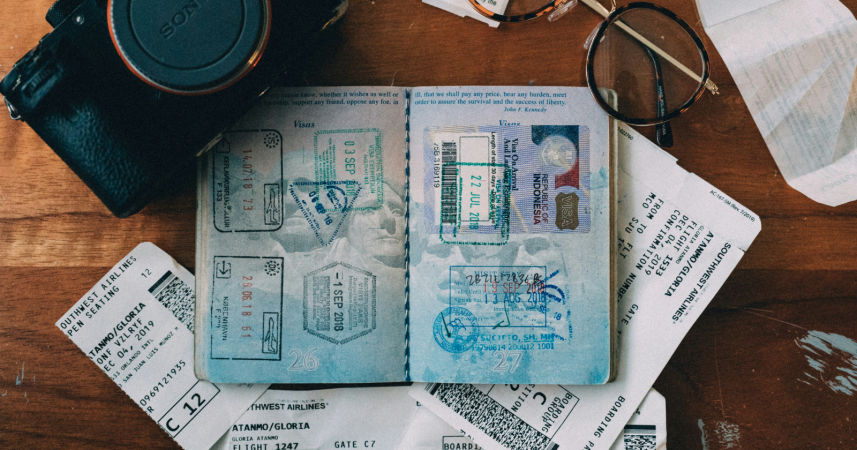
Ever flip through your passport and feel a little flutter of pride at all those colorful stamps?
I know I do. There's something about those ink marks that represents more than just border crossings. They're proof you stepped outside your comfort zone, tasted food you couldn't pronounce, and maybe even fumbled through a conversation in broken phrases while locals smiled patiently at your efforts.
But here's what I've noticed after years of exploring the world: not all travel experiences hit the same. Some destinations genuinely expand your worldview in ways that beach resorts and tourist traps simply don't. They challenge your assumptions, introduce you to radically different ways of living, and leave you forever changed.
So if your passport bears stamps from these seven places, you're not just well-traveled. You've actively sought out cultural depth that most Americans never experience.
1. Japan
Japan is where ancient tradition and cutting-edge innovation exist side by side without contradiction.
I remember my first morning in Kyoto, watching an elderly woman in a kimono bow deeply at a centuries-old temple, then pull out her smartphone to snap a photo. That moment captured something essential about Japan: a culture that honors its past while embracing the future.
What makes Japan culturally significant isn't just the temples or the technology. It's the entire social framework built on respect, precision, and an attention to detail that borders on art. From the way a shopkeeper wraps your purchase to the ritualized preparation of tea, every action carries meaning.
Most Americans never get past Tokyo Disneyland or quick Instagram stops at popular shrines. But if you've spent time understanding concepts like "omotenashi" (wholehearted hospitality) or sat through a traditional kaiseki meal, you've accessed something deeper. You've glimpsed a worldview where harmony and collective wellbeing matter more than individual expression.
2. Morocco
Step off the plane in Morocco and you're immediately hit with sensory overload in the best possible way.
The call to prayer echoing across terracotta rooftops. The scent of tagine and fresh mint tea. The labyrinthine medinas where getting lost is half the adventure. Morocco sits at the crossroads of Africa, Europe, and the Arab world, and you can feel that blend in everything from the architecture to the language you hear on the streets.
What strikes me most about Morocco is how it challenges Western assumptions about modernity. Here's a country where ancient souks thrive alongside contemporary art galleries, where Berber traditions persist in mountain villages while Casablanca pulses with cosmopolitan energy.
If you've navigated the chaos of a Marrakech market, shared tea with a family in the Atlas Mountains, or watched the sun set over the Sahara, you've experienced cultural complexity that most Americans never encounter. You've learned that "different" doesn't mean "backward," and that wisdom doesn't require a college degree.
3. Peru
Sure, plenty of Americans make it to Machu Picchu. But there's a difference between checking off a bucket list item and truly engaging with Peru's layered cultural identity.
Peru is where Indigenous Quechua and Aymara traditions remain vibrantly alive, where pre-Columbian history isn't something you read about in textbooks but something you can touch and taste. The country's biodiversity matches its cultural diversity, from the Amazon basin to Andean highlands to coastal desert.
I'll never forget sitting in a small restaurant in Cusco, watching the owner's grandmother prepare pachamanca using cooking techniques passed down for generations. She explained how each ingredient honored Pachamama, Mother Earth. That conversation taught me more about sustainable living and respect for nature than any environmental studies course ever could.
As cultural anthropologist Wade Davis has noted, "The world in which you were born is just one model of reality. Other cultures are not failed attempts at being you; they are unique manifestations of the human spirit."
If you've engaged with Peru beyond the tourist circuit, you understand this viscerally.
4. India
India doesn't just challenge your cultural assumptions. It demolishes them, then rebuilds your entire framework for understanding humanity.
With 22 official languages, multiple major religions, and regional cultures that differ as dramatically as separate countries, India is less a single nation and more a civilization unto itself. The contradictions are everywhere: extreme poverty alongside extreme wealth, cutting-edge tech hubs next to villages without running water, deep spirituality mixed with aggressive commercialism.
What makes India culturally transformative is that it forces you to expand your capacity for complexity. You can't reduce it to simple narratives. You have to sit with contradiction, ambiguity, and paradox.
I spent three weeks in Rajasthan a few years ago, and I'm still processing what I learned. About family structures that prioritize collective harmony over individual desires. About spirituality that's woven into daily life rather than compartmentalized. About resilience and resourcefulness in the face of challenges that would break most Westerners.
If you've traveled India with an open mind, you've stretched your cultural muscles in ways that few other destinations demand.
5. Ethiopia
Ask most Americans to point to Ethiopia on a map and you'll get blank stares. Yet this East African nation has one of the richest cultural histories on the planet.
Ethiopia was never colonized, which means its traditions developed without European interruption. It has its own ancient alphabet, its own calendar (currently seven years behind the Gregorian calendar), and its own branch of Christianity that dates back to the 4th century. The food, the music, the social customs are all distinctly Ethiopian.
What struck me most during my time there was the fierce pride Ethiopians have in their heritage. They know their history matters, even if the rest of the world overlooks it. The rock-hewn churches of Lalibela rival anything in Europe. The manuscripts in ancient Ge'ez script contain knowledge that predates the Renaissance.
Traveling to Ethiopia means acknowledging that Western civilization isn't the center of human achievement. It means recognizing that some of the world's most significant cultural developments happened in places American schools barely mention.
That kind of humility? That's the foundation of genuine cultural awareness.
6. Vietnam
Vietnam has a way of getting under your skin.
Maybe it's the resilience of a culture that's been invaded, colonized, and war-torn yet somehow emerged with its identity intact. Maybe it's the way ancient traditions persist alongside rapid modernization. Or maybe it's just the warmth of people who've chosen to move forward rather than stay stuck in bitterness.
What struck me most during my time in Vietnam was the disconnect between what I'd learned in American history classes and the actual lived experience of Vietnamese people today. We reduced an entire nation to a war, but Vietnam's story spans thousands of years of distinct cultural development, artistic achievement, and philosophical depth.
The country's cultural complexity reveals itself in layers. Chinese influence from centuries of occupation. French colonial architecture and cuisine. Indigenous traditions that predate both. And underneath it all, a fierce independent spirit that refused to be defined by anyone else's narrative.
Walking through Hanoi's Old Quarter or cycling through the Mekong Delta, you encounter a society that's simultaneously looking backward to honor ancestors and forward to build prosperity. Family remains central. Communal values trump individual desires. Yet entrepreneurial energy is everywhere.
If you've traveled Vietnam with genuine curiosity, you've learned that history is always more complicated than the version you were taught. You've seen how cultures heal, adapt, and thrive even after unimaginable trauma.
7. Turkey
Turkey literally bridges two continents, and that geography shapes everything about its culture.
Standing in Istanbul with one foot in Europe and one in Asia isn't just a tourist gimmick. It's a metaphor for a nation that's been a crossroads of civilizations for millennia. Greek, Roman, Byzantine, and Ottoman influences layer on top of each other, creating something entirely unique.
What makes Turkey culturally significant is how it embodies productive cultural fusion. The call to prayer mingles with church bells. Women in headscarves shop alongside women in miniskirts. Ancient traditions adapt to modern contexts without losing their essence.
I've watched Turkish families navigate these cultural currents with remarkable grace, holding onto what matters while embracing change. That balance between tradition and progress, between Eastern and Western values, offers lessons that Americans could definitely use right now.
If you've experienced Turkey beyond the resort beaches, if you've shared tea with shopkeepers in the Grand Bazaar or explored the ancient ruins of Ephesus, you've witnessed successful cultural synthesis. You've seen proof that different worldviews can coexist and even enrich each other.
Final thoughts
Look, having these stamps in your passport doesn't automatically make you culturally superior. Plenty of people visit these places and stay firmly inside their bubble, seeing only what confirms their existing beliefs.
Real cultural growth requires something harder than just showing up. It requires curiosity, humility, and a willingness to have your assumptions challenged. It means trying to understand rather than just observe. It means recognizing that your way of living isn't the only valid way.
But if you sought out these destinations specifically because you wanted that deeper understanding, if you returned home changed by what you experienced, then yes. You've developed a cultural awareness that most Americans simply don't have.
And in our increasingly interconnected world, that awareness isn't just nice to have. It's essential.
What’s Your Plant-Powered Archetype?
Ever wonder what your everyday habits say about your deeper purpose—and how they ripple out to impact the planet?
This 90-second quiz reveals the plant-powered role you’re here to play, and the tiny shift that makes it even more powerful.
12 fun questions. Instant results. Surprisingly accurate.