If everyone copied your behavior in a public space, would that space work better or worse?
Travel shrinks the world and puts our habits on display.
The good ones, like curiosity and patience, open doors.
The not-so-good ones make seatmates, people in security lines, and café baristas silently tense up.
I have been both the person gritting my teeth and, occasionally, the culprit. If you want smoother trips and kinder encounters, check yourself for these nine behaviors. They are easy to fix once you notice them.
Before we dive in, a quick frame: this is not about perfection. It is about being aware of how our choices land on the people around us. Emily Post said that “manners are a sensitive awareness of the feelings of others.”
If you cultivate that awareness, you already have good manners, no matter the zip code or time zone.
1. Playing audio out loud
Do you ever scroll videos at full volume while boarding because it is “just for a sec”?
On buses, trains, and in airports, outside sound creates instant tension. People are already managing fatigue, logistics, and tight timelines. Add unexpected noise and their stress spikes.
A simple rule helps: if it makes noise, use headphones or mute it. That includes TikToks, voice notes, and video calls. If you travel with kids, pack lightweight, volume-limited headphones. Everyone will be more comfortable, including you.
Pro tip: download playlists and shows before you leave. You will not need to crank the volume to hear through shaky Wi-Fi, and you will not blast nearby strangers while you fumble with settings.
2. Treating shared space like your living room
Airports and train stations are not yoga studios. I love a good stretch as much as anyone, but sprawling across three seats, dropping bags in the aisle, or setting up a floor picnic in a busy corridor forces others to dodge your stuff and your limbs.
Use a quick self-check. Ask yourself, “If everyone copied me right now, would this space still work?” If the answer is no, shrink your footprint. Stack bags vertically. Keep your shoulders inside your seat frame. Look around before you rearrange furniture or lie down.
People may not say anything, but they will feel the intrusion.
3. Blocking the flow, then acting surprised when people squeeze by
Crowd flow behaves like a river. When you stop in the middle to check a map, tie a shoe, or debate lunch options, you create a dam. Others will not confront you; they will sidestep with tight smiles and simmer.
Make it a habit to pull to the side, the way you would with a car. The same principle applies during boarding and deplaning. If you are reorganizing your bag in the aisle, you are delaying dozens of people.
Step into your row, reorganize, then step back into the aisle when you are ready. You will feel like a travel ninja, and the collective blood pressure around you will drop.
4. Reclining without checking on the human behind you
Reclining is not a moral failing. Doing it abruptly, however, can create a mess. On a red-eye to New York, the person in front of me slammed his seat back while my laptop was open. I did not say anything, but my heart rate jumped.
Since then, I take a quick glance, give a small gesture to say, “I am about to recline a bit,” and move slowly. If the person behind me is tall or has a tray down, I negotiate: “I can go just a little. Does that work?”
Two seconds of consideration can prevent spilled drinks, pinched knees, and bruised feelings. Think of it as the in-flight version of using your turn signal.
5. Photographing people without consent
New city, beautiful light, vibrant street life, camera out. Here is a truth we do not always like to face: people are not scenery. Snapping photos of strangers, especially children or people in vulnerable situations, can feel invasive. In some cultures it is deeply disrespectful.
Ask yourself, “Would I be comfortable being photographed like this?” If you really want the shot, smile, gesture to your camera, and wait for a nod.
Most people respond kindly when you lead with respect. If they decline, move on. The memory is enough.
6. Ignoring local norms and using “I am just being myself” as a pass
Travel invites a balance between authenticity and adaptability. That balance tips the moment we arrive with “my way or the highway” energy. Dress codes for sacred sites, volume expectations on public transport, tipping customs, and even elevator etiquette vary widely.
Do a quick scan when you arrive. How loud are people talking? How close are they standing? How do they greet café staff? Mirror what you see. Anthropologist Edward T. Hall noted that cultures signal expectations through unspoken rules.
Reading those signals is part of being a good guest. When uncertain, watch first, then act, or simply ask.
7. Performing kindness in a way that turns into condescension
There is a fine line between friendly and patronizing. Overly familiar nicknames, exaggerated praise like “You are a saint for doing your job,” or turning complaints into a show for the line behind you can make staff and bystanders uncomfortable.
When I traveled constantly for work, I learned this the hard way. One night, exhausted, I tried to charm my way into a seat change with big, dramatic kindness. The agent’s smile froze, and the couple behind me looked down. I was not being kind; I was performing.
Now I keep it simple. I make eye contact, use a genuine “please” and “thank you,” and get specific about what I need. If the answer is no, I accept it without theatrics.
8. Bringing strong scents or pungent food into tight spaces
Strong perfume in row 18. A tuna melt on the 7:10 a.m. commuter train. Garlic noodles in a crowded shuttle. You may love the smell. The person next to you may feel nauseous. Scent and food are personal. In small, shared spaces they become public.
Go neutral on travel days. Use unscented deodorant and keep fragrance minimal. Pack snacks that do not announce themselves: nuts, crackers, fruit, or simple sandwiches. If you want something aromatic, enjoy it after you arrive.
The goal is not to deny pleasure; the goal is to avoid forcing others into your sensory world without consent.
9. Offloading your stress onto everyone nearby
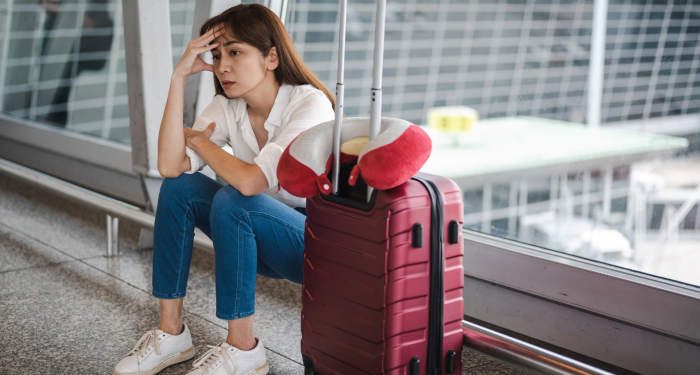
Travel glitches are inevitable. Delays, lost bags, and missing reservations happen. The question is what we do with the cortisol. Ranting loudly, catastrophizing to your partner, or snapping at the nearest human feels justified in the moment. It also spreads tension like a cold.
On a recent trip, my train was canceled after a long workday. I felt the surge of frustration. Instead of venting out loud, I took ninety seconds to breathe, texted a factual update to my host, and opened the carrier’s app.
The people around me stayed calm partly because I stayed calm. We influence the room more than we realize.
Here is a helpful reframe: you are not only solving a logistics problem. You are also setting the emotional temperature for your little corner of the journey.
What to do instead, in three easy beats
Lead with quiet. Keep your audio to yourself. Keep your body within the boundaries of your seat or your spot in line. Drop your voice one notch lower than you think you need. Quiet signals safety, and people relax around you.
Read the room and the culture. Notice local queues, greetings, and volume. If you are unsure, ask. A simple “Is it okay if I…?” in the local language or in English goes a long way.
Choose dignity, yours and theirs. From staff to seatmates to street vendors, treat people like the point of the trip rather than obstacles in your way. Small courtesies add up: recline slowly, step to the side when you need to check your phone, ask before you take a photo, and keep scents and snacks considerate.
A quick self-audit for your next trip
- Will any sound from my device reach someone who did not ask to hear it?
- Am I occupying more space than I paid for or actually need?
- If everyone copied my behavior, would this place work better or worse?
- Have I checked the human behind me, both literally and figuratively?
- Did I mirror local norms, or did I bulldoze with mine?
- Did I treat staff as partners rather than props?
- Will my scent or my food linger longer than I do?
- Am I managing my stress, or am I distributing it?
Travel is a practice. The more you do it with awareness, the smoother it becomes, not only for you but for everyone who shares your path that day. Most people will not tell you when you cross a line; they will simply feel it. The gift is simple: make it easy to be around you, and watch the world soften in return.
When I am not on the road, I run trails, dig in the garden, and volunteer at a farmers’ market. Those spaces keep teaching me what travel reinforces again and again. Shared places work best when we treat them like a community, not a stage.
If we want trips that feel less like an obstacle course and more like an exchange, we begin with small choices. Use one headphone. Step aside for a quick map check. Recline slowly.
Practice these habits one moment at a time, and you will travel lighter while everyone around you breathes easier.