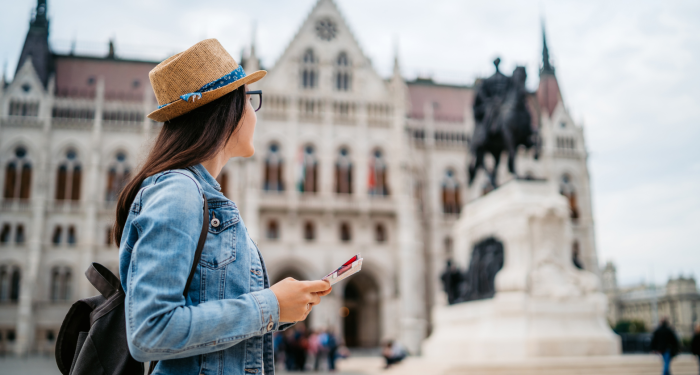
Museums put things behind glass while grocery stores put them in your hands, giving you a different kind of education about daily life rather than observing it from a distance.
You know that feeling when you step into a foreign grocery store and your heart actually skips a beat?
While your travel companions are lining up for the Louvre or racing to catch the cathedral tour, you're standing in the dairy aisle of a local supermarket, fascinated by the seventeen varieties of yogurt you've never seen before.
I'll be honest. On my last trip to Portugal, I spent an entire morning in a neighborhood market while my friends explored yet another historical monument. They thought I was missing out. I thought they were the ones missing the real story of the place.
If you're nodding along, you're probably part of a particular tribe of travelers. Here are eight traits you likely share.
1. You're a hands-on learner
Museums put things behind glass. Grocery stores put them in your hands.
There's something about touching the actual products people buy, reading labels in another language, and watching locals make purchasing decisions that gives you a different kind of education. You learn by doing, by experiencing, by being in the thick of daily life rather than observing it from a distance.
When I'm wandering through a grocery store in a new country, I'm not just looking. I'm picking things up, trying to decode ingredients, comparing prices. My brain lights up in a way it never does when I'm staring at a painting or reading a placard about pottery from the 14th century.
This isn't about dismissing traditional learning. It's about knowing yourself well enough to recognize that you absorb information better when you're actively engaging with it.
2. You value authenticity over curation
Museums are designed experiences. Someone decided what you should see, how you should see it, and what story you should take away from it.
Grocery stores? Nobody curated those for tourists. The layout, the products, the prices, the shoppers rushing through after work. It's all real, unfiltered, and happening whether you're there to witness it or not.
There's a rawness to everyday spaces that planned attractions can't replicate. You're seeing what people actually need and want, not what tour guides think you should appreciate. The organic produce section tells you more about local eating habits than any food museum ever could.
I remember standing in a grocery store in Seoul, watching a woman carefully select persimmons while her young daughter pointed at different varieties. That five-minute observation taught me more about Korean family dynamics and food culture than any exhibit could have.
3. You're curious about the mundane
What's in the cleaning aisle? How much does bread cost here? Do they have a bigger selection of tea or coffee?
These might seem like boring questions to some people. To you, they're absolutely fascinating because they reveal how people actually live.
Psychology professor Sam Gosling has noted that "the things people surround themselves with can be very revealing about their identities." And what better place to see those things than where people shop for them?
The mundane details matter because they're the foundation of daily existence. Grand historical events are interesting, sure. But the small, repetitive choices people make every single day? That's the texture of life itself.
4. You connect through food and practicality
Food is a universal language, but it's also deeply specific to place and culture.
Walking through a grocery store, you're essentially reading a map of what sustains a community. The seafood section in a coastal town versus a mountain village. The spice selection in different neighborhoods of the same city. The ratio of fresh to packaged goods.
This practical approach to understanding culture feels more grounded to you than admiring art or architecture. You want to know what people eat for Tuesday night dinner, not just what they created for posterity.
On a trip through rural Japan, I spent an hour in a small-town grocery store just observing the ready-made meal section. The care put into those everyday lunch boxes, the variety, the presentation. It told me everything about Japanese values around food, efficiency, and aesthetics in a way that felt immediate and real.
5. You're an independent explorer
Museums have suggested routes, audio guides, and tour groups. Grocery stores require you to figure things out yourself.
You probably prefer this kind of unstructured exploration. There's no right way to experience a supermarket, no optimal path through the aisles, no checklist of things you absolutely must see. You create your own journey based on what catches your attention.
This independence extends beyond travel. You likely approach learning, hobbies, and even problem-solving in life with the same self-directed style. You'd rather poke around and discover things organically than follow someone else's prescribed experience.
The freedom to wander aimlessly through unfamiliar spaces, making your own connections and discoveries, feels more valuable to you than being told what to think about a famous painting.
6. You're observant of human behavior
A grocery store is basically a living laboratory of human behavior.
How do people navigate personal space in the aisles? What's the checkout line etiquette? Do people chitchat with strangers or keep to themselves? How do parents interact with their kids during shopping trips?
You notice these patterns because people-watching in everyday contexts fascinates you more than studying historical figures or artistic movements. The woman comparing prices on her phone, the elderly man carefully counting coins, the teenager grabbing snacks before heading to the register. These micro-interactions reveal so much.
In museums, you're observing objects. In grocery stores, you're observing life as it's being lived right now.
7. You're budget-conscious but experience-rich
Let's be practical for a moment. Museum tickets add up quickly, especially in tourist-heavy cities.
Grocery stores are free to enter, and if you do buy something, you're getting actual value. A local snack, ingredients for a picnic, or just a bottle of water costs less than admission to most attractions and often provides more memorable experiences.
This doesn't mean you're cheap. It means you've figured out that meaningful experiences don't always come with a price tag. Some of the best stories from your travels probably involve things that cost almost nothing.
I once spent an entire afternoon in a Barcelona market, bought ingredients for maybe ten euros, and had a picnic in a nearby park. That day remains more vivid in my memory than many expensive tours I've taken over the years.
8. You understand that culture lives in the everyday
Here's the thing about museums. They're important, they preserve history, they showcase achievement. But they're fundamentally about the past or about exceptional moments.
Grocery stores are about right now. They're about the ordinary, the necessary, the daily rhythm of life. And you've realized that understanding a place means understanding how people actually live, not just what they've accomplished or preserved.
Culture isn't only in the grand gestures and celebrated works. It's in the breakfast cereal selection, the way produce is displayed, the background music playing while people shop, the fact that there's an entire aisle dedicated to one particular type of food you've never even heard of.
Final thoughts
If you're still reading this, I'm guessing at least a few of these traits hit home.
The next time someone gives you a strange look for spending your vacation time in grocery stores instead of museums, you can just smile and know that you're gathering a different kind of knowledge. One that's grounded in how people actually live rather than what they've built or painted.
Both approaches to travel have value, of course. But there's something special about understanding a place through its everyday spaces. Through the aisles where people make small decisions that add up to a life.
So go ahead and skip that cathedral tour. The dairy aisle is calling, and it has stories to tell that no museum placard ever could.
If You Were a Healing Herb, Which Would You Be?
Each herb holds a unique kind of magic — soothing, awakening, grounding, or clarifying.
This 9-question quiz reveals the healing plant that mirrors your energy right now and what it says about your natural rhythm.
✨ Instant results. Deeply insightful.