When was the last time any of us had a memorable interaction with a stranger simply because we needed help finding our way somewhere?
Ever flip through an old photo album and wonder what travel was really like before smartphones and online booking?
I ask because my mom recently shared stories about her cross-country road trips in the '70s, and honestly, it sounded like a completely different world. No GPS. No instant hotel reservations. Just a paper map, a sense of adventure, and a whole lot of trust.
As someone who's traveled extensively in the digital age, I find myself fascinated by these pre-internet travel experiences. They reveal something important about how technology has fundamentally reshaped not just how we get from point A to point B, but our entire relationship with exploration and discovery.
So let's take a look at some travel experiences that defined boomer adventures but have essentially disappeared for younger generations.
1. Getting film developed after a trip to see your vacation photos
Remember the anticipation of dropping off rolls of film and waiting days to see if your photos actually turned out?
Boomers spent entire trips carefully rationing their shots. You had 24 or 36 exposures per roll, and that was it. No previews. No do-overs. No endless scrolling through hundreds of nearly identical sunset pics.
The fascinating part? You couldn't share your experiences in real time. Your friends and family had no idea what you were up to until you got home and invited them over for a slide show. Travel felt more personal, more yours.
I'll admit there's something I miss about that delayed gratification, even though I never experienced it myself. These days, we're so focused on documenting every moment for social media that we sometimes forget to actually be present in those moments.
2. Using paper maps and asking strangers for directions
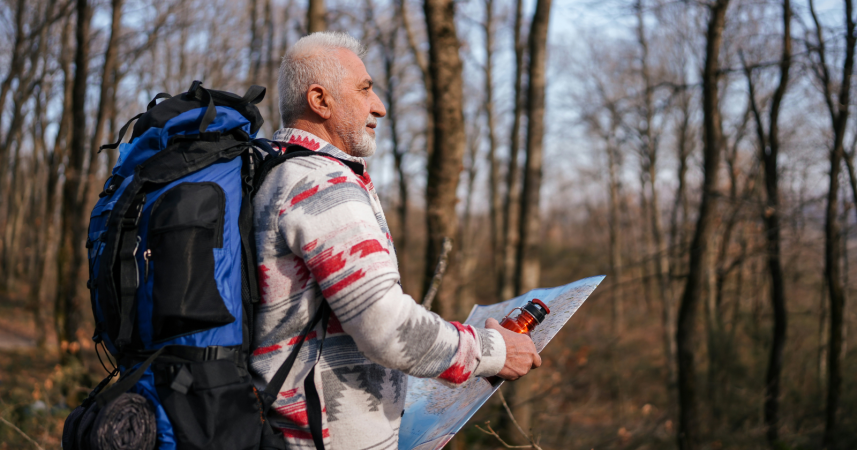
Picture this: you're driving through an unfamiliar town, completely lost, and your only option is to pull into a gas station and unfold a massive map across your hood.
This was standard operating procedure for boomer travelers. They navigated entire countries using nothing but paper maps, road signs, and the kindness of strangers. Getting lost wasn't a minor inconvenience, it was part of the adventure.
My uncle tells this story about driving through rural France in 1982. He took a wrong turn and ended up in a tiny village where no one spoke English. Through hand gestures and broken French, a local baker not only gave him directions but invited him in for fresh bread and coffee. That detour became the highlight of his trip.
It seems to me that our reliance on GPS may actually be affecting our spatial memory and navigation skills. We're losing something when we outsource all our wayfinding to technology.
When was the last time any of us had a memorable interaction because we needed help finding our way?
3. Visiting a travel agent to plan your vacation
Before Expedia and Booking.com, planning a trip meant making an appointment with a travel agent.
You'd sit in their office, flip through brochures, and rely on their expertise to craft your itinerary. They booked your flights, arranged your hotels, and sometimes even made dinner reservations. The entire process took weeks, not minutes.
There was something reassuring about having a real person guide you through the planning process. Travel agents knew the destinations inside and out. They'd been there or worked with people who had. They could answer questions you didn't even know to ask.
Today, we have infinite information at our fingertips, but we also have infinite options. Sometimes I wonder if the paradox of choice makes travel planning more stressful rather than easier.
4. Collecting physical travel documents and tickets
Boomers kept elaborate folders of travel documents. Printed tickets. Hotel confirmations. Car rental agreements. Everything was physical, and losing any of it could derail your entire trip.
I came across my dad's old travel wallet from the '80s recently. It was stuffed with boarding passes, train tickets, and receipts from places he'd been. Each item told a story. You could trace his entire journey just by looking through it.
As noted by travel writer Pico Iyer, "We travel, initially, to lose ourselves; and we travel, next to find ourselves." Those physical mementos served as tangible proof of transformation. They weren't just stored in the cloud somewhere, forgotten the moment the trip ended.
Now? Everything lives on our phones. Convenient, sure. But there's something lost when our travel memories exist only as digital files.
5. Making phone calls from hotel rooms or pay phones
Staying connected while traveling used to require serious effort and money.
If you wanted to call home from abroad, you had two options: use the hotel phone and face astronomical charges on your bill, or track down a pay phone and figure out the local calling system. Some travelers bought phone cards. Others relied on collect calls.
My mom remembers budgeting $50 just for a 10-minute call home during her honeymoon in Hawaii. That was 1976 money. Today's equivalent would be over $250 just to say "hi, we made it safely."
The upside? When you were traveling, you were truly away. You couldn't be reached for work emergencies. You couldn't doom-scroll through news from home. You were forced to be present wherever you were.
There's research backing this up too. Studies show that constant connectivity actually diminishes our travel experiences. We're physically in one place but mentally scattered across multiple time zones.
6. Carrying traveler's checks instead of using credit cards
Here's something most millennials have never even heard of: traveler's checks.
These were prepaid checks you'd buy before your trip, sign twice, and use like cash. If they got stolen, they could be replaced. They were considered safer than carrying large amounts of cash but way more complicated than swiping a card.
The process was tedious. You'd stand in line at American Express or your bank, buy however many checks you thought you'd need, then hope you estimated correctly. Run out mid-trip? Good luck finding a place to buy more.
But this system had an unexpected benefit. It forced travelers to budget carefully. You had a finite amount of money converted into checks, and when they were gone, they were gone. There was no tapping your phone for another purchase or checking your bank balance on an app.
7. Sending postcards as the only way to share experiences
Before Instagram stories and WhatsApp groups, postcards were how you let people know you were thinking of them while traveling.
You'd wander into tourist shops, carefully select cards showing local landmarks, write brief messages, hunt down stamps, and mail them off. Your friends and family would receive them weeks later, sometimes after you'd already returned home.
This created a beautiful ritual. Writing postcards forced you to distill your experiences into a few sentences. Who was important enough to receive one? What moment or place meant enough to share?
I keep a box of postcards my grandmother sent from her travels. Reading them now, decades later, gives me a window into who she was. Her handwriting. Her choice of words. The specific moments she wanted to preserve.
A screenshot of a text message just doesn't carry the same weight.
8. Experiencing true serendipity without online reviews
Perhaps the biggest difference? Boomers traveled with far less information and far more faith.
There was no TripAdvisor to consult before choosing a restaurant. No Google reviews to validate that a hotel was worth the money. No blog posts detailing every hidden gem in a city. You showed up and figured it out as you went.
This meant sometimes you ate terrible meals or stayed in questionable accommodations. But it also meant you stumbled into incredible experiences that weren't on any predetermined list.
A study from Cornell University found that when travelers rely heavily on online reviews, they tend to have more predictable but less memorable experiences. The magic of discovery gets lost when every moment is pre-researched and validated by strangers online.
One of my trail running buddies is a boomer who traveled extensively in his twenties. He talks about finding this tiny restaurant in Barcelona by following the smell of grilled seafood down a side street. No stars. No reviews. Just instinct and hunger. He says it was the best meal of his life, and he has no idea if that place even exists anymore.
When was the last time any of us took that kind of leap?
Final thoughts
Look, I'm not suggesting we all throw away our smartphones and start traveling like it's 1975.
Technology has made travel more accessible, safer, and in many ways, more enjoyable. I can video chat with my family from anywhere in the world. I can navigate foreign cities without getting hopelessly lost. I can read reviews before booking anything.
But understanding how boomers traveled gives us perspective on what we might be losing in exchange for all this convenience. The anticipation. The mystery. The forced presence. The genuine human connections that happened out of necessity rather than choice.
Maybe the real lesson here isn't about nostalgia for a pre-digital era. It's about being intentional with how we use technology when we travel. Sometimes putting the phone away, taking a wrong turn, or choosing a restaurant without consulting the internet can lead to the kind of stories worth telling for decades.
Because at the end of the day, the best travel experiences aren't about seeing every sight or eating at every highly-rated restaurant. They're about the unexpected moments, the human connections, and the memories that stick with you long after you've unpacked your suitcase.
What’s Your Plant-Powered Archetype?
Ever wonder what your everyday habits say about your deeper purpose—and how they ripple out to impact the planet?
This 90-second quiz reveals the plant-powered role you’re here to play, and the tiny shift that makes it even more powerful.
12 fun questions. Instant results. Surprisingly accurate.