Cruise crews remember the guest who packed light, said thank you, and didn’t treat “no” like a personal insult.
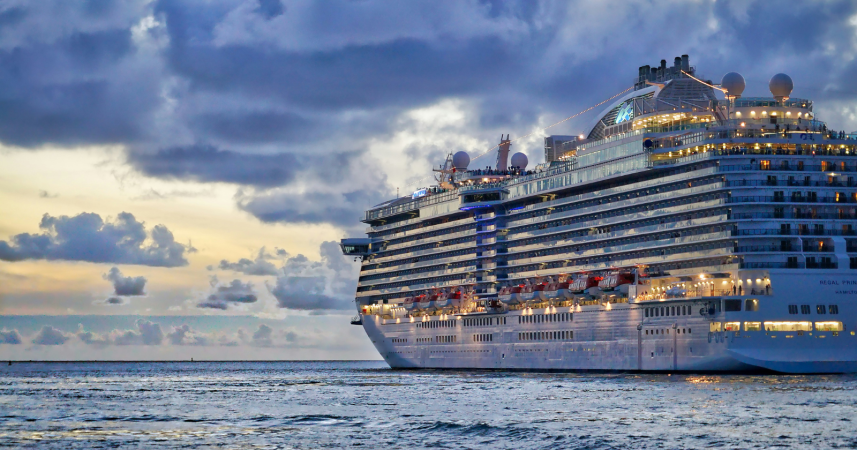
Cruise ships are floating cities with their own rhythms, rituals, and unspoken rules. Step on board and, whether you realize it or not, you are telling a story about who you are through your body language, your choices, and those tiny interactions at the buffet or in the corridor.
Hospitality pros are world-class observers. They clock patterns quickly, not to judge, but to keep thousands of people safe, comfortable, and happy at sea.
Here are eight things crew members tend to notice right away, and what those cues might be saying, even if no one says it out loud.
1. How you board sets your baseline
First impressions on a ship start before you see the atrium chandeliers. The team at the terminal is already noting how you handle the little frictions: luggage tags, security lines, and the inevitable shuffle forward and back.
Do you make eye contact with the crew member taking your passport? Do you let the person behind you pass while you repack your bag? That is your baseline. If you are calm and kind there, staff will often assume you will be the same when the elevator is packed or the tender runs late.
Maya Angelou’s line still nails it: “People will forget what you said, people will forget what you did, but people will never forget how you made them feel.” On ships, feelings ripple. Start with warmth and your ripple works in your favor.
2. Your luggage tells a story, and it is not about money
Crew do not care if your suitcase has a luxury logo or came from a thrift store. What they notice is whether it is organized, labeled, and liftable.
A bag that weighs more than a medium anvil hints at a traveler who planned for every “what if,” which can signal a tendency to escalate small problems.
Think, “I packed six outfits and still have nothing to wear for white night!” On the flip side, bags without tags or with loose straps suggest a guest who might need extra reminders, or whose items could go wandering during a transfer.
Pro tip from the other side of the counter: use sturdy tags, take a quick photo of your luggage, and carry one small bag with embarkation essentials. Medications, chargers, and a swimsuit belong with you in case staterooms are not ready yet.
3. Your greeting script reveals your travel role
On day one I like to watch couples and families at the muster drill. There is the “chief logistics officer” who manages maps, schedules, and room keys, the “fun captain” who brings the enthusiasm and jokes, and sometimes the “reluctant traveler” who crosses arms and scans for exits.
Crew clock these roles in seconds, which helps them tailor how they help you later.
If you greet staff with a smile and a name, for example, “Hi, I’m Sam in 8261,” you will often get more personalized service without asking.
Dale Carnegie captured why: “A person’s name is to that person the sweetest and most important sound in any language.” Learn your cabin steward’s name, use it naturally, and you will see little magic tricks happen, from extra hangers to timely ice.
4. Your buffet behavior broadcasts your mindset
One of my favorite low-stakes anthropology labs is the buffet. Staff instantly notice whether you sanitize or wash before you touch tongs, whether you let a kid cut in to reach the mac and cheese, and whether you return a used plate or stack a fresh one on top.
None of this is about being perfect, it is about being aware. A guest who keeps traffic moving and follows the flow saves the team dozens of micro-fixes in a single lunch. That person gets remembered, and often gets help when the paella arrives piping hot two minutes later.
If you are not sure about a station’s etiquette, ask. Crew would rather answer ten quick questions than navigate one messy misunderstanding.
5. “Please” and “thank you” are more than manners, they are signals
Hospitality folks are trained to hear tone and timing, not just words. A “please” tossed over the shoulder while texting lands differently from a “thank you” offered with a pause and a nod. Staff notice which guests look up when they say thanks, and who only engages when there is a problem.
Here is the quiet truth: gracious regulars do not get special treatment, they get human treatment. That is different. When a storm forces an itinerary change, the passengers the crew goes the extra mile for are often the ones who have been offering patience, not pressure, all along.
As restaurateur Danny Meyer puts it, “Service is the technical delivery of a product; hospitality is how the delivery of that product makes its recipient feel.” Your words set the tone, and your tone shapes the experience.
6. Your time habits predict your stress curve
Cruise clocks are strict for a reason. Tenders, shows, and port calls are choreographed down to minutes. Staff notice who arrives five minutes early for the shore excursion and who sprints down the gangway at last call.
Here is why it matters: late patterns compound. If you cut it close for the muster drill, you are more likely to cut it close for the safety talk on the tender or the shuttle back to the pier. That raises your stress and the team’s stress.
Build what I call a “maritime margin” into anything that involves a hard departure. Aim to be where you need to be ten minutes ahead, with a snack and water in your bag. It keeps your nervous system steady and frees crew to help passengers with actual emergencies, not avoidable scrambles.
7. How you handle “no” reveals your true travel style
Ships are abundant environments with shows, pools, and soft-serve. Even so, there are moments when the answer is “No.” The theater is full, the deck is closed for weather, or the bar has reached capacity.
Crew notice who treats “no” as information rather than an insult. The first group asks, “What are my options?” The second group argues, hunts for exceptions, or names their loyalty tier as if it were a magic spell.
I learned this on a foggy Alaskan morning when the zipline got canceled. My inner planner flared. Then I remembered my own advice. I asked the excursion desk for alternatives, and they pointed me to a last-minute photography walk that became my favorite memory of the trip. Flexibility is a superpower at sea.
8. Your footprint speaks when you have left the room
The quietest thing staff notice is what you leave behind. Dishes in hallways, pool towels in abandoned heaps, and paper cups perched on railings. These are tiny tasks to reset once, but multiply them by thousands and the crew is sprinting rather than serving.
In my stateroom, I corral recycling in one bag, keep shoes off the walkway, and place used towels in a neat stack. Not because I want karma points, but because it is my way of saying, “We share this space.” It is astonishing how much smoother the day goes when you move like a collaborator instead of a consumer.
A few practical tweaks that make you “crew favorite” material
- Right-size your requests. If you need something big, like a mattress topper, ask once, then give the team a reasonable window to sort it out. For small needs such as extra tea or more hangers, batch them so you are not creating five separate trips.
- Use the ship’s language. Learn the layout words, including forward, aft, port, and starboard. It speeds up every conversation. You can even turn it into a game with kids: “Meet me port side, midship. Bonus cookie if you get there first!”
- Tip with a note. When gratuities are automated, a short handwritten thank-you paired with a little extra, if your budget allows, can mean the world. If cash is not your thing, specific praise at guest services helps staff get recognized.
- Be a calm signal. When plans change, and they will, be the person who takes a breath and says, “Okay, what is next?” Staff gravitate to calm because calm is contagious.
Final thoughts
Cruise teams are not secretly judging your shoes or tallying your soft-serve cones. They are reading cues so they can take better care of you and the thousands of other humans sharing the same horizon line for a week.
The good news is simple. None of this requires you to be perfect, wealthy, or a veteran cruiser. A little awareness, a little kindness, and a little flexibility go a very long way at sea.
So the next time you step on board, imagine you are co-captaining the vibe. Say hello. Learn a name or two. Leave spaces a touch better than you found them. Then watch how the ship opens up to meet you.
If You Were a Healing Herb, Which Would You Be?
Each herb holds a unique kind of magic — soothing, awakening, grounding, or clarifying.
This 9-question quiz reveals the healing plant that mirrors your energy right now and what it says about your natural rhythm.
✨ Instant results. Deeply insightful.