I used to pack for “just in case.” Now I pack for energy, ease, and the life I’m actually living.
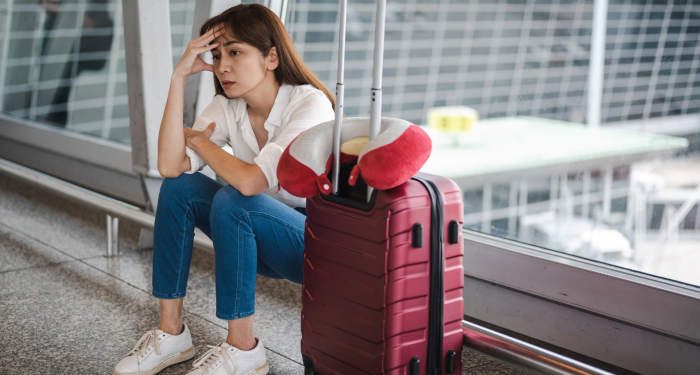
I didn’t become a light packer overnight. Early on, I was the person sitting on my suitcase, saying a silent prayer that the zipper wouldn’t revolt. Then I worked in finance, traveled often for client meetings, and learned the hard way that packing is less about predicting every scenario and more about designing for constraints, energy, and ease.
Here are the eight rules I rely on now. They’re simple, practical, and, once you practice them, a little addictive. Ready to stop dragging a closet through airports?
Let’s go.
1. Start with constraints, not outfits
Before you pull a single shirt, lock in your limits: bag size, airline rules, trip length, weather, and the real activities on your itinerary.
I treat this like budgeting. If I’ve got a 40L carry-on, that is the “spend.” My itinerary, three city days, two hikes, one nice dinner, sets the “categories.” The weather forecast tells me where the “overspend” risk is (hello, rainy season). Only then do I choose garments.
This flips the usual trap of building outfits first and negotiating with physics later. You’ll be surprised how quickly decisions get easier when the box is clearly drawn.
- Pick one color story (neutrals plus one accent). Everything must mix.
- Use a 5–4–3–2–1 baseline for a week: 5 tops, 4 underwear, 3 socks, 2 bottoms, 1 sweater or jacket. Adjust for your activities, not your anxieties.
- Shoes are the heaviest culprits. Cap them at two pairs (wear one, pack one) unless your itinerary truly demands a third.
2. Build a “travel uniform”
I used to chase variety. Then I realized variety is a packing tax you pay in weight, space, and morning decision fatigue.
Now I travel with a uniform: a breathable tee, tailored joggers or straight-leg pants, and a packable layer. It’s not boring; it’s strategic. When pieces all work together, three tops and two bottoms become six outfits. A light scarf or a necklace changes the vibe.
Ask yourself, “If I had to wear the same silhouette every day, what would I actually enjoy?” Pack that in variations. Bonus points if everything can be washed together and dries overnight.
3. Pack by zones, not categories
Most people pack by category, shirts with shirts, socks with socks. Seasoned travelers pack by zones of use.
I create three zones:
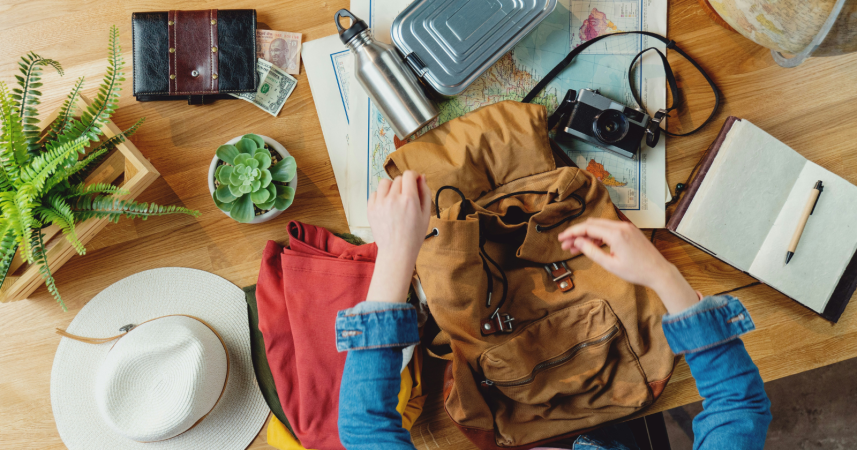
- Transit kit: Everything I need on the move, passport, wallet, headphones, snacks, pen, lip balm, hand sanitizer, sleep mask, a tiny moisturizer. This lives in the seat-back ready pouch of my personal item so I’m not spelunking under the seat for a tissue.
- Day kit: The ready-to-grab pouch for daily outings, sunscreen stick, compact umbrella, portable charger, reusable bag, and a small first-aid kit (bandages, pain reliever, blister plasters).
- Hotel kit: Toiletries and bedtime items that go straight to the bathroom and nightstand. When I arrive tired, I can get ready for sleep without unpacking chaos.
Packing cubes are optional; pouches are essential. Organize your bag like a kitchen drawer: everything has a home, and you can find it in the dark.
4. Embrace the laundry plan
If you’re away more than four days and pack for all ten, you’ll lug around six days of “just in case” fabric. Do your future self a favor and plan laundry instead.
I bring a small sink-stopper, a travel-size laundry soap (solid or sheet), and a line or a few pegs. Many hotels have same-day service; apartment stays usually have a machine. Worst case? A quick hand wash of the high-rotation items in the sink.
This isn’t hardship; it’s strategy. You reclaim suitcase space and weight in exchange for a 20-minute mid-trip reset. That trade pays off every time.
5. Decant and downsize ruthlessly
We don’t need a month of product for a week-long trip. Decant your skincare and haircare into mini bottles or solid versions. Switch to a razor with a cover. Ditch the “backup of the backup.”
A mindset that helps me here is a line often attributed to Antoine de Saint-Exupéry: “Perfection is achieved, not when there is nothing more to add, but when there is nothing left to take away.”
Apply that spirit to liquids and lotions. Use contact lens cases for creams, straws heat-sealed for single-use ointments, and tiny atomizers for fragrance. I label everything with washi tape and a Sharpie so I don’t “mystery-bottle” myself into using cuticle oil as serum.
A final nudge: if you wouldn’t pack the full-size of something, the mini probably doesn’t deserve a ticket either.
6. Make a pre-flight checklist, then stage it
Packing on vibes is how chargers get left on kitchen counters.
I keep a living checklist in my notes app: essentials (passport, wallet, phone, meds, glasses), flight comforts (earplugs, scarf), work gear (laptop, charger, adapter), health (electrolytes, bandaids), and trip-specifics (trail shoes, swimwear, local transit card). The night before, I stage everything on a clear surface and tick it off physically.
Some folks call this overkill. I call it outsourcing stress. As travel writer Rick Steves loves to emphasize, “You’ll never meet a traveler who, after five trips, brags: ‘Every year I pack heavier.’” It’s a mantra that nudges me to remove the third “maybe” top and add the second charging cable instead.
If you share bags with a partner or kids, print the checklist and make it a game: everyone lays out their items, and nothing enters the suitcase before a quick show-and-tell.
7. Weigh and test before you go
Airlines have scales. Your shoulders do, too.
First, weigh your suitcase at home (a cheap luggage scale pays for itself in one avoided fee). Then do a ten-minute carry test: put the packed bag on and walk around your home or, better, outside and up a flight of stairs. Notice the pinch points: a strap that digs, a tote that bashes your hip, shoes that are cute but traitorous.
- Remove two items you didn’t reach for during staging. You won’t miss them.
- Address one friction you felt: pad the strap, switch the bag, swap the shoes, or redistribute weight.
Seasoned travelers don’t have fewer needs; they have fewer surprises.
8. Leave 15% empty on purpose
The surest sign of an overpacked suitcase is zero breathing room. Give yourself a 15% buffer for snacks, local products, or that scarf from the street market you absolutely didn’t plan for but will wear nonstop.
- One-in/one-out during packing. If you add a “maybe,” remove a “maybe.” If it’s not a yes, it’s a no.
- Compress strategically. Use one compression cube for clothes and a non-compression cube for items that crease. Over-compressing everything is a recipe for rummaging and wrinkles.
- Ship or stash. If your trip includes a loop back through the same city, ask your hotel to hold a small bag. On longer journeys, mail home the early souvenirs so your bag stays constant.
An empty corner in your suitcase is not wasted space. It’s space you’re choosing to invest in spontaneity.
Bonus mindset shifts that make all the difference
A few small psychological reframes have saved me from the “just in case” spiral:
- Pack for your actual trip, not your fantasy trip. If your calendar shows museums and meals, leave the bulky “maybe I’ll run every morning” gear at home. (Says the trail runner who has packed trail shoes for cities with zero trails.)
- Dress codes are more flexible than you think. A simple black dress or dark jeans with a neat top, a scarf, and clean shoes goes almost anywhere.
- Weather is a system, not a sentence. Layers adapt better than single-purpose heavy items. A light down jacket plus a rain shell beats a chunky coat every time.
A sample packing blueprint (one week, carry-on only)
- Tops (5): 2 breathable tees, 1 long-sleeve, 1 nicer blouse or shirt, 1 lightweight sweater
- Bottoms (2): 1 dark pant, 1 versatile skirt or tailored jogger
- Layers (1–2): packable jacket or cardigan; rain shell if needed
- Shoes (2): walking sneaker (wear), dressier flat or loafer or trail shoe (pack)
- Underthings: 4 underwear, 3 socks, 1 sleep set
- Accessories: scarf, small jewelry, compact umbrella, sunglasses
- Toiletries: decanted essentials, sunscreen stick, solid shampoo and conditioner
- Tech: phone, charger, universal adapter, small power bank
- Health: meds, mini first-aid, electrolytes, throat lozenges
Final thoughts
Great packing isn’t about deprivation. It’s about designing a trip you can actually enjoy: moving easily, dressing without fuss, and having what you need when you need it.
When I’m tempted to add “just one more” item, I ask, “What problem is this solving?” If I can’t answer, it stays home. The win isn’t only a lighter bag; it’s a lighter mind.
Here’s the secret seasoned travelers learn: you don’t miss what you leave behind. You notice what you made room for, clear mornings, spontaneous detours, and a back that doesn’t ache.
Happy travels, and here’s to zippers that close on the first try.
If You Were a Healing Herb, Which Would You Be?
Each herb holds a unique kind of magic — soothing, awakening, grounding, or clarifying.
This 9-question quiz reveals the healing plant that mirrors your energy right now and what it says about your natural rhythm.
✨ Instant results. Deeply insightful.