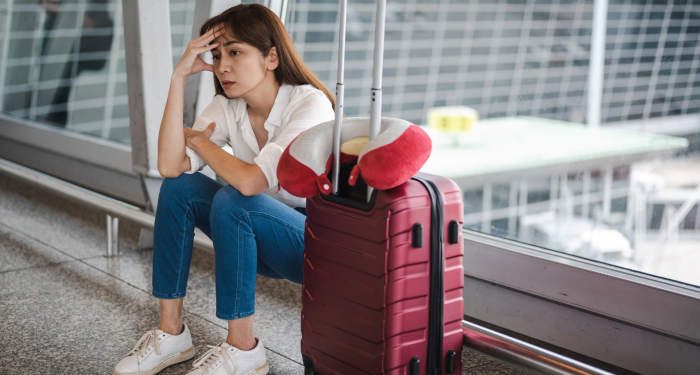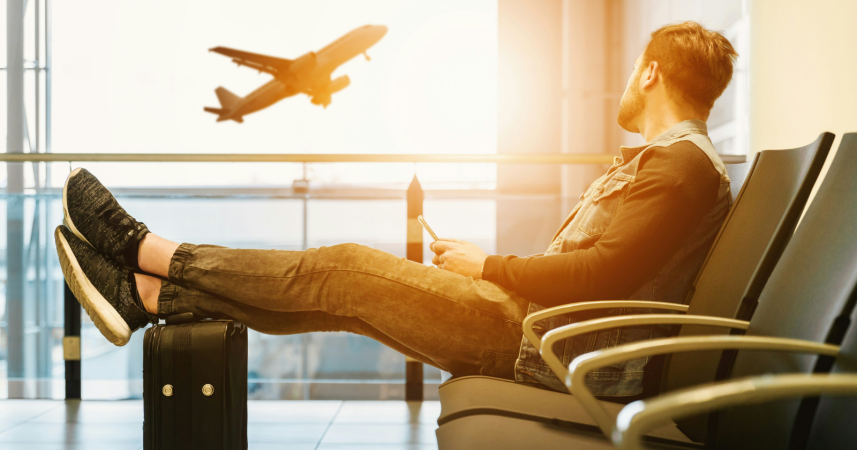
Every line is a choice. The more you prep, the fewer you wait in.
Airports can feel like a live experiment in patience. I used to treat them like a test of endurance—show up, hope for the best, and brace for the long shuffle.
Then I got curious: What if I could shave minutes off each bottleneck and show up at the gate with my shoulders down instead of up by my ears?
Here are the seven moves that consistently help me skip lines, calm my nervous system, and land at the gate with time to spare.
1. Nail the 48-hour prep window
The quiet work you do before you even zip the suitcase is what saves you in the lines. I treat the 48 hours before a flight like a mini project:
-
Check in as soon as your airline opens it. That small timestamp often nudges you into a better boarding position and lets you spot aircraft swaps or seat map changes early.
-
Preload everything: airline app, digital boarding pass in your wallet, frequent flyer/barcode, and a screenshot of your itinerary in case airport Wi-Fi stumbles.
-
Pack “checkpoint smart.” Put your laptop, liquids bag, and any metal-heavy items in the top layer of your carry-on so you can pull them (if required) without excavating your entire life. Even better: keep electronics and liquids together in a slim pouch so your movements are single, not scattered.
-
Wear “frictionless shoes” (quick on/off, no fiddly laces) and an extra layer with zip pockets. Every second you don’t spend juggling your phone and ID is a second the line moves.
I spent a decade as a financial analyst, and the best risk-return trade I know is preparation. A 10-minute checklist up front saves 20 minutes of line churn later.
2. Use trusted traveler programs like a pro (and pair them)
There are memberships, and then there are line-melting memberships. If you fly a few times a year, they’re worth doing the math on:
-
TSA PreCheck® is the domestic line-cutter at security. As the TSA notes: “With TSA PreCheck, shoes, belts, and light jackets stay on.” In many lanes, “Electronics and 3-1-1 liquids stay in your bag.” That’s less undressing, less bin drama, and much faster throughput.
-
Global Entry covers immigration on the way back into the U.S. (and includes PreCheck), which means you skip those serpentine passport lines after a long-haul. If you don’t qualify or don’t want the interview, consider Mobile Passport Control (MPC)—the free app from U.S. Customs and Border Protection that, as CBP explains, “allows eligible travelers to submit their travel document, photo, and customs declaration information through a free, secure app.”
-
If your home airport offers it and it fits your budget, CLEAR can accelerate the identity check before security. I only add this on routes where the standard lines spike at rush hours.
Pro tip: pair programs with timing (next point) and packing (Point 4) to multiply the effect. Stacking optimizations is where the real calm shows up.
3. Fly the “shoulder” and “first wave”
Not all airport hours are created equal. When I can, I target two windows:
-
First wave of the day. Early departures often face fewer knock-on delays, and security lines haven’t had time to swell. The psychology matters too—arriving to shorter lines sets the tone.
-
Shoulder times. Late morning midday on weekdays, or mid-afternoon after the business rush but before the after-work crowd, tends to be calmer.
I know this isn’t always practical. But if your calendar is flexible, picking a line-friendly hour is like choosing the empty lane at the lap pool—you just glide.
4. Pack like you’ll have to prove it
Nothing clogs a security lane faster than “surprise liquids” and electronics scattered across five pockets. Two habits keep me—and everyone behind me—moving:
-
Liquids discipline. The TSA’s 3-1-1 rule is still the rule. In their words: “Each passenger may carry liquids, gels and aerosols in travel-size containers that are 3.4 ounces (100 milliliters).” I keep my quart bag on the top of my carry-on so I can reach, place, and go. (Yes, hummus counts as a liquid. Ask me how I learned.)
-
Bin choreography. If you’re in a standard lane (no PreCheck), place your shoes and steel-heavy items (watch, belt) in the first bin, laptop and liquids in the second, bag in the third. When you exit the scanner, you’ll recreate yourself in the right order and won’t cause the dreaded bottleneck while you hunt for a shoe that took a solo journey.
A note on “one-bagging”: it’s not a moral stance; it’s a stress reducer. If you can avoid checking a bag, you skip the counter line and the carousel wait. When I do check, I prepay online and use self-tag kiosks—fewer handoffs, fewer queues.
5. Choose your line like a strategist, not a romantic
We all tell ourselves stories in lines—“Left lines are faster,” “Follow the flight crew,” “Avoid the families.” I treat it like observation, not superstition:
-
Scan for complexity, not length. A slightly longer line of solo travelers with backpacks often moves faster than a shorter line with multiple strollers or oversized items that need special screening.
-
Watch the agent velocity. Some document checkers move with metronome precision; some chat. If two lines are equal, pick the one with the brisker agent.
-
Use alternate checkpoints within the same terminal or connected terminals. Many airports have secondary security points tucked near lesser-used entrances that get less traffic. I’ll happily walk an extra three minutes for a line that saves me fifteen.
-
Keep your head up. The line you joined ten minutes ago might stall. If you notice an adjacent lane consistently flowing, it’s okay to pivot—politely.
And please, whichever line you choose, be the person who has their ID out and their bag arranged. It’s generous to everyone around you.
6. Make your phone do the walking
When I volunteer at our local farmers’ market, the fastest stalls have one thing in common: they separate thinking from paying. Airports reward the same mindset.
-
Airline apps will ping you when your gate moves, when boarding groups change, and when a delay quietly appears. Turn on notifications; don’t rely on the overhead speakers alone.
-
Maps and wayfinding. Most apps now include terminal maps with walking times. If there’s a security checkpoint a few minutes farther with a shorter wait, you’ll see it. Some airports publish live wait times; I check those before I commit to a line.
-
Wallet + backups. Add your boarding pass to your phone’s wallet app and keep a backup screenshot. If the scanners glitch, you’re not fumbling through email.
-
Food preorders. Hungry lines are long lines. A growing number of terminals let you mobile-order food for pickup near your gate. I’d rather spend 30 seconds grabbing my sandwich than 15 minutes snake-walking for a wilted salad.
Tech doesn’t remove every friction point, but it removes enough of them that I arrive less wired.
7. Build a five-minute “micro-buffer” at each choke point
This one changed everything for me. Instead of thinking “arrive two hours early” (a vague directive that can still leave you stressed), I run a series of tiny buffers:
-
Five minutes for curb-to-counter. Rideshare drop-offs can get chaotic. I add five minutes to account for the curb shuffle.
-
Five minutes for kiosk or bag drop. Even if you prepaid, machines hiccup. Five minutes keeps your heart rate from spiking.
-
Five minutes for security. Lines expand and contract. Five minutes absorbs a sudden school group that arrives right before you.
-
Five minutes post-security. This is the calm-down buffer. Bathroom, water bottle refill, quick stretch, and a gate check.
Twenty extra minutes is a small price for the difference it makes. When I skip buffers, I feel it in my shoulders. When I add them, I move like I’ve got all the time in the world—even if I don’t.
A few rapid-fire stress diffusers I lean on
-
Hydrate smart. Empty bottle through security, refill at the first fountain after. No kiosk line, no $6 water.
-
Boarding plan. If overhead bin space matters (it often does), consider a fare that includes early boarding on flights where carry-ons are king. If it doesn’t matter, sit tight; the jet bridge is just another line.
-
Gate sanity. If your gate is packed, find a quiet adjacent one and set an alarm for boarding. You’ll avoid the “Where am I supposed to stand?” crowding that spikes stress before you even step on the plane.
-
Use Mobile Passport Control on return. It’s free, and when the immigration hall looks like a music festival, it’s a beautiful sight to be waved to the shorter line. As noted by CBP, using MPC “streamlines the traveler’s entry process… by reducing passport control inspection time and overall wait time.”
Final thoughts
There’s a reason even seasoned travelers get frazzled at airports: so many steps, so many chances to stall out. But every place there’s a queue, there’s also a choice that trims it—or at least lowers your blood pressure while you’re in it.
I think of these moves as compounding interest for time. Check in early. Pack with intent. Choose the simpler line. Let technology carry part of the load. And claim those tiny buffers like they’re non-negotiable.
Do I still get caught in a surprise delay? Absolutely. But most days I stroll to the gate, refill my bottle, and text a friend a photo of a slightly ridiculous airport snack I didn’t stand in line for. That, to me, is winning travel.
What’s Your Plant-Powered Archetype?
Ever wonder what your everyday habits say about your deeper purpose—and how they ripple out to impact the planet?
This 90-second quiz reveals the plant-powered role you’re here to play, and the tiny shift that makes it even more powerful.
12 fun questions. Instant results. Surprisingly accurate.