When the old life feels too tight, the right landscape can make space for the person you’re becoming.
We don’t always announce it—even to ourselves—but there’s a moment when the old life feels too tight.
A job title that used to fit now pinches. The routines we swore by start to run us instead of the other way around.
When I left finance for writing, I didn’t broadcast it. I just started listening for places that felt like green lights.
Some destinations don’t just call your name; they meet you at the arrivals gate with a mirror and a gentle nudge.
Below are seven places that tend to draw people who are quietly, almost shyly, ready to turn the page.
I’ve mixed in practical suggestions, a few prompts, and only three quotes from thinkers who’ve helped me locate my feet when the ground was shifting.
Before you pick a spot, ask yourself: What part of me is craving space, and what kind of landscape would nourish it—movement, stillness, community, or solitude?
Then follow the pull.
1. Camino de Santiago, Spain
Have you ever noticed how walking solves problems your mind can’t?
The Camino is a pilgrimage, yes—but it’s also a moving workshop in patience, boundaries, and self-trust.
When I coached a reader through her first week on the trail, she told me the hardest part wasn’t the blisters.
It was admitting she’d planned a career that no longer fit and saying it out loud to strangers who somehow felt safe.
Why it draws you: The Camino breaks reinvention into bite-size pieces. Breakfast. Miles. A stamp in your credential. Sleep. Repeat.
That pace asks you to drop the performance and meet your actual energy, not the heroic version you post online.
Try this: Each evening, jot down one thing you carried that you didn’t need—physically or emotionally.
Then ask, What would tomorrow look like if I left that behind? Mail home a literal item by week’s end. Make the metaphor real.
Pro move: Resist filling every moment with chatter. Guard an hour of quiet walking. Reinvention loves silence more than strategy decks.
2. Kyoto, Japan
Kyoto is precision wrapped in moss. It doesn’t shout. It bows.
If you’re secretly ready to become someone new, ritual helps—and Kyoto is a masterclass in small, repeatable acts that shape identity: shoes off at thresholds, hands washed at shrines, tea prepared without hurry.
Why it draws you: The city’s gardens, temples, and alleyway coffee shops invite deep noticing.
Reinvention here isn’t a dramatic haircut. It’s rearranging your mornings one attentive minute at a time.
Anecdote: I once outlined a career pivot in a café near Nanzen-ji, punctuated by the soft clap of geta sandals outside.
Twenty minutes of honest math—What do I earn? What do I need? What do I value?—did more than six months of “someday” talk.
I left with three experiments to try, not a five-year plan.
Try this: Choose one micro-ritual to bring home (pouring tea, writing a haiku at dawn, stepping outside barefoot to greet the day). Keep it for 30 days. Let a small doorway lead to a larger room.
3. Sedona, Arizona, USA
Red rock cathedrals. Sky that refuses to be background. Some come for talk of “vortexes”; I come for the way the landscape strips life down to elemental choices.
Hike long enough and the static drops. Your honest answer has room to speak.
Why it draws you: The desert doesn’t multitask. Neither should a person in transition. If you’re quietly done pretending, Sedona’s terrain helps you choose a direction without needing to explain yourself.
A question to carry: What am I done performing? Write the first five answers that land. Don’t tidy them. Let the sun bleach what’s already over.
Try this: Sunrise on Bell Rock or Cathedral Rock. After the climb, sit for ten minutes and literally practice saying your next move in a single sentence. Whisper it if you need to. Then say it again, steady. Let your nervous system hear you.
4. Rishikesh, India
Where the Ganges exits the Himalayas, Rishikesh hums with yoga, chanting, and chai-fueled debates about meaning.
You don’t have to attend an ashram to benefit (though a few days of structure can be a reset).
What matters is time away from your own noise—no endless scrolling, no racing between meetings, just breath, river, and questions with teeth.
Why it draws you: Reinvention often starts with nervous-system repair. Slow breath, honest movement, familiar food, early nights. Rishikesh wraps those basics in a wider sense of purpose.
Try this: In the evening, sit by the river and ask, If my body picked my next step, not my résumé, what would it choose? Let your pen keep up with your pulse, not your inner critic.
As Joseph Campbell put it, “We must be willing to let go of the life we have planned, so as to accept the one that is waiting for us.” Sometimes the letting go is a breath at a river’s edge.
5. Iceland’s hot springs and wide-open quiet
If your life feels full of tabs you can’t see but somehow still hear, Iceland offers a clean desktop.
Lava fields. Steam rising from earth’s pores. Nights that stretch or shrink to remind you time is elastic.
Sit in a hot spring and watch your shoulders unclench.
That relaxation is not indulgence; it’s data.
Why it draws you: The contrast therapy of hot and cold clarifies what actually warms you.
After a few cycles—hot pot, cold plunge, towel, repeat—you start to tell the truth faster: This project energizes me; that one freezes me solid.
Try this: Bring a small waterproof notebook (or make notes right after the pool).
After each soak, answer: What did I think about when my body finally softened? Your default thought in relaxation is often your real priority.
A note on logistics: Go beyond the famous spots when you can. Small, community pools teach the most—quiet, local rhythms, and unhurried conversations that remind you reinvention doesn’t have to be a spectacle.
6. Ubud, Bali, Indonesia
Yes, it’s beautiful. Yes, it’s popular with seekers.
That can be a feature, not a bug—if you arrive with humility and boundaries.
Ubud offers rice terraces that make you breathe deeper, a creative community that normalizes trying things, and enough cafés to write a draft of your next chapter before lunch.
Why it draws you: Community matters when you’re changing.
Ubud puts you in proximity to people who have already made pivots—designers turned herbalists, accountants turned ceramicists, chefs turned movement teachers.
You don’t copy them. You just stop apologizing for wanting a life that fits.
Caution I’ve learned the hard way: Don’t collect workshops like stickers.
Pick one lane for a week—writing, cooking, yoga teacher training, language study—and go deep.
Depth beats dabbling when you’re building a new core.
Try this: Volunteer one morning at a local community garden or food initiative. Service is a de-buzzing agent. It gets your attention out of your head and into your hands, where real change often starts.
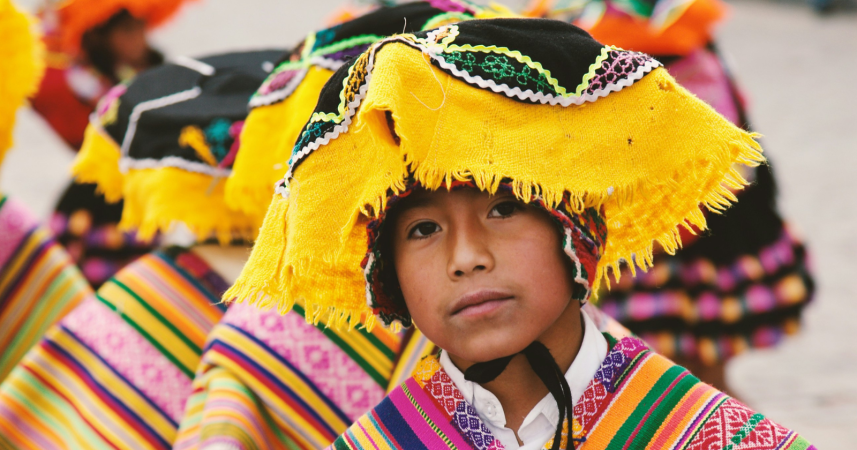
7. The Sacred Valley, Peru
There’s a steadiness in the Andes that recalibrates you. Terraces cut into mountainsides. Markets braided with color.
Quiet towns where change looks less like fireworks and more like choosing a path and walking it, step by step, at altitude.
Why it draws you: History and humility. You’re reminded that many lives have unfolded before yours and many will after.
That timeline takes the pressure off “getting it right” fast—and paradoxically helps you choose with more courage.
Try this: Keep a “thresholds” list for the week—moments when you crossed from one state to another (doubt → clarity, resentment → grief, fear → curiosity).
Notice what helped the crossing. Reinvention is often a series of thresholds, not a single leap.
As Rumi has said, “As you start to walk on the way, the way appears.”
The Sacred Valley is the kind of place where you take the first steps and trust the path to show itself as you go.
Practical notes for traveling as a quietly changing human
-
Go small before you go big. You don’t need a sabbatical to begin. Long weekends count. Reinvention loves continuity—return to the same café, the same path, the same hour of writing—and see how you change within the repetition.
-
Choose constraints on purpose. Limited wardrobe, limited Wi-Fi, limited schedule. Constraints create clarity. If a decision keeps looping, shrink the options.
-
Make your decision ritual tactile. I like writing choices on index cards, shuffling, and drawing one to live with for 24 hours. By dinner, your body will tell you if it’s a yes or a no. Data, not drama.
-
Talk to strangers wisely. There’s liberation in telling the barista in Lisbon—or the monk in Kyoto—what you’re trying to do. No history, no expectations. Just a clean echo that helps you hear yourself.
And because this is a season of change, here’s a final compass line from Viktor Frankl: “When we are no longer able to change a situation, we are challenged to change ourselves.”
If a destination is calling you, maybe it’s simply time to practice that change in a place that makes courage feel natural.
How to choose your next destination
Ask three questions, answer quickly, and don’t overthink:
-
Do I need movement or stillness?
-
Do I need solitude or community?
-
Do I need ritual or rupture?
Then match the answer to a place above.
Movement + solitude? Camino in the off-season.
Stillness + ritual? Kyoto. Community + courage? Ubud.
Wild quiet + nervous-system reset? Iceland.
History + humility? The Sacred Valley. A desert that tells the truth? Sedona.
Breath and belonging? Rishikesh.
Most reinventions look ordinary on the outside. A woman tying her shoes at dawn. A man filling a thermos before a train ride.
Someone buying a notebook at the airport. But inside, something tectonic shifts.
You don’t have to announce it. Just go where your next self can hear you—and start walking.