Sometimes sharpening your mind looks less like work—and more like play.
We live in a world where everything is designed to be faster, easier, and more efficient. But sometimes the smartest thing you can do for your brain is slow down and pick up a hobby that feels… well, a little old-fashioned.
Boomers know this well. They grew up before screens dominated every corner of life, and the hobbies they’ve held onto have surprising cognitive benefits.
Here are eight of them.
1. Reading physical books
There’s something different about holding a real book.
Studies have shown that reading on paper increases comprehension and retention compared to screens. When you flip actual pages, you engage more senses, creating deeper mental connections.
Boomers often never gave up the habit of keeping a paperback by their bedside. It’s not just nostalgia. Reading helps with focus, builds empathy, and even lowers stress levels.
Personally, I’ve noticed that when I read a physical book, I remember passages weeks later—whole sentences stick with me. But when I read on my phone? I barely recall the main points a few days later. The tactile experience makes a difference.
And here’s a fun detail: researchers at the University of Sussex found that reading for just six minutes can reduce stress by up to 68%. Six minutes! That’s less time than most of us spend scrolling headlines we won’t remember.
So ask yourself: when was the last time you set your phone aside and got lost in a book without distractions?
2. Playing cards
Poker, bridge, gin rummy—take your pick.
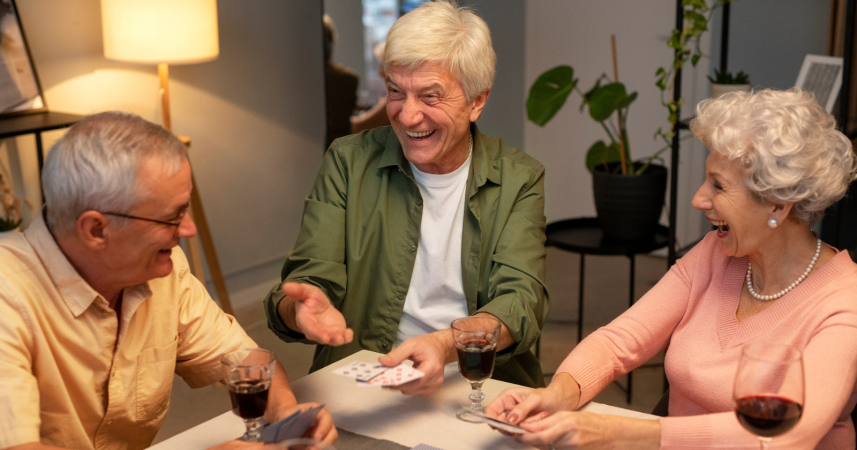
Card games are social, strategic, and require memory in ways apps rarely do. A friend of mine invited me to a bridge night a couple of years ago, and I realized quickly that my brain felt like it was doing mental pushups.
As neuroscientist Yaakov Stern has noted, “Engaging in cognitively stimulating leisure activities can help preserve brain function.” Card games are a prime example. You’re calculating odds, reading opponents, and practicing patience.
It’s also about adaptability. The cards you’re dealt change constantly, which means you’re forced to strategize on the fly. That flexibility sharpens problem-solving in everyday life.
And bonus: you’re actually talking to people, not just tapping a screen. A round of cards often comes with conversation, laughter, and subtle social cues that strengthen emotional intelligence too.
3. Gardening
At first glance, gardening looks like bending over dirt. But there’s a reason so many Boomers spend hours in their backyards tending to tomatoes or roses.
Gardening requires planning, pattern recognition, and adaptability. You learn to track cycles, pay attention to subtle changes, and problem-solve when something doesn’t grow as expected.
I used to think gardening was boring—until I tried it during a long stay in Italy. Within weeks, I realized it was teaching me patience in a way no app ever could. Plus, it’s a full sensory experience: sight, smell, touch. That richness makes the brain light up.
Psychologists even have a term for the mental benefits: “horticultural therapy.” The act of nurturing plants lowers stress hormones while stimulating executive function (planning, organizing, adapting). You get calm and sharp at the same time.
And unlike endless scrolling, gardening gives you visible results. The brain loves feedback loops, and watching a plant grow from seed to bloom is one of the most satisfying ones there is.
4. Playing a musical instrument
How many Boomers still have a guitar or piano in the house? Plenty.
Learning and playing music is one of the most complex tasks the brain can do. You’re reading notation, controlling timing, using both hands (sometimes feet), and listening all at once. It strengthens memory and coordination, and even improves verbal abilities.
As Oliver Sacks once wrote, “Music can lift us out of depression or move us to tears—it is a remedy, a tonic, orange juice for the ear.”
I still keep my guitar in the corner of my living room, and whenever I pick it up, I feel sharper afterward. That’s not an accident. Research shows musicians often have better working memory and more robust neural pathways between the brain’s hemispheres.
And here’s the kicker: you don’t need to be “good.” Even practicing a few chords or learning a simple song activates the same brain benefits. Boomers who strum along for fun may be unknowingly giving their minds a serious workout.
5. Knitting and needlework
It might not seem glamorous, but handcrafts like knitting, crocheting, and embroidery are incredibly good for the mind.
They require fine motor skills, pattern recognition, and long-term focus. Psychologists note that repetitive, detail-oriented tasks like these can induce a state of “flow,” where the brain is both calm and intensely engaged.
One Boomer I know compares her knitting group to meditation mixed with math. She’s right—because you’re counting stitches, correcting mistakes, and visualizing the end product while keeping your hands moving.
Research supports this. For example, a large study examined older adults who regularly engaged in arts and crafts (including knitting, sewing, quilting, etc.) and found they were significantly less likely to develop mild cognitive impairment compared to those who didn’t.
The skill demands of crafts plus the enjoyment seem to provide real cognitive protection.
And unlike scrolling Instagram, at the end of knitting you’ve got something tangible to show for it.
6. Cooking from scratch
Boomers came from an era before meal kits and takeout apps. Cooking wasn’t just a necessity—it was a skill.
When you cook from scratch, you’re doing more than following steps. You’re juggling timing, proportions, and taste while working with your hands. That’s cognitive multitasking at its best.
I’ve mentioned this before, but travel taught me a lot about how much mental sharpness is baked into food prep. In Japan, I stayed with a host family that treated making noodles like an art form. Watching—and then helping—showed me how engaging all five senses can spark mental clarity.
Cooking also connects to creativity. You start with raw ingredients and have to imagine what they could become. That kind of divergent thinking is exactly what keeps intelligence flexible.
And let’s not forget: cooking often involves serving others. Sharing a meal strengthens social bonds, which research shows is another major predictor of cognitive health.
7. Puzzles and crosswords
Crosswords may feel like your parents’ Sunday morning ritual, but they’ve stood the test of time for a reason.
Word games exercise verbal intelligence, memory, and lateral thinking. They force you to connect ideas, recall obscure facts, and stretch your vocabulary.
A 2017 study from the University of Exeter and King’s College London found that people aged 50+ who regularly do word puzzles like crosswords perform significantly better on tests of attention, reasoning, and short-term memory.
Those who played frequently had brain function more like someone ten years younger, in some cognitive measures.
I’ve seen this in action. My uncle—who still does the Sunday crossword religiously—has a mental agility that outpaces people half his age. It’s not just genetics; it’s mental training.
And while apps now offer similar games, there’s something special about scribbling in ink and arguing over clues with a friend. That social interaction amplifies the cognitive benefits.
8. Volunteering
You might not immediately think of volunteering as a hobby, but many Boomers treat it as one.
Whether it’s tutoring kids, organizing food drives, or helping at local libraries, these activities require problem-solving, empathy, and adaptability. Research consistently shows that volunteering keeps the brain engaged and lowers the risk of cognitive decline.
And let’s be honest: working with real people, in real time, forces you to stretch socially and mentally in ways digital life rarely does.
I’ve done volunteer photography projects, and the act of collaborating with strangers for a common goal sharpened me in ways that sitting at a desk never could. You’re constantly reading situations, adjusting your approach, and learning from the people around you.
That’s the kind of brain workout no app can replicate.
The bottom line
Old-fashioned doesn’t mean outdated.
Boomers may have held onto hobbies that seem quaint in a digital-first world, but the science is clear: these activities keep the brain sharp. They combine focus, creativity, memory, and social interaction—all the ingredients for long-term intelligence.
Maybe the smartest move isn’t downloading another brain-training app. Maybe it’s picking up a deck of cards, a garden spade, or a crossword puzzle instead.
Because intelligence isn’t just about raw processing speed. It’s about staying flexible, curious, and engaged with the world. And sometimes, the best way to do that is by going a little old-school.
What’s Your Plant-Powered Archetype?
Ever wonder what your everyday habits say about your deeper purpose—and how they ripple out to impact the planet?
This 90-second quiz reveals the plant-powered role you’re here to play, and the tiny shift that makes it even more powerful.
12 fun questions. Instant results. Surprisingly accurate.