What used to feel like punishment is now marketed as a luxury experience.
Every generation has its quirks, right?
Ask boomers what their least favorite childhood chores were, and you’ll often hear groans about raking leaves, hanging laundry, or weeding the garden. These weren’t just tasks—they were mandatory character-building exercises handed down from parents who believed hard work built resilience.
Fast forward to today, and those same chores have been rebranded. In fact, younger generations are paying good money to do them voluntarily, often calling them “wellness practices” or “mindful hobbies.”
It’s an ironic twist—what once felt like punishment is now considered luxury self-care.
Let’s dive into seven prime examples.
1) Gardening and yard work
If you grew up in a boomer household, you probably heard: “Go weed the garden!” Or worse—“Mow the lawn before dinner.” Yard work was sweaty, itchy, and seemingly endless. I still remember the smell of gasoline from the mower and the ache in my arms after pulling stubborn dandelions out by the roots.
But now? Gardening is marketed as therapeutic. Younger generations invest in raised beds, indoor grow lights, and boutique plant subscriptions. They post their monstera leaves and tomato harvests on Instagram like trophies.
Why the shift? Gardening today isn’t about survival or curb appeal—it’s about connection. It’s grounding, literally. Studies show digging in the dirt reduces cortisol levels and boosts mood. After a day of staring at screens, pulling weeds feels almost meditative.
For boomers, this was a dreaded Saturday chore. For us, it’s a way to unplug, slow down, and feel human again.
2) Hanging laundry on a clothesline
Laundry day used to be a headache. Lugging baskets outside, pinning socks to lines, rushing to collect everything before the rain hit—it was tedious and time-consuming. For many boomers, the invention of the electric dryer was pure freedom.
Yet younger generations are rediscovering clotheslines. Some eco-conscious communities even ban dryers in favor of outdoor drying. Others pay for workshops on “slow living,” where hanging clothes by hand is celebrated as an art form.
I’ve tried it myself during summers, and honestly, the smell of sun-dried sheets is unbeatable. There’s something about crisp cotton warmed by the sun that no fabric softener can replicate. What my mother once saw as a drag has become, strangely enough, a luxury.
It’s less about efficiency and more about mindfulness. Pegging laundry piece by piece forces you to slow down. You notice textures, scents, even the rhythm of the work. The hum of a dryer can’t compete with that sensory joy.
3) Cooking from scratch
For many boomers, cooking wasn’t fun—it was a daily grind. Meals had to be stretched on tight budgets, and convenience foods like TV dinners and canned soup were prized as time-savers. The goal was efficiency, not creativity.
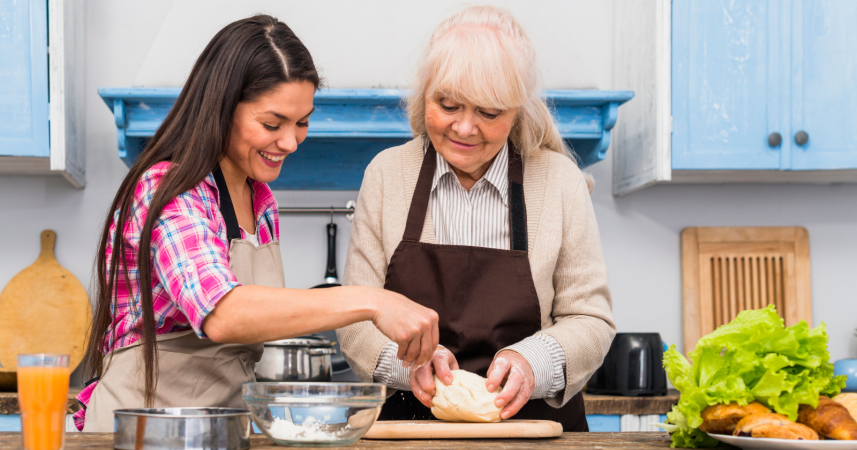
Contrast that with today’s food culture. Younger folks buy $12 sourdough starters and pay for fermentation classes. “Farm-to-table” isn’t just a restaurant tagline—it’s a lifestyle. Cooking from scratch is framed as a passion project, a way to reclaim tradition and nourish body and soul.
Ironically, what boomers considered drudgery (“peeling potatoes again?”) is being romanticized as artisanal. Hand-rolled pasta nights are now considered date-worthy. Sourdough starters even have names.
I’ve joined bread-making classes where participants are giddy about kneading dough for hours. Boomers, meanwhile, couldn’t wait to replace that with instant mashed potatoes. The same work, but with a totally different framing.
4) Cleaning the house
Here’s a confession: I used to dread Saturday mornings when my mom would crank up the radio and declare it “cleaning day.” We scrubbed floors, polished furniture, and wiped down every window. For boomers, cleaning wasn’t a choice—it was an expectation.
Now? Cleaning has been rebranded as a wellness ritual. People buy memberships for “rage cleaning” workshops or watch ASMR cleaning videos on YouTube. TikTok is overflowing with creators showing their favorite scrubbing products as if they’re luxury cosmetics.
Younger generations aren’t just cleaning; they’re curating. With hashtags like #cleantok, what was once obligation is now a performance. Some even pay for retreats where group cleaning becomes a bonding experience.
I’ll admit: sometimes I find scrubbing the kitchen sink oddly satisfying. It’s a control-in-the-chaos moment. Boomers may have grumbled about it, but there’s something grounding about taking a messy environment and making it shine again.
5) Walking everywhere
For boomers, walking was often just…transportation. If you missed the bus or couldn’t borrow the family car, you walked. And usually, you weren’t happy about it. Walking was framed as a lack of convenience, not a choice.
But today, people spend serious money on walking treadmills, guided “urban hikes,” and even walking tours in their own cities. Fitness apps gamify steps, and wellness coaches praise walking as the ultimate low-impact exercise.
I love trail running, and part of that is the walking stretches in between. They clear my head in ways sitting at a desk never could. That “long walk home from school” boomers resented? Millennials now pay for mindfulness coaches to take them on the same kind of stroll.
What was once seen as a tiresome necessity has been reframed as a powerful mental health tool.
6) Preserving food
Canning tomatoes, pickling cucumbers, making jam—these were once survival strategies for boomer families. It wasn’t a hobby; it was a way to stretch food through the winter. Many kids groaned as they stirred vats of fruit or tightened jar lids until their hands ached.
Flash forward, and pickling workshops are packed with twenty- and thirty-somethings who find the process “fun.” Farmers’ markets sell out of artisan kimchi and sauerkraut at $10 a jar. Cooking schools offer fermentation classes that cost hundreds of dollars.
Why? Preserving food has shifted from necessity to novelty. It’s now associated with creativity, gut health, and sustainability.
A friend of mine recently spent an entire weekend in a “fermentation retreat.” She came back glowing, arms full of jars. I couldn’t help but laugh, thinking of how my grandmother used to grumble about pickling day. Different generations, totally different spin.
7) Exercising through manual labor
Boomers didn’t call it “exercise”—they called it chores. Splitting firewood, shoveling snow, or hauling buckets of water were unavoidable tasks, not workouts. Most boomers didn’t pay for a gym membership because their daily lives kept them physically active whether they liked it or not.
But younger generations? We spend billions on boutique fitness classes that mimic the exact same movements. Think about CrossFit: flipping tires, swinging kettlebells, carrying heavy loads. It’s essentially farm chores repackaged as a trendy workout.
Some even sign up for “farm fitness” retreats, where participants pay to muck stalls, haul hay bales, and dig trenches—all in the name of functional exercise. What boomers resented as sweat and strain has been reframed as strength training.
I once joined a “wood-chopping workout” for fun. It was exhausting, yes—but also exhilarating. And I couldn’t help but picture my dad, rolling his eyes, because for him chopping wood was just Saturday’s non-negotiable.
Final thoughts
Isn’t it funny how the cycle works?
What one generation saw as punishment, the next reframes as pleasure. Part of it is nostalgia, part of it is marketing, and part of it is a genuine craving for balance in a hyper-digital world.
The deeper truth is this: our relationship with chores reflects our relationship with time. Boomers often approached these tasks as burdens stealing time away from rest. Younger generations, on the other hand, are trying to reclaim time from hustle culture by turning simple tasks into grounding rituals.
So maybe the lesson here is perspective. A “chore” is just an action waiting for context. With a shift in mindset, what feels like drudgery in one era can transform into joy in another.
And who knows? The things we complain about today might just become the self-care trends of tomorrow.