The routines some families see as ordinary childhood traditions often look like luxuries from the outside.
Every family has its version of normal.
For some, it’s piling into the car for a road trip with homemade sandwiches and gas station snacks.
For others, it’s weekends at country clubs or afternoons spent in extracurriculars that come with hefty price tags.
What feels ordinary to one household can look like a privilege to another.
If you grew up in an upper-middle-class family, you probably didn’t think twice about certain activities because they were simply part of the rhythm of life.
But when you step back, you realize those “normal” experiences often aren’t universal—they’re tied to financial comfort and cultural expectation.
Here are nine activities that many people from upper-middle-class families grew up seeing as totally standard.
1. Taking annual family vacations
For many upper-middle-class families, vacations weren’t a once-in-a-lifetime event—they were a yearly tradition.
Trips to the beach, Disney World, or even abroad became markers of family time. You expected that summer would mean travel, not just staying home.
These vacations often shaped childhood memories. They taught kids about airports, hotels, and different cultures in a way that didn’t feel remarkable at the time.
Looking back, though, it’s clear how unusual it is to grow up with that kind of access.
Family trips became as much about bonding as about status. Saying you were “going to Europe for the summer” or “skiing in Aspen” carried a quiet social weight in certain circles.
2. Enrolling in multiple extracurriculars
Soccer, piano, debate team, dance, swim lessons—sometimes all in the same week.
For upper-middle-class kids, afternoons were often packed with structured activities. Parents had the resources to sign them up and the flexibility to drive them around.
This gave them not just skills but exposure. They learned teamwork, discipline, and how to balance commitments at an early age.
It also reinforced the idea that free time should be filled with “productive” hobbies, not just hanging out in the neighborhood.
While other kids might have been playing outside until dinner, upper-middle-class kids were often in uniforms, carrying instrument cases, or hustling to practice.
3. Going to summer camp
I’ll never forget my first summer at camp. My parents sent me to a weeklong overnight camp in the mountains, complete with canoes, campfires, and color wars.
At the time, I assumed every kid got to do this.
Later, I realized camp is expensive. Many families can’t budget for weeks away at sleepaway programs.
For upper-middle-class families, though, it was often non-negotiable. Camp wasn’t just entertainment—it was seen as part of building independence and social skills.
For kids who grew up this way, singing campfire songs or writing letters home became a rite of passage, one they only later recognized as a privilege.
4. Dining out regularly
Here’s a question: how many times a week did your family eat out when you were growing up?
For many upper-middle-class households, restaurants weren’t reserved for birthdays or special occasions. They were a normal part of life.
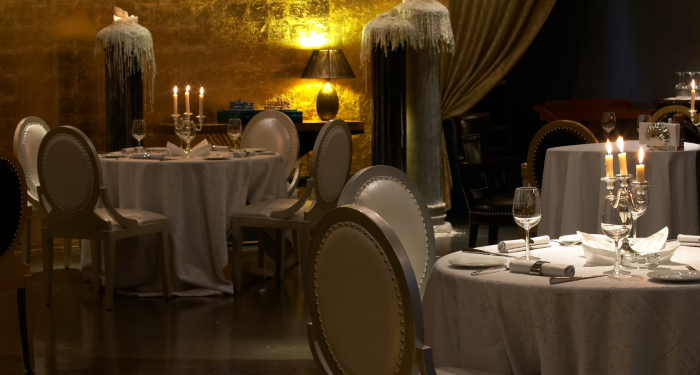
Whether it was Sunday brunch, Friday night dinners, or takeout sushi midweek, eating out taught kids how to order from menus, interact with servers, and navigate social etiquette at a table.
These things felt casual then, but they’re skills that not every kid gets to practice so often.
Dining out regularly also normalizes variety. Kids grew up expecting to try cuisines beyond pizza and burgers—Indian, Thai, Italian—without realizing how rare that exposure was.
5. Having private lessons
Music lessons, SAT tutoring, golf coaching—private instruction was often the default.
Parents didn’t just rely on schools or group settings; they hired experts to give their kids an extra edge.
The one-on-one attention made kids feel like their growth was worth investing in. It also helped them excel in ways that might not have been possible otherwise.
But as an adult, you realize just how financially out of reach that level of support is for many families.
Private lessons made “getting ahead” feel normal, when in reality, it was an advantage baked into childhood.
6. Attending cultural events
I remember my parents taking me to see a ballet when I was nine.
At the time, I was more interested in the intermission snacks than the performance, but it stuck with me.
Museums, symphonies, plays—all of these were sprinkled into childhood like casual outings.
For upper-middle-class families, cultural exposure is part of the package.
Kids grow up walking through art galleries and listening to classical music without thinking twice about ticket prices. They learn to sit through performances, clap at the right times, and talk about what they saw afterward.
Those experiences shape their tastes and worldviews. As adults, they may carry an ease in those spaces that others don’t, simply because they grew up seeing them as ordinary.
7. Playing “status” sports
When you think back to childhood sports, were they the local little league or something like tennis, golf, or lacrosse?
In plenty of upper-middle-class households, kids were steered toward activities that carried a certain prestige.
These sports often come with a higher barrier to entry. Equipment is expensive, lessons take place at private clubs, and travel teams require both time and money.
At the time, children didn’t see the financial layer—they just thought it was fun. But looking back, the message was clear: these weren’t just games, they were social cues.
As adults, those same kids usually feel at ease in environments where golf outings or tennis matches are part of professional networking, because it was woven into their upbringing from the start.
8. Traveling for school trips
Upper-middle-class kids often went on elaborate school trips, whether it was a week in Washington, D.C., or even an international excursion with classmates. The costs were often quietly absorbed by parents who could afford it.
These trips gave kids the chance to bond, explore history firsthand, and see themselves as global citizens before adulthood. At the time, it just felt like school. In hindsight, it was another layer of access that widened their horizons.
Many people look back on those trips as formative—yet they were privileges disguised as standard education.
9. Going shopping just for fun
Weekend trips to the mall were practically a pastime in some upper-middle-class households.
Kids would tag along with parents or friends, not necessarily to buy anything essential, but simply to browse, try things on, and grab food at the food court.
That kind of casual shopping trip normalized spending as recreation. Picking out a new pair of sneakers or grabbing a few items like clothes felt routine, not like a rare treat.
The mall wasn’t just about clothes—it was a social hub where kids learned how to spend, choose, and present themselves.
Looking back, it’s clear how much access was built into those outings. The idea of shopping as entertainment, rather than necessity, shaped a mindset of abundance that didn’t exist in every household.
Final thoughts
For kids growing up in upper-middle-class families, activities like camp, cultural outings, or private lessons didn’t feel special—they felt standard.
But those experiences quietly shaped their confidence, access, and worldview in ways that only become obvious later.
What’s considered “normal” in one household can look like luxury in another. Recognizing that difference isn’t about guilt—it’s about awareness.
Because when you see how privilege operates in the background of everyday life, you start to understand just how much it influences the paths people take.
What’s Your Plant-Powered Archetype?
Ever wonder what your everyday habits say about your deeper purpose—and how they ripple out to impact the planet?
This 90-second quiz reveals the plant-powered role you’re here to play, and the tiny shift that makes it even more powerful.
12 fun questions. Instant results. Surprisingly accurate.