Discover how small, everyday passions can spark joy, sharpen your mind, and make life feel richer—without stepping beyond your own doorstep.
There’s this myth that once you hit your 60s, you have to either start traveling the world or settle into a life of daytime TV and light gardening.
While both have their charms (and I’ll happily talk garden soil pH if you’re up for it), there’s an entire middle ground—rich with possibility—that doesn’t require a passport, a plane ticket, or a five-figure budget.
In fact, I’ve found that the most fulfilling hobbies at this stage of life are the ones you can sink into from the comfort of your own home or community.
They keep your mind sharp, your social connections alive, and your sense of curiosity humming—without the exhaustion that sometimes comes with travel.
Here are eight hobbies worth exploring, whether you’re looking to spark creativity, learn something new, or simply add more fun to your everyday routine.
1. Learning a musical instrument
It’s never too late to learn music. In fact, many people find that in their 60s, they finally have the patience—and the time—that learning an instrument requires.
There’s a quiet kind of joy in picking up a guitar, a piano, or even a harmonica, knowing you’re doing it purely for yourself.
When I first started learning the ukulele, I didn’t expect it to be as humbling as it was. My fingers felt clumsy, and even the simplest chord progressions seemed like a puzzle.
But slowly, my muscle memory caught on. I began recognizing how certain sounds made me feel more relaxed or energized, and I realized I was actually training my ear and my patience at the same time.
The science is on your side here—studies suggest that playing an instrument engages multiple areas of the brain at once, improving memory, coordination, and even emotional resilience.
You don’t have to perform for anyone; simply strumming your favorite song on a quiet evening can feel like a personal victory.
2. Creative writing or memoir journaling
Writing is one of those rare hobbies that costs almost nothing but pays you back in ways you can’t measure.
Whether you’re scribbling in a notebook, typing on a laptop, or dictating into a voice recorder, it’s a way to process your thoughts, revisit old memories, and make sense of your current chapter of life.
A friend of mine started a “memory hour” every Sunday afternoon. She picks a single year of her life—1978, for instance—and writes everything she can remember: who she was spending time with, what she was eating, the music that played in the background of that season.
Over time, these entries have formed a living record of her life, one her grandchildren already love hearing about.
The beauty of creative writing and memoir work is that it doesn’t have to be polished. In fact, the messier and more honest it is, the more valuable it becomes. You’re not writing for an audience—you’re writing for connection, clarity, and maybe a little nostalgia.
3. Cooking (and experimenting) at home
Cooking in your 60s can shift from “getting dinner on the table” to exploring the kind of flavors and techniques you’ve always been curious about.
Maybe you’ve always wanted to try making hand-pulled noodles, or you’re curious about fermenting your own kimchi. This is the perfect stage of life to lean into those experiments.
You can make it social, too. Hosting a “tasting night” where everyone brings one dish—whether it’s their best vegan lasagna or a homemade jam—creates a space for conversation and creativity. Food becomes not just something you consume, but something you share.
4. Volunteering your skills locally
Not all hobbies are purely for personal enjoyment—some feed your sense of purpose in ways that leisure alone can’t.
By your 60s, you’ve likely built up decades of experience, whether that’s in a profession, a craft, or simply navigating life. There are countless organizations, clubs, and community groups that could benefit from what you know.
You might volunteer at a literacy program and help children develop reading confidence, mentor new business owners who are trying to get their footing, or work with a community garden to teach sustainable growing practices.
The key is to choose causes that genuinely matter to you so that giving your time feels energizing, not draining.
Beyond the good you do for others, mental health experts say that volunteering can have a profound effect on your own well-being as well. Staying engaged with a cause gives you a sense of purpose, strengthens social bonds, and even improves overall life satisfaction.
5. Indoor gardening and plant care
Even if you’ve never kept a plant alive before, indoor gardening is one of the gentlest ways to add life, beauty, and a sense of care into your home.
Unlike outdoor gardening, you can do it year-round, regardless of weather.
You might start with easy, forgiving plants like snake plants or pothos, which thrive on minimal fuss.
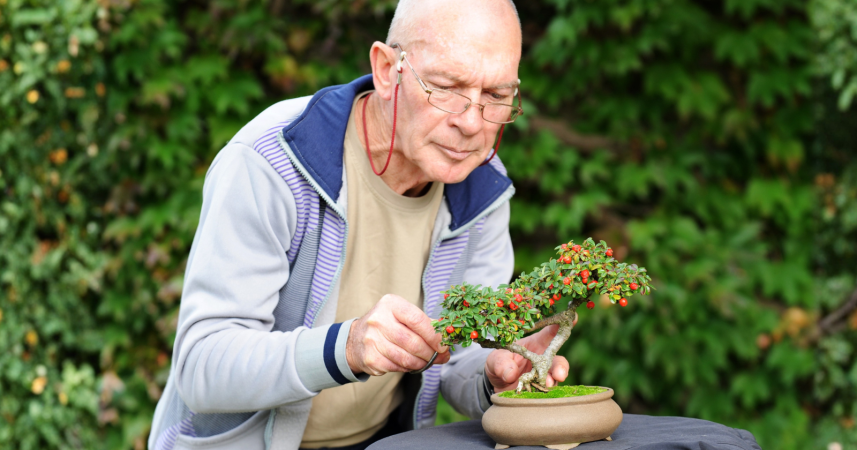
As your confidence grows, you can branch out into more challenging varieties like orchids, bonsai, or even a miniature lemon tree. Each plant comes with its own rhythm, and learning those rhythms can be surprisingly meditative.
There’s also an undeniable mental health benefit. Studies suggest that caring for plants can reduce stress and boost mood. The simple act of watering, pruning, or rotating a pot toward the sun can become a grounding daily ritual—one that rewards you with visible growth.
6. Taking up painting or drawing
Art isn’t about talent; it’s about expression.
Picking up a paintbrush or a pencil in your 60s can be as freeing as it is challenging. You’re not bound by school assignments or commercial deadlines—this is art for the sake of art.
Some people find inspiration in joining a local class where they can pick up techniques from others.
Others prefer the privacy of an online tutorial and the comfort of their kitchen table.
You might start noticing that you see the world differently—colors seem richer, shadows more interesting, textures more layered—because you’re training yourself to really look.
Painting and drawing can also become a form of mindfulness. When you’re immersed in mixing colors or sketching a scene, you’re anchored in the present moment, far away from distractions and worries.
7. Learning a new language
Learning a language in your 60s is like building a bridge to new perspectives—and you don’t even have to leave home to cross it.
With online courses, language apps, and community classes, it’s never been easier to get started.
The first time you manage to string together a full sentence in another language, it’s thrilling. Even if you never reach fluency, the process itself strengthens your brain, improves memory, and can even delay cognitive decline, according to research.
Plus, you’ll start recognizing words and phrases in movies, songs, and books, which is its own small delight.
To keep it engaging, try connecting your language learning to something you love. If you’re into cooking, learn the language’s food vocabulary. If you’re a film fan, watch subtitled movies and try to follow along.
8. Puzzle solving and brain games
Puzzles might seem simple, but they pack a surprising punch when it comes to mental fitness.
Crosswords, sudoku, word games, and logic puzzles all challenge different parts of your brain, helping to keep it agile.
I know someone who turned puzzle-solving into a monthly social event by hosting “game nights” that feature escape room board games. It’s a mix of problem-solving, teamwork, and plenty of laughter—proof that brain exercise doesn’t have to be solitary.
The best part? You can scale it up or down depending on your mood.
Some days you might want the quiet focus of a solo crossword, while other days you might crave the buzz of a group challenge. Either way, you’re keeping your brain in motion.
Final words
The hobbies you choose in your 60s aren’t just “time-fillers.” They’re investments—in your brain, your joy, and your sense of connection.
You don’t need a stamp-filled passport to make life feel expansive. All it takes is curiosity, a willingness to try, and maybe a few false starts along the way.
The best part? Every single day is another opportunity to begin something new.