The activities you instinctively avoid might be pointing directly to the emotional growth you need most.

Add VegOut to your Google News feed. 
Have you ever noticed how some people gravitate toward activities that require them to open up, while others seem to carefully avoid anything that might expose their inner world?
I spent years as one of those people. I'd choose solo activities over group ones, intellectual pursuits over emotional ones, anything that let me keep my guard up while still appearing engaged with life.
Here's what I eventually realized: the hobbies we avoid often reveal exactly where our growth edges are. And for emotionally unavailable people, there's a whole category of activities they instinctively steer clear of.
These aren't just random preferences. They're strategic avoidances of anything requiring genuine emotional exposure, vulnerability, or deep connection with others.
If you find yourself nodding along or feeling a little defensive reading this, pay attention. That reaction might be telling you something important.
Let's look at seven hobbies emotionally unavailable people typically avoid, and why these activities feel so threatening.
1) Group therapy or support circles
There's something raw about sitting in a circle with strangers and admitting you're struggling. It's the opposite of the polished facade most of us work so hard to maintain.
Emotionally unavailable people steer clear of group therapy or support circles because these spaces demand exactly what they're not comfortable giving: honesty about their inner world.
I spent years in individual therapy before I ever considered joining a group setting. The idea of sharing my vulnerabilities with multiple people at once felt terrifying.
For someone who's emotionally unavailable, this kind of exposure feels like too much risk. A support circle asks them to dismantle their defenses in front of witnesses, and the vulnerability required isn't just about sharing but about receiving support.
2) Improv classes
Improv is basically structured unpredictability. You have no script, no safety net, and you're required to respond authentically in the moment.
Emotionally unavailable people avoid it because you can't fake your way through improv. Your scene partner can tell immediately if you're not genuinely engaged.
The core principle is "yes, and" which means accepting what your partner offers and building on it. This requires trust, openness, and a willingness to look foolish.
Improv demands you tap into emotions quickly and authentically. If you've spent years disconnecting from your feelings, accessing them on command in front of an audience feels impossible.
3) Partner dancing
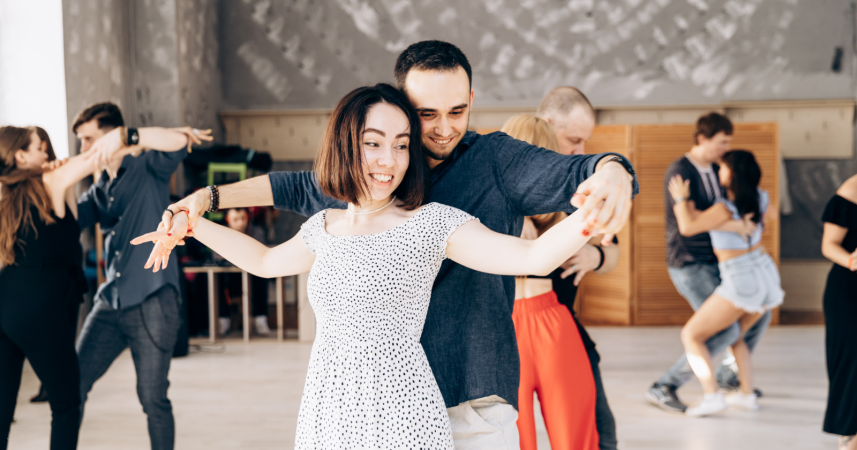
Tango, salsa, swing dancing, anything that requires you to move in sync with another person demands a particular kind of surrender.
You have to trust your partner and communicate through subtle physical cues. For emotionally unavailable people, this level of attunement feels overwhelming.
Dancing with a partner isn't just about learning steps. It's about connection, about allowing someone into your personal space and responding to their guidance.
Partner dancing requires you to be vulnerable in your body, which is often where we hold our deepest defenses. It asks you to be seen and to make mistakes in someone's arms.
4) Journaling or memoir writing
Plenty of emotionally unavailable people can talk endlessly about work or current events, but ask them to write about their inner experience and they shut down.
Journaling requires you to be honest with yourself about what you're actually feeling. There's no audience to perform for, no one to impress.
For someone who's spent years avoiding their emotional landscape, this kind of self-examination feels threatening. What if they discover feelings they don't want to acknowledge?
Memoir writing takes this vulnerability further. You're not only examining your own experience but sharing it with others. That level of exposure is exactly what emotionally unavailable people work hard to avoid.
5) Team sports requiring high communication
Certain team sports require emotional availability that goes beyond just showing up. Sports like volleyball or basketball demand constant communication, trust in your teammates, and the ability to give and receive feedback in real-time.
Team sports also require you to celebrate together and lose together. When your team wins, you're expected to share that joy openly. When you lose, you process that disappointment collectively.
For emotionally unavailable people, the risk of letting teammates down feels too heavy. So does the vulnerability of needing them. They'd rather engage in individual pursuits where their emotional walls can stay firmly in place.
6) Book clubs or deep discussion groups
Reading a book alone is safe. Discussing that book with others, especially when it touches on themes of relationships or loss, requires you to reveal something about yourself.
Book clubs aren't just about plot summaries. They're about how the story made you feel, what it reminded you of in your own life, which characters you connected with and why.
Emotionally unavailable people tend to keep book discussions surface-level. They'll talk about literary techniques or plot holes, anything except how the material affected them personally.
These groups also create intimacy through shared intellectual and emotional exploration. For someone who keeps people at arm's length, that growing closeness triggers their defenses.
7) Volunteer work requiring emotional investment
Not all volunteer work demands emotional availability. You can organize donated items without much personal exposure.
But certain types require you to connect emotionally: mentoring young people, working in homeless shelters, visiting nursing homes, crisis hotline counseling.
These activities ask you to witness suffering, to hold space for someone else's pain, and to offer not just your time but your emotional presence.
When I started mentoring young women considering career changes, these conversations weren't casual. They were sharing their fears and dreams. They needed me to be present, to share my own struggles, to admit that I didn't have all the answers.
Emotionally unavailable people avoid these types of service because witnessing someone else's vulnerability can trigger their own. The emotional labor feels like too much when you're already working hard to maintain your walls.
Final thoughts
If any of these hobbies made you uncomfortable just reading about them, that might tell you something.
Emotional unavailability isn't usually a conscious choice. It's a protection mechanism that once served a purpose. Maybe vulnerability led to hurt in the past. Maybe opening up felt unsafe. Maybe the people around you growing up didn't model emotional availability.
But here's what I've learned through my own journey: those walls that protect you also isolate you. They keep pain out, but they also keep connection out. And connection is what makes life rich.
You don't have to jump into the most vulnerable hobby on this list tomorrow. But maybe consider testing your edges. Try one small thing that makes you a little uncomfortable. Notice what happens.
Growth lives just outside your comfort zone, in those spaces where you feel exposed but not endangered. The hobbies we avoid often point directly to the growth we need most.
And if this feels overwhelming, therapy can help. Working with someone trained to hold space for your vulnerabilities might be exactly what you need to start lowering those walls, one careful brick at a time.