These classic 1960s hobbies are coming back because they offer things our digital, fast-paced lives are missing—tangible results, slow creation, and skills you can see and touch.

Add VegOut to your Google News feed. 
Everything old is new again. And some of the best hobbies never really went away.
I've noticed something interesting over the past few years. The hobbies my parents and grandparents did in the 1960s are suddenly everywhere again. Not as nostalgia or irony, but as genuine interests that people are rediscovering and embracing.
At first, I thought it was just a quirky trend. But the more I paid attention, the more I realized these hobbies are coming back for real reasons. They offer things our digital, fast-paced lives are missing. Tangible results. Slow creation. Skills you can see and touch. Connection to materials and process rather than screens and algorithms.
The 1960s were a time when people made things with their hands, spent time on crafts that took patience, and engaged in hobbies that produced actual objects you could use or display. That appeal hasn't disappeared. If anything, it's become more compelling as our lives have gotten more virtual and ephemeral.
These seven classic hobbies from the 1960s have made a full comeback in 2025, and it makes perfect sense why.
1. Macramé
Walk into any home decor store right now and you'll see macramé everywhere. Wall hangings, plant hangers, room dividers, bags. The knotted rope craft that defined 1960s bohemian style is completely back.
Macramé is having a renaissance because it's meditative, affordable, and creates beautiful functional objects. You don't need expensive equipment. Just rope or cord, your hands, and patience. The repetitive knotting is soothing, almost hypnotic. And at the end, you have something tangible you made yourself.
I tried macramé last year after seeing plant hangers everywhere and wanting to make my own. The process pulled me in immediately. There's something satisfying about watching a pattern emerge from simple knots repeated over and over. No screens, no notifications, just cord and concentration.
The comeback makes sense. In a world where most of what we create is digital and can be deleted in seconds, making something physical that will hang in your space for years feels meaningful.
2. Vinyl record collecting
Vinyl never completely disappeared, but its resurgence in 2025 is undeniable. Record stores are thriving. Turntables are selling out. Young people who grew up on streaming are hunting for physical albums.
The appeal is partly sound quality. Vinyl enthusiasts will tell you records sound warmer, richer, more authentic than digital. But it's more than that. Vinyl collecting is about the ritual. Flipping through records at a store. Reading liner notes. Handling the physical album. Placing the needle carefully on the record.
It's the opposite of algorithm-driven playlists that play automatically. Vinyl requires intention. You choose an album. You play it front to back. You're present for the experience.
I started buying records after years of only streaming music. The difference is striking. I listen more carefully. I appreciate albums as complete works rather than just collections of singles. And I love having physical objects that represent music I care about.
3. Bread baking
Bread baking exploded during the pandemic and hasn't slowed down. People are still making sourdough, experimenting with different flours, sharing starter cultures, and posting photos of their loaves.
This hobby connects directly back to the 1960s when baking from scratch was normal household practice. The difference is that now it's a choice rather than necessity, which makes it feel more intentional and valuable.
Bread baking appeals because it's alchemy. Flour, water, yeast, salt, time. Simple ingredients become something completely different through your hands and patience. The process is slow, sensory, and produces something you can share and eat.
I got into bread baking two years ago and it's become a weekly ritual. The smell of bread in the oven. The satisfaction of a good rise. The taste of something I made from basic ingredients. It grounds me in a way few other activities do.
4. Knitting and crocheting
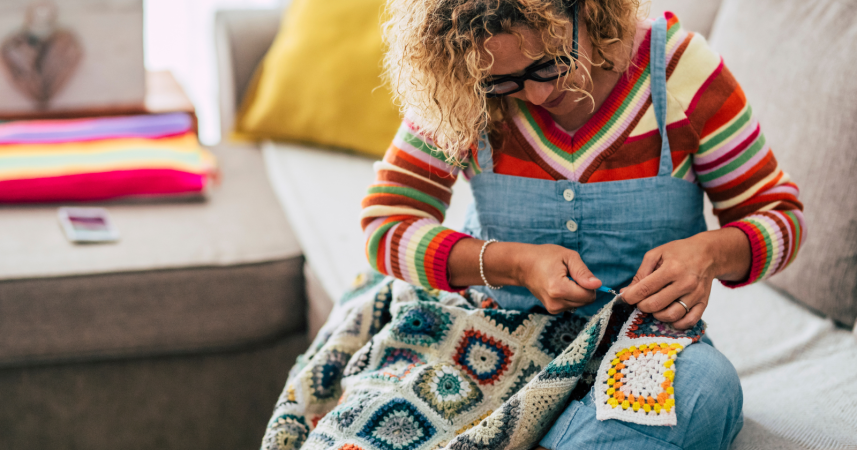
Knitting circles are everywhere now. Young people are learning from YouTube tutorials. Social media is full of finished projects and works in progress. What was once seen as old-fashioned has become cool again.
The comeback makes sense for all the reasons other craft hobbies are resurging. Knitting is portable, meditative, and productive. You can do it while watching TV, talking with friends, or sitting in a park. And at the end, you have a scarf, sweater, or blanket you made with your own hands.
There's also something quietly rebellious about knitting in our consumer culture. Making your own clothes or home goods instead of buying mass-produced versions. Taking hours to create something when you could order it in minutes.
I learned to knit last winter when I wanted a hobby I could do in the evenings. The repetitive motion is incredibly calming. And there's real satisfaction in watching a scarf grow row by row, knowing every stitch came from your hands.
5. Film photography
Digital photography made film nearly obsolete for years. But film cameras are back in a big way. Vintage cameras are expensive now. Film developing services are busy. Photography courses are teaching analog techniques again.
Film photography appeals because it forces you to slow down and be intentional. You have limited shots. You can't see the image immediately. You have to think before you shoot. And when you finally get your developed photos back, there's anticipation and surprise that digital lacks.
The aesthetic matters too. Film has a quality that digital can't quite replicate. The grain, the colors, the imperfections. It looks and feels different.
I bought a film camera at a thrift store and started shooting occasionally. The constraint of limited shots makes me more thoughtful about composition. And there's something special about holding physical prints instead of just scrolling through phone photos.
6. Indoor gardening and houseplants
The 1960s were the golden age of houseplants. Every home had plants in macramé hangers, on stands, filling windowsills. That aesthetic is completely back.
Plant shops are thriving. Social media is full of plant content. People trade cuttings, discuss care techniques, and display their collections proudly. Indoor gardening has become a legitimate hobby, not just decoration.
The appeal is multifaceted. Plants improve air quality and bring nature indoors. Caring for them is meditative and rewarding. Watching something grow because of your attention creates connection and responsibility. And plant spaces are beautiful, living art.
I started collecting plants three years ago and now have dozens. Watering them, checking for new growth, propagating cuttings. It's become a morning ritual I genuinely enjoy. And my space feels more alive and peaceful with all the greenery.
7. Letter writing and correspondence
This might be the most surprising comeback. In an age of instant messaging, people are rediscovering the joy of handwritten letters and slow correspondence.
Letter writing clubs exist. Stationery is popular again. Pen pal matching services are busy. People are choosing to communicate slowly and deliberately with paper and ink instead of texts and emails.
The appeal is intimacy and intention. Writing a letter requires thought and time. You're creating something physical that will travel through space to reach someone. The recipient can hold it, reread it, keep it. It's permanent in a way digital messages aren't.
I started writing occasional letters to friends who live far away. The practice feels different than any other form of communication. More considered. More personal. And receiving a handwritten letter in the mail is genuinely exciting in a way that email never is.
Why these hobbies matter now
These seven hobbies share common threads that explain their comeback.
They're analog in a digital world. They produce tangible results when so much of our work and creativity exists only on screens. They require patience and presence when everything else is optimized for speed and distraction.
They connect us to previous generations who practiced these same crafts. Making bread the way grandparents did. Writing letters like people did before phones. Knitting using techniques passed down through families.
And they offer relief from the constant connectivity and productivity pressure of modern life. These hobbies are slow. They can't be rushed or optimized. They exist outside the attention economy and performance metrics.
The 1960s represent a time before digital overwhelm, when hobbies were genuinely about enjoyment and creation rather than content and optimization. Returning to these practices feels like reclaiming something we've lost.
I've adopted several of these hobbies over the past few years and they've genuinely improved my quality of life. Not because they're productive or impressive, but because they ground me. They give me things to do with my hands. They produce objects I can see and use. They connect me to history and craft traditions.
These aren't just trends or nostalgia. They're responses to genuine needs that modern life doesn't meet. The need to create something tangible. The need to slow down and focus. The need to connect with materials and processes that have meaning beyond the screen.
The hobbies of the 1960s are coming back because we need what they offer. And that's not going away anytime soon.
If You Were a Healing Herb, Which Would You Be?
Each herb holds a unique kind of magic — soothing, awakening, grounding, or clarifying.
This 9-question quiz reveals the healing plant that mirrors your energy right now and what it says about your natural rhythm.
✨ Instant results. Deeply insightful.

Avery White
Formerly a financial analyst, Avery translates complex research into clear, informative narratives. Her evidence-based approach provides readers with reliable insights, presented with clarity and warmth. Outside of work, Avery enjoys trail running, gardening, and volunteering at local farmers’ markets.
More Articles by Avery