
I was scared of aging—until I learned to stop fighting it and started living it. Here are seven routines that changed everything.

Add VegOut to your Google News feed. 
Aging used to terrify me.
Not just the wrinkles or gray hairs (though I’ll admit, those were a shock at first). It was the deeper stuff—the fear that life’s best moments were behind me.
I worried about becoming irrelevant, about losing energy, about fading quietly into the background while the world kept sprinting ahead.
But somewhere along the way, that fear started to dissolve. Not because I suddenly stopped aging—but because I began to see it differently.
I stopped clinging to who I was and started getting curious about who I was becoming.
As Dr. Laura Carstensen from the Stanford Center on Longevity has noted, “Aging brings some rather remarkable improvements—increased knowledge, expertise—and emotional aspects of life improve. That’s right, older people are happy. They’re happier than middle-aged people, and younger people, certainly”.
That hit me. Maybe aging wasn’t the enemy I thought it was. Maybe it was the teacher I needed.
Here are seven surprisingly fulfilling routines that helped me make peace with aging—and actually start to enjoy it.
1. Morning movement that honors my body, not punishes it
In my twenties, exercise was about pushing harder, sweating more, burning calories. It was punishment for “not being enough.”
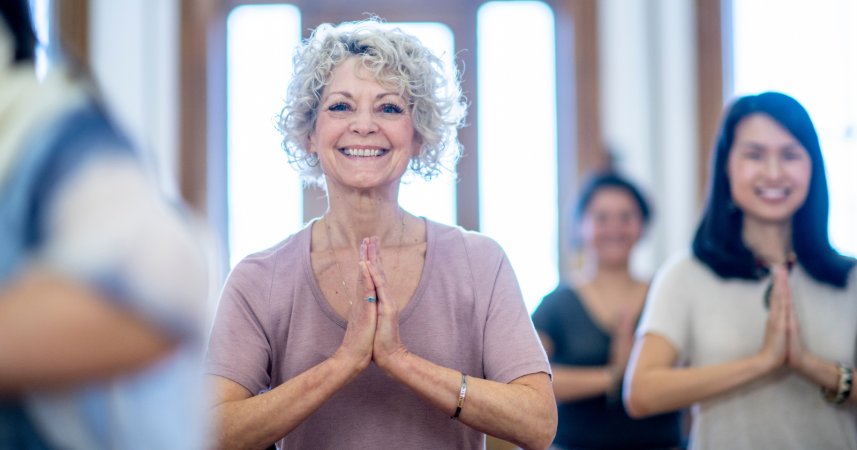
Now, movement feels like an act of respect. Some mornings it’s yoga in my living room, other days a slow jog on a forest trail, or simply stretching in the sun with a cup of tea nearby.
As Rudá Iandê writes in Laughing in the Face of Chaos, “The body is not something to be feared or denied, but rather a sacred tool for spiritual growth and transformation.” That line changed how I see myself.
I stopped viewing my body as a project to be managed—and started seeing it as a companion to be cherished. Every ache and line now feels like a chapter in a story worth reading.
2. Keeping a “curiosity list” instead of a bucket list
Bucket lists always stressed me out. They felt like pressure to cram in as many experiences as possible before some invisible deadline.
So I replaced mine with a “curiosity list”—a living document of things I’d simply like to explore. No expectations, no timelines.
Learn a new language? Maybe. Try pottery? Sure. Read poetry in the park? Why not?
The magic isn’t in checking boxes—it’s in staying open. Aging doesn’t have to mean slowing down mentally.
It can mean deepening. And curiosity, I’ve found, is the antidote to stagnation.
Whenever I feel stuck or too serious, I glance at that list and remind myself: it’s never too late to be curious.
3. Spending time with younger people (and letting them challenge me)
There’s something beautifully humbling about hanging out with people a decade or two younger. Their ideas, energy, and confidence can feel contagious—and occasionally uncomfortable.
At first, I resisted it. I’d quietly judge their pace or think, They’ll understand when they’re older.
But then I realized I was missing the point. They were teaching me—just in a different language.
According to the Yale School of Public Health, “Attitude matters: people who view aging positively tend to engage in healthier behaviors and even live longer”.
Staying curious about youth culture—whether that’s TikTok trends or Gen Z activism—has helped me stay mentally flexible.
These exchanges remind me that aging isn’t about withdrawing—it’s about expanding. We all have something to teach and something to learn, no matter the decade we’re in.
4. Choosing purpose over productivity
When I left my corporate finance job years ago, I didn’t realize how much of my identity was wrapped up in being productive. Crossing tasks off lists gave me a sense of control—until it didn’t.
Now, I choose purpose over productivity. I still love achieving things, but the joy comes from meaning, not metrics.
That might mean mentoring a younger writer, tending to my garden, or volunteering at the farmers’ market where I get to connect with people face-to-face.
Those moments don’t earn me a promotion or a bonus, but they fill me with something even more valuable—a quiet sense of alignment.
I’ve learned that life doesn’t have to look impressive to feel important.
Sometimes, the most purposeful days are the simplest ones—the ones that leave you feeling present, grounded, and at peace with where you are.
5. Letting emotions guide, not scare me
For most of my life, I treated emotions like disruptions—something to be managed, not trusted. But the older I get, the more I realize emotions are information.
When fear surfaces, it’s not weakness—it’s guidance. When sadness appears, it’s a signal to slow down or reconnect.
Emotions aren’t obstacles; they’re invitations to pay attention to what’s really going on beneath the surface.
Now, when I feel overwhelmed, I pause and listen. Sometimes that means journaling. Other times, it’s simply breathing and letting my body tell me what it needs. It’s not always graceful, but it’s honest.
And that honesty—being able to feel without judgment—has made me feel more alive than ever.
6. Prioritizing depth over breadth in relationships
Aging naturally trims your social circle—and that’s not a bad thing.
I used to feel guilty for saying no to social events or letting certain friendships fade.
But now, I understand that relationships, like seasons, evolve. I’d rather nurture three deeply fulfilling friendships than maintain thirty shallow ones.
As I’ve gotten older, I’ve noticed something beautiful: conversations go deeper, silences feel more comfortable, and the people in my life know the real me—not the polished version.
It’s no coincidence that this shift has brought more peace into my days. When you stop trying to be everywhere and please everyone, you create space for connection that’s honest, reciprocal, and nourishing.
Aging hasn’t made my circle smaller—it’s made it more meaningful.
7. Practicing gratitude for the passage of time
There’s a quiet joy in acknowledging the beauty of impermanence.
Some mornings, when I’m sipping coffee and watching the light shift across my kitchen, I think about how many mornings I’ve taken for granted. Gratitude has become my favorite form of mindfulness—it’s how I honor the time I’ve been given.
Instead of mourning what’s gone, I try to celebrate what’s unfolding. Every laugh line, every scar, every goodbye—they’re evidence of a life fully lived.
I’ve realized that peace doesn’t come from trying to preserve every moment—it comes from appreciating it as it passes. Gratitude has a way of turning ordinary days into sacred ones, reminding me that the point isn’t to hold on forever, but to be fully here, right now.
Final thoughts
If you’d told me ten years ago that I’d feel more content in my forties than I did in my twenties, I would’ve laughed.
But here I am—stronger, calmer, and surprisingly hopeful about what’s ahead.
Aging stopped being something to fear when I started seeing it as a privilege, not a punishment. It’s the price of a well-lived life—and the gift of still being here to live it.
Reading Laughing in the Face of Chaos by Rudá Iandê only deepened that truth for me. His insights reminded me that the more we embrace every messy, beautiful, unpredictable part of life, the freer we become.
Maybe aging isn’t about losing youth—it’s about gaining wholeness. And that, to me, feels like something worth celebrating.












