Gen Z is rediscovering the quiet routines our grandparents swore by—and turning them into modern rituals for calm, connection, and self-understanding.
We like to think self-care is something new. A modern invention born out of stress, hustle culture, and too much screen time.
But if you look closely, a lot of what’s trending today looks a lot like what our grandparents used to do without giving it a name.
Their routines were simple, quiet, and deeply human. And somehow, they’re exactly what many of us are craving again.
Let’s take a look at a few of those timeless habits that have found their way back into our daily lives.
1. Waking up early for quiet time
There’s something magical about the early hours. Before the pings, deadlines, and scrolls start, the world feels soft and untouched.
My grandmother used to wake before sunrise, make tea, and sit by the window without saying a word.
Now, many of us are doing something similar, waking early for journaling, meditation, or a few peaceful minutes before life begins. That small pause gives the mind a chance to settle. It’s where clarity is born.
Psychologists often talk about “transition rituals,” little habits that signal the brain it’s safe to shift from rest to engagement. This is one of them. A gentle beginning instead of an abrupt start.
2. Handwriting letters and journaling
We’ve gone from instant messages to longhand journaling. And maybe that’s progress. Writing by hand slows down the mind. It helps us process emotions in ways a keyboard can’t.
I sometimes write letters I never send, to people, to places, to versions of myself. The act of writing them helps me make sense of what I feel.
There’s a reason therapists often recommend journaling as part of healing work. The physical motion of writing connects the brain, body, and emotion in a powerful loop.
It’s tender, honest work. And it reminds me of my grandfather’s letters to friends overseas, thoughtful, slow, filled with heart.
3. Reading for leisure
There’s something so comforting about reading just for the sake of it. Not to learn, not to produce, but simply to drift into another world.
According to Harvard Health Publishing, “People who read books regularly lived almost two years longer on average than non-readers”.
That might be one of the most beautiful forms of self-care I can think of, extending your life through imagination.
For many young people today, quiet reading time has become an antidote to overstimulation. The texture of paper, the scent of old pages, the immersion of words, it’s presence disguised as leisure.
4. Sitting on the porch (or balcony) doing nothing
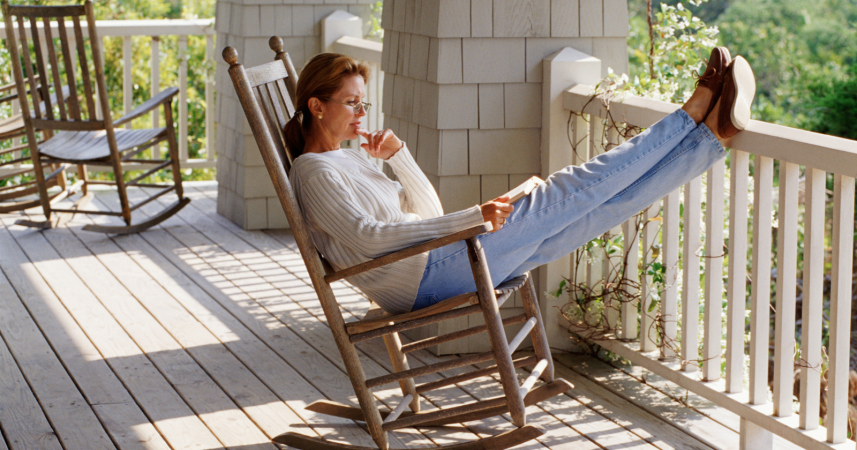
Remember when doing nothing wasn’t considered lazy? My grandmother used to sit on her porch every evening, rocking slowly, listening to crickets. No podcasts, no productivity goals, only air, stillness, and thought.
We’ve come back around to that. Now, sitting quietly has been renamed mindfulness.
But really, it’s the same thing our elders knew instinctively, that the nervous system needs moments of stillness to reset.
When I take a few minutes outside, watching light shift through trees, I understand what she felt. A sense of being part of something wider than thought.
5. Baking from scratch
Flour on the counter. The smell of vanilla. Waiting for dough to rise. There’s something so grounding about baking. It’s slow, sensory, and completely embodied.
I started baking during a stressful time in my life, and it became my favorite form of meditation.
There’s no rushing a loaf of bread. You have to let it unfold at its own pace. Somewhere in that process, patience turns into peace.
Many psychologists talk about “flow states,” moments when focus and calm merge. Cooking and baking are perfect examples. They demand your full attention, but in return, they quiet everything else.
6. Keeping a photo album
Scrolling through your phone doesn’t give the same feeling as flipping through old photographs. A physical album slows you down. It makes memory tangible.
I have one that belonged to my mother, filled with family photos taken long before I was born. Looking at them feels grounding, like I’m borrowing strength from the past.
In a world obsessed with documenting the present, these albums remind us that meaning lives in what we preserve, not just what we post.
Curating photos, printing them, and arranging them becomes more than nostalgia; it turns into a quiet act of reflection in motion.
7. Knitting or crocheting
Knitting circles were once social lifelines. A way to connect, share, and create.
Today, they’re back in a different form, young people crocheting colorful blankets or making their own clothes.
There’s something profoundly soothing about repetitive movement.
Psychologists say that activities like knitting can reduce stress and even mimic the effects of meditation. The rhythm slows the mind, steadying thoughts like waves finding their pattern.
I sometimes knit while listening to music, and it feels like my brain finally exhales.
8. Gathering in community
The older generations rarely faced life alone. They had neighborhoods, dinners, and routines built around others.
The World Health Organization notes that “meaningful social activities can significantly improve mental health, life satisfaction, and quality of life for older adults”. The same is true for us, no matter our age.
We’ve reimagined connection through dinner parties, game nights, and friend rituals that fill the same role, to belong, to be witnessed, to share energy.
When I started volunteering at the local farmers’ market, I noticed how similar it felt to the gatherings I remembered as a kid. People laughing, trading stories, showing up week after week. It wasn’t fancy, but it was healing.
Final thoughts
Maybe self-care doesn’t need to be reinvented at all. Perhaps we just need to remember what once kept us grounded.
Rudá Iandê, in his book Laughing in the Face of Chaos, writes, “When we stop resisting ourselves, we become whole. And in that wholeness, we discover a reservoir of strength, creativity, and resilience we never knew we had.”
That line stayed with me. Because these old routines, the quiet mornings, handwritten letters, shared meals, they all lead back to the same place: wholeness.
The wisdom our grandparents lived by wasn’t about self-improvement. It was about self-acceptance.
Maybe that’s the real evolution of self-care, not chasing balance, but remembering the simple ways we already had it.
Just launched: Laughing in the Face of Chaos by Rudá Iandê
Exhausted from trying to hold it all together?
You show up. You smile. You say the right things. But under the surface, something’s tightening. Maybe you don’t want to “stay positive” anymore. Maybe you’re done pretending everything’s fine.
This book is your permission slip to stop performing. To understand chaos at its root and all of your emotional layers.
In Laughing in the Face of Chaos, Brazilian shaman Rudá Iandê brings over 30 years of deep, one-on-one work helping people untangle from the roles they’ve been stuck in—so they can return to something real. He exposes the quiet pressure to be good, be successful, be spiritual—and shows how freedom often lives on the other side of that pressure.
This isn’t a book about becoming your best self. It’s about becoming your real self.