Discover simple, enjoyable hobbies that quietly keep your mind sharp, adaptable, and energized as the years go by.
We all want to feel sharp as the years roll by, don’t we? I’m not just talking about remembering where you put your keys, but about keeping your mind adaptable, curious, and engaged with life.
The good news? You don’t need to push yourself into stressful brain-training programs or grind through things you hate.
The real secret lies in picking up simple, enjoyable hobbies that double as workouts for your mind.
And here’s the best part: many of these pastimes don’t feel like “work” at all. They’re fun, soothing, and—backed by science—help build the kind of mental flexibility that pays off well into your later years.
1. Learning a new language
I’ll be honest—this one sounded intimidating to me at first. But the beauty is, you don’t have to master five dialects to benefit. Even picking up conversational phrases can make a difference.
According to Harvard Health, a study published in the Annals of Neurology found that speaking two or more languages, even if you learned the second in adulthood, may slow age-related cognitive decline. That’s huge.
Think about it: when you practice another language, you’re juggling new words, new rules, and fresh cultural perspectives.
That mental juggling strengthens the brain’s ability to adapt—kind of like keeping your “mental gears” oiled.
And unlike crossword puzzles, learning a language connects you directly to people.
Whether you’re chatting with a neighbor, planning a trip, or just exploring an app on your phone, every new word is another thread strengthening your cognitive web.
2. Walking for creativity and memory
Writers, inventors, and artists have always sworn by walking to clear their heads. And science backs them up.
A landmark experiment at Stanford University found that people generated 60% more creative ideas while walking than when sitting still.
But it isn’t just creativity at play—walking is a powerful protector of brain health. Scientists discovered that just thirty minutes of moderate morning exercise, with short walking breaks every half hour, improved executive function and working memory in adults aged 55–80.
That’s a fancy way of saying your brain processes information more smoothly and remembers better when you move.
The best part? You don’t need to train for a marathon. A stroll around the block, a lap through the park, or even pacing your living room can give your neurons a friendly nudge.
I do much of my thinking while on trails. Ideas I can’t force at my desk often come when my feet are moving. Maybe the same will be true for you.
3. Gardening
Have you ever noticed how calming it feels to get your hands in the soil? Gardening is one of the most grounding hobbies out there.
It pulls you away from screens, slows you down, and gives you something beautiful—and sometimes edible—to show for your time.
Tending plants doesn’t just relax the body; it challenges the mind. You’re learning about timing, problem-solving pests, and observing subtle changes in the seasons.
These small acts demand attention and nurture focus.
And here’s a bonus: spending time around green space has been linked to improved mindfulness, better mood, and reduced anxiety.
That makes every weeding session a mini brain-boosting retreat.
4. Volunteering
I know, volunteering might not sound like a “hobby” in the traditional sense, but hear me out. Giving your time and energy to help others offers more than just feel-good moments.
According to researchers at Stanford, older adults who volunteered regularly reported enhanced cognition, lower rates of depression, and greater life satisfaction compared to those who didn’t.
The act of showing up, contributing, and connecting with others keeps you socially engaged and mentally sharp.
I sometimes spend weekends at farmers’ markets, helping out local growers. It’s not just about the produce—it’s about conversations, problem-solving on the fly, and staying mentally agile through human connection.
5. Learning to play an instrument
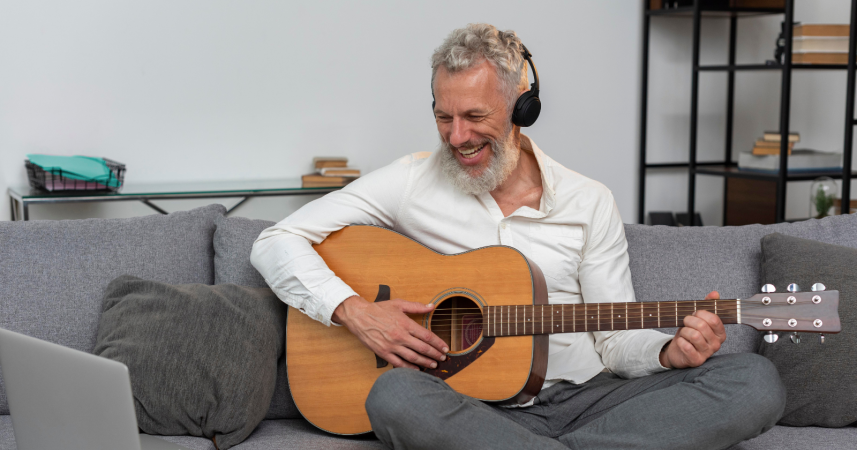
When was the last time you tried something completely new? Picking up an instrument—whether it’s piano, guitar, or even hand drums—is like giving your brain a whole new workout routine.
Music challenges both hemispheres of the brain, combining memory, coordination, rhythm, and creativity all at once.
And unlike other learning tasks, it’s inherently joyful. Playing even a simple tune can spark pride and motivation to keep going.
Plus, music creates opportunities to connect with others. Join a community choir, jam with friends, or simply share a song with family.
The social layer adds another protective boost to your cognitive health.
6. Meditation
Let’s face it: modern life trains our brains to scatter in a thousand directions. Meditation helps bring it all back.
You don’t have to sit cross-legged for hours. Even a few minutes of stillness a day can help train focus, reduce stress, and strengthen awareness. Investors, athletes, and creatives have all sworn by meditation as a key ingredient in their success.
Ray Dalio, the billionaire investor, once said, “Meditation more than anything in my life was the biggest ingredient of whatever success I’ve had”.
If someone juggling billions can find clarity through meditation, chances are good it can help us navigate our own daily challenges.
7. Reading for curiosity
Finally, the simplest yet most transformative habit: reading.
Whether it’s novels, essays, or practical guides, reading stretches your imagination, introduces you to new perspectives, and strengthens memory.
I’ve found that what matters most isn’t sticking to a single genre but following your curiosity.
One week I’ll be diving into neuroscience, the next into poetry. The variety itself keeps the brain limber.
And as Rudá Iandê reminds us in his book Laughing in the Face of Chaos, “When we let go of the need to be perfect, we free ourselves to live fully—embracing the mess, complexity, and richness of a life that's delightfully real.”
His insights reminded me that it’s not about reading to “master” knowledge, but reading as a way to live more fully and flexibly.
That’s the real gift—books that don’t just feed your brain, but help you see yourself and the world with fresh eyes.
Final thoughts
Keeping your mind sharp into old age doesn’t require endless puzzles or stressful programs. It comes down to living in ways that feel natural and engaging.
Learning a new language, walking, gardening, volunteering, making music, meditating, and reading—these aren’t chores, they’re joys. And yet, each one nourishes your brain in powerful ways.
So maybe the question isn’t if you should try one of these hobbies, but which one excites you most right now.
Pick one, start small, and let your brain thank you in the years to come.
What’s Your Plant-Powered Archetype?
Ever wonder what your everyday habits say about your deeper purpose—and how they ripple out to impact the planet?
This 90-second quiz reveals the plant-powered role you’re here to play, and the tiny shift that makes it even more powerful.
12 fun questions. Instant results. Surprisingly accurate.