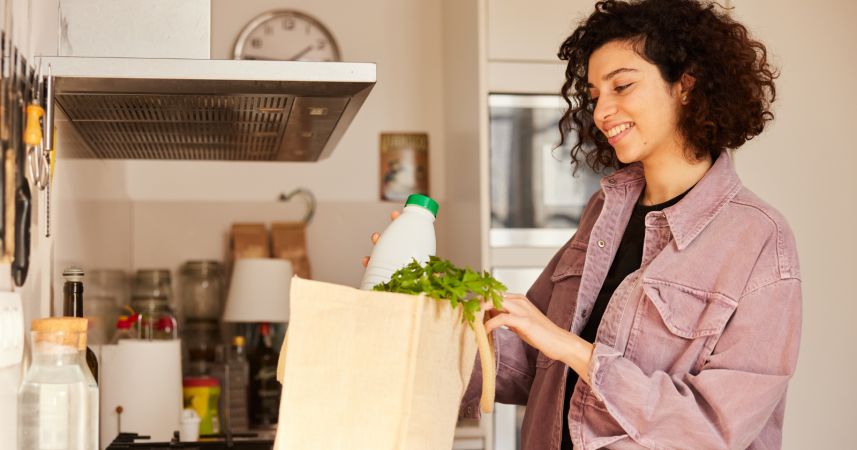
After years of refining my approach, I've discovered that eating well on a plant-based diet doesn't require a premium budget, just a shift in perspective.

Add VegOut to your Google News feed. 
When I left my finance career at 36, I traded a comfortable salary for the uncertainty of freelance writing. Suddenly, the grocery budget that once felt like an afterthought became something I scrutinized with the same intensity I'd once reserved for quarterly reports.
I remember standing in Whole Foods during those early months, watching my cart total climb past $150, wondering how I'd ever make this work.
Five years later, I've cracked the code. My weekly grocery haul consistently comes in under $50, and I eat better now than I did when money wasn't a concern.
The secret isn't deprivation or endless meal prep. It's about understanding which ingredients deliver the most nutritional and culinary value for every dollar spent.
The foundation: dried beans and bulk grains
I spend roughly $8 to $10 of my weekly budget on dried beans and whole grains from the bulk section. This might sound boring, but hear me out. One pound of dried black beans costs around $1.50 and yields about six cups cooked. That's protein for multiple meals at pennies per serving.
My weekly rotation includes black beans, chickpeas, and red lentils. For grains, I stick with brown rice, oats, and whatever's on sale, often quinoa or farro.
According to the Harvard T.H. Chan School of Public Health, plant proteins like legumes provide essential amino acids while also delivering fiber and micronutrients that animal proteins lack.
Do you find yourself reaching for canned beans out of convenience? I did too, until I realized my Instant Pot could cook dried beans in under an hour with zero effort. The texture is better, the sodium is controllable, and the savings add up to hundreds of dollars annually.
Produce that punches above its weight
Here's where my analytical brain really kicks in. I allocate about $15 to $18 weekly for produce, but I'm strategic about it. Cabbage, carrots, onions, and potatoes form my vegetable base. They're inexpensive, store well, and adapt to countless preparations.
For greens, I buy whatever's cheapest, usually kale or collards, which cost a fraction of pre-washed salad mixes and last longer in the fridge. Frozen vegetables round out the mix. A bag of frozen broccoli or spinach costs $2 and adds nutrition to any meal without the pressure of using it before it wilts.
Fruit-wise, I follow the seasons. Apples and bananas are my constants, supplemented by whatever's abundant and affordable. Right now, that means citrus. In summer, it's stone fruit and berries. This approach keeps things interesting while respecting my budget.
The flavor builders that make everything sing
About $8 goes toward what I call flavor infrastructure. A bottle of good soy sauce, a jar of tahini, a tube of tomato paste, nutritional yeast, and a few spices. These aren't weekly purchases, but I factor in their cost over time.
The real game-changer? Learning to make my own sauces and dressings. A tahini dressing costs pennies compared to store-bought versions and transforms a simple bowl of grains and vegetables into something I genuinely crave. Miso paste, while initially seeming expensive at $6 to $8, lasts months and adds depth to soups, dressings, and marinades.
What flavors do you reach for most often? Understanding your preferences helps you invest in the right pantry staples rather than accumulating jars that gather dust.
The proteins that stretch furthest
Tofu and tempeh make regular appearances in my cart, but I'm selective. I buy extra-firm tofu in bulk when it's on sale, typically $2 per block, and freeze what I won't use immediately. Freezing actually improves tofu's texture, making it chewier and more absorbent.
Tempeh, while pricier, offers incredible nutritional density. Research published in the Journal of Food Science and Technology shows that fermented soy products like tempeh provide enhanced bioavailability of nutrients compared to unfermented options. One $4 package gives me protein for three meals.
I skip the fancy meat alternatives most weeks. They're fine occasionally, but at $6 to $8 per package, they don't align with budget-conscious eating. When I want something hearty, I make my own bean burgers or lentil loaf instead.
A typical week in my cart
Let me break down an actual recent haul.
Dried beans and lentils: $4. Brown rice and oats: $3. Tofu (two blocks): $4. Cabbage, carrots, onions, potatoes: $6. Kale and bananas: $4. Frozen broccoli and spinach: $4. Canned tomatoes and coconut milk: $5. Bread and tortillas: $4. Peanut butter: $3. Miscellaneous (garlic, ginger, lemon): $3. Total: $40.
That $10 buffer gives me flexibility for treats, whether that's a bar of dark chocolate, some fresh herbs, or seasonal produce that catches my eye. The structure provides security while leaving room for spontaneity.
Final thoughts
Living on a budget taught me something my finance career never did: constraints can be creative catalysts rather than limitations. When I stopped viewing cheap ingredients as inferior and started seeing them as foundations for good cooking, everything shifted.
This approach requires a mindset change more than a skill change. It asks you to plan loosely, cook simply, and trust that whole foods prepared with care will satisfy in ways that expensive convenience products rarely do.
After five years of eating this way, I can honestly say my relationship with food has never been healthier, financially or otherwise. What might shift for you if budget constraints became an invitation to creativity rather than a source of stress?