
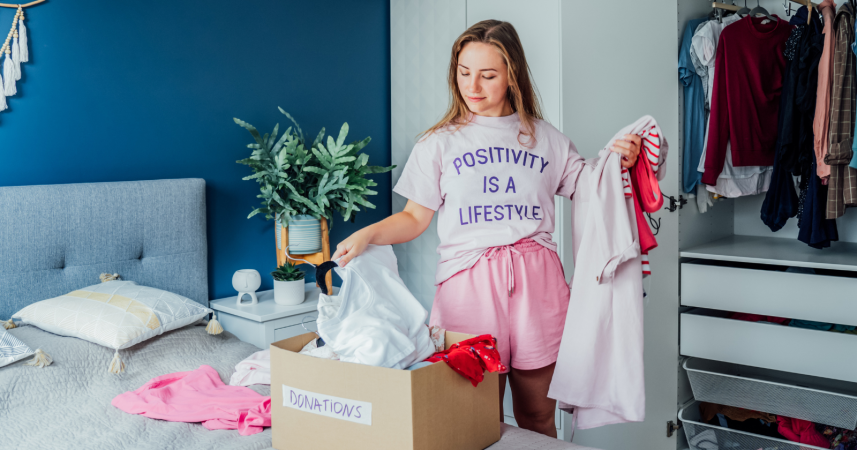
I thought these purchases made life easier—until I realized they were quietly stealing space, money, and peace of mind.

Add VegOut to your Google News feed. 
It took me years to understand that the stuff I thought was “making life easier” was actually just adding more noise to my home and mind.
On the surface, it looked like I was creating comfort, variety, or efficiency. In reality, I was filling my space with things I didn’t truly need.
Clutter is sneaky like that. It disguises itself as practicality or pleasure, then slowly takes up space and drains energy.
Once I started cutting back on certain purchases, I noticed my home felt lighter, my spending was more intentional, and I felt calmer overall.
Here are nine things I stopped buying when I realized they were clutter in disguise—and why letting go of them has been so freeing.
1. Seasonal décor for every holiday
I used to love the idea of decorating for every occasion—Valentine’s Day, Easter, Halloween, Thanksgiving, you name it.
The problem was, each holiday came with another box of trinkets to store. After a few years, I had bins stacked in closets and the garage, all holding things I used for a week or two at most.
The truth is, seasonal décor can bring a temporary thrill, but that feeling fades quickly. What lingers is the storage burden and the stress of having to haul it all out and put it away again.
I realized that the joy of a holiday comes from the people and traditions, not the plastic pumpkins or themed towels.
Now, I keep a few versatile pieces that work year-round, like simple candles and fresh flowers. They feel special without requiring a rotation schedule or another bin in the garage.
2. Trendy kitchen gadgets
Have you ever bought a tool that promised to slice, dice, or peel in a way that changed everything? I certainly have.
For years, my cabinets were filled with single-use gadgets—an avocado slicer, a strawberry huller, even a special contraption for coring pineapples.
These items seem clever at first, but the excitement wears off once you realize a simple knife can handle most of the tasks. What’s worse, they take up valuable drawer space and make cooking feel more complicated than it needs to be.
These days, I stick with a few solid tools: a sharp chef’s knife, a cutting board, and a cast-iron pan. They’ve replaced the drawer full of gimmicks and made my kitchen much more functional.
3. Fast fashion clothing
It’s easy to get lured in by the low prices and constant turnover of fast fashion.
For a long time, I thought grabbing a few trendy pieces every season was a smart way to keep my wardrobe fresh. But eventually, I noticed how little I wore most of it, and how quickly the clothes lost their shape and quality.
Research in psychology shows that decision fatigue is real—too many choices can make us less satisfied overall. My closet was a perfect example. The more items I had, the less content I felt with my style.
Now I buy fewer, better-quality pieces that mix and match easily. It’s amazing how much calmer I feel when getting dressed is simple and the clothes I own actually last.
4. Souvenirs from every trip
Travel is something I treasure, and for a long time, I thought buying a little something from every place I visited was part of the experience.
Over the years, though, I ended up with shelves of mugs, magnets, and trinkets that didn’t mean much to me once the trip was over.
One day, while dusting yet another ceramic figurine, I realized that the best souvenirs weren’t the ones I could hold—they were the photos I took and the memories I carried.
The clutter was a poor stand-in for experiences I had already internalized.
Now, I skip the souvenir shops. I bring back photos, journal entries, and sometimes a locally made food item I can actually enjoy. The memories feel lighter without the weight of objects that don’t truly matter.
5. Duplicate cleaning products
How many sprays does one household really need? For a while, I had a bottle for glass, one for counters, another for bathrooms, plus specialized products for everything in between.
The truth is, they all did about the same thing.
I noticed one day while reorganizing under the sink that I had multiple half-empty bottles of nearly identical products. It was visual clutter, financial waste, and mental confusion. Paring it down to a few multi-purpose cleaners has been liberating.
6. Books I knew I’d never read
I love books. For years, that love translated into impulse buys every time I passed a bookstore.
The problem was, most of those books ended up collecting dust. They weren’t bad books—I just never realistically had the time or interest to read them.
I remember glancing at a shelf once and realizing half of what I saw was aspirational clutter. Those books represented who I thought I should be, not who I actually was. It was a subtle but powerful wake-up call.
Now, I borrow from the library or buy only what I’m excited to read right away. My shelves finally feel like a reflection of me rather than a list of undone homework.
7. Home “organizing” bins
This one might sound counterintuitive. I used to think buying more bins, baskets, and boxes was the answer to clutter.
But over time, I realized I was simply hiding the problem. The bins filled up quickly, and I ended up with a house full of containers instead of solutions.
Organizing is different from decluttering. When I began letting go of what I didn’t need, I found I required far fewer bins. The ones I kept now serve a purpose rather than acting as camouflage for excess.
The change was eye-opening. A tidy closet is satisfying, but a pared-down one is life-changing.
8. Subscription boxes
At first, subscription boxes felt like a fun treat—something to look forward to in the mail.
The problem was, the novelty wore off quickly, and I was left with piles of products I didn’t use. Samples of skincare, quirky snacks, and random accessories added up to clutter disguised as “surprise.”
Psychologists have noted that novelty gives a temporary dopamine hit. But once that thrill fades, the leftover items rarely bring lasting value. I found myself with drawers of unused samples and a sense of guilt for the waste.
Canceling those subscriptions was one of the most freeing financial and mental choices I’ve made. Now, if I want to treat myself, I do it with intention instead of waiting for a mystery box to decide for me.
9. Extra throw pillows and blankets
I’ll admit it—I love cozy spaces. That's why I kept buying more throw pillows and blankets every time I saw a design I liked.
At one point, my couch had so many cushions you couldn’t sit down comfortably, and closets were overflowing with extra throws.
It reached a breaking point one day when I realized I was spending more time moving pillows out of the way than actually enjoying my living room. That was the moment I saw the truth: coziness doesn’t multiply with more stuff, it comes from how you use your space.
Now, I keep a few favorites that are soft, practical, and meaningful. The rest went to donation centers where they could actually serve a purpose. My home feels just as warm but much less cluttered.
Final thoughts
Clutter often sneaks into our lives disguised as convenience, comfort, or celebration. By paying closer attention to what I was buying, I realized I didn’t need half the things I once thought I did.
Far from feeling deprived, I actually felt like I had more room for the things that truly matter. Less clutter means more space, more peace, and more energy to enjoy life fully. And in the end, that’s worth more than any trinket or gadget could ever bring.
What’s Your Plant-Powered Archetype?
Ever wonder what your everyday habits say about your deeper purpose—and how they ripple out to impact the planet?
This 90-second quiz reveals the plant-powered role you’re here to play, and the tiny shift that makes it even more powerful.
12 fun questions. Instant results. Surprisingly accurate.












