Shopping patterns usually reveal what you’re trying to balance: Comfort and cost, aspiration and reality, and convenience and values.

Add VegOut to your Google News feed. 
We have a funny habit of misreading “middle class” as some fixed income bracket with a neat label attached.
In real life, it often shows up as a pattern: The kind of places you shop, what you’re willing to pay extra for, where you hunt for deals, and what you’re trying to make your life feel like.
If you regularly rotate through the seven stores below, there’s a good chance you’re doing a very specific kind of modern balancing act: Saving in some categories so you can spend in others, prioritizing convenience, and quietly investing in comfort without calling it “luxury.”
To be clear, none of this is a judgment.
The point is to notice your defaults so you can choose them on purpose:
1) Target
Target is basically the unofficial community center of middle-class life.
You go in for toothpaste and leave with a candle, a throw pillow, and a “why not” plant pot that looked sad under fluorescent lighting.
If that’s you, you’re not alone: Target is designed to make small upgrades feel responsible.
What this often signals is that you’re in the comfort-building stage of life.
You want your home to feel put together, you like the idea of being prepared, and you are willing to pay a little more than the absolute cheapest option to avoid stress later.
Here’s the self-development angle I’ve had to learn the hard way: The middle-class money leak usually is the tiny “treats” that don’t register as treats.
Try this next time: Before you walk in, decide your “extra” number.
Maybe it’s $0, $15, or $30, but pick it on purpose.
The goal is to stop your mood from being the manager of your cart.
2) Costco
Costco is a philosophy.
Buying in bulk is what people do when they have some storage space, some planning habits, and a brain that thinks in weeks instead of days.
That is very middle class, and it’s future-focused.
It also signals something else: You’re optimizing and trying to win the game of life by being practical.
I used to work as a financial analyst, and I can tell you this is one of the most common “smart money” moves people make, with one big catch: Bulk only saves you money if you actually use what you buy.
Here’s a simple gut-check question: Am I buying this because it’s a deal, or because it matches my real life?
If you’re vegan (like me), Costco can be amazing for staples like nuts, oats, tofu packs, frozen fruit, and big bags of greens.
However, it can also be a graveyard of good intentions.
Three pounds of chia seeds does not magically turn you into a smoothie person.
Pick your “always yes” items, then limit the fantasy purchases to one per trip.
You still get to have fun, but you don’t end up donating half your fridge to the compost bin.
3) Trader Joe’s
Trader Joe’s is where middle-class shoppers go to feel fancy without paying fancy prices.
The packaging is cute and the snacks feel international.
You can walk out with a basket that looks like you have your life together, even if you ate cereal for dinner twice this week.
A Trader Joe’s routine usually means you value experience and want food to be enjoyable.
You’re also probably someone who likes a small adventure, but within a safe and familiar system.
The growth question here is: What are you really buying at Trader Joe’s?
Sometimes you’re buying ingredients or buying emotional relief.
A new sauce, a seasonal item, a fun frozen meal; It’s comfort, novelty, and the feeling of “I’m taking care of myself.”
If you notice your cart is mostly impulse snacks and “fun add-ons,” try a tiny rule: One fun item per five practical items.
That keeps your grocery budget from turning into a snack museum while still letting you enjoy the little pleasures.
4) Home Depot or Lowe’s

Home improvement stores are where middle class shows up with a tool belt and optimism.
Even if you rent, and even if you have no idea what you’re doing.
If you shop at Home Depot or Lowe’s regularly, you’re probably in the stage where your space matters.
You’re patching, upgrading, painting, organizing, fixing; this is a “build and maintain” kind of life.
You want control, in a psychological sense, too.
When life feels messy, improving your environment is a way to create progress you can see.
Tighten a screw, hang a shelf, replace a shower head, and suddenly you’re a capable person again.
My favorite way to keep this from becoming a money pit is to separate “maintenance” from “projects.”
Maintenance is non-negotiable, while projects are optional and emotional.
If you treat every emotional project like a maintenance emergency, you’ll spend like you’re constantly behind.
Instead, keep a running list of projects and choose one per month.
You get the pride and the progress without the panic spending.
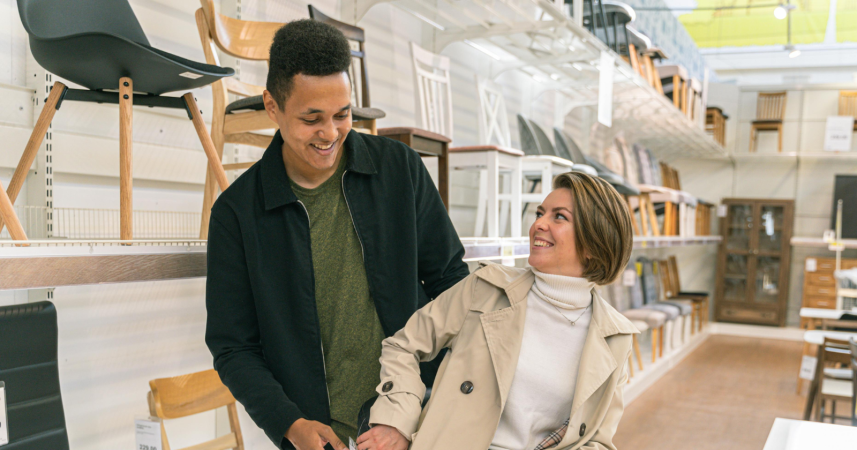
5) IKEA
IKEA is pure middle-class symbolism: Affordable design, a little stress, and the belief that you can build a better life with an Allen wrench.
People who shop at IKEA often fall into one of two camps:
- I’m setting up a new chapter.
- I’m upgrading my current chapter.
That’s why IKEA runs feel personal; you’re buying a version of yourself who reads more or buying the fantasy of a tidy home that stays tidy.
Sometimes the feeling is worth it, a calm space is not shallow.
It affects your nervous system. It affects your habits.
However, you can also chase that feeling forever through furniture and never actually change the routines that create the clutter in the first place.
Before you buy new storage, do a one-bag reset.
Fill one bag with things you no longer use, donate it, then see what storage you still need.
You’ll buy less, and what you buy will actually work.
6) Old Navy
Old Navy is where middle class goes for reliability.
It’s the place you go when you want clothes that look fine, fit real bodies, survive real laundry, and don’t require a whole identity shift to wear.
If you shop there regularly, you’re probably juggling practicality with presentation.
You care how you look, but you care even more about not being financially stressed by how you look.
This is where I’ll drop one of my favorite truths: “Cheap” and “affordable” are not the same thing.
Cheap is buying something that falls apart and forces you to replace it.
Affordable is buying something that supports your life without draining it.
Try this wardrobe practice: Make a “default uniform” list of five to ten items that you know you actually wear, then stop buying random one-off pieces that don’t match anything.
Old Navy is great for building a simple uniform.
It’s not great for random trend experiments that end up haunting your closet.
7) TJ Maxx, Marshalls, or Ross
These stores are the middle-class thrill ride.
You walk in with no plan, you scan the aisles like you’re on a treasure hunt, and you leave feeling like you “won” because you got a name brand item for less.
That feeling is real, and your brain loves a bargain.
But, here’s the trap: Deals can trick you into buying things you never needed in the first place.
If you shop discount retailers regularly, you’re probably someone who likes the idea of smart spending.
You might also be someone who feels a little guilty spending full price, even when you can afford it.
Let’s make it healthier: Go in with a list of categories, not specific items.
For example: “sports bra,” “kitchen towel,” “notebook,” and “plant pot.”
If you find something in your categories, great; if not, you leave.
One more question that saves a lot of money: Would I still buy this if it cost 20% more?
If the answer is no, you might be buying the discount, not the product.
A middle-class habit is justifying extra purchases because they were “a steal.”
Final thoughts
If you saw yourself in a few of these, it means you’re human.
Shopping patterns usually reveal what you’re trying to balance: Comfort and cost, aspiration and reality, then convenience and values.
The middle class is a lifestyle of trade-offs.
So, here’s the small challenge I’ll leave you with: Pick one store you go to a lot and do one “intentional trip” this week.
Set a budget, know what you’re there for, and let yourself enjoy it, but stay awake while you do it.
The goal is to build a life where your spending supports who you are.