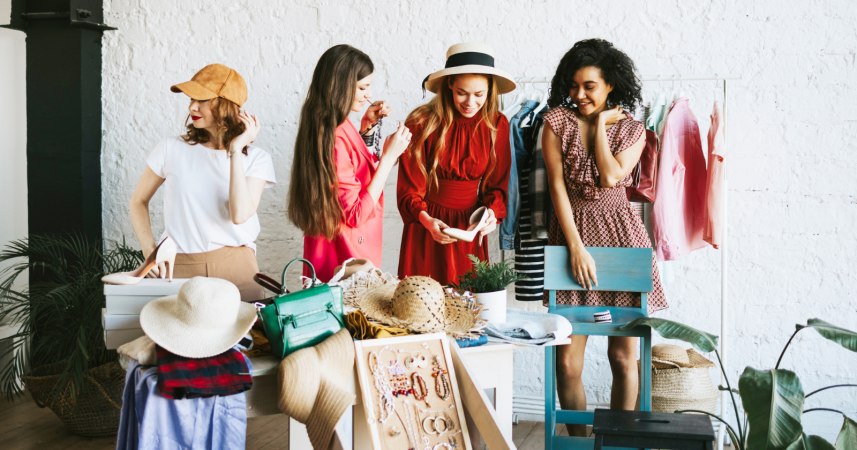
Most thrift shoppers are looking in all the wrong places for all the wrong things.

Add VegOut to your Google News feed. 
Walk into most thrift stores and you'll see two types of shoppers. The first rushes through racks hunting for trendy pieces they'll wear twice. The second moves slowly, checking seams, testing fabric weight, searching for something entirely different.
I used to be the first type. During my finance years, I'd hit the occasional vintage shop looking for statement pieces that would get noticed at networking events. Then I'd watch them fall apart after a few wears, wondering why I'd bothered.
Everything changed when I started actually understanding what I was looking at. The secondhand apparel market represents a societal movement toward more conscientious buying habits, and once you know how to spot quality, those dusty thrift racks transform into treasure troves of pieces that can outlast anything hanging in department stores.
Here are eight types of secondhand purchases that genuinely pay off for decades, along with what to look for when you're hunting.
1) Pure cashmere sweaters
When I left corporate life, I donated dozens of cheap sweaters that had pilled beyond recognition after a single season. But three cashmere pieces I'd thrifted years earlier? Still perfect.
Pure cashmere as opposed to a blend ensures you're getting the lightest and most comfortable garment, with two-ply yarn resulting in a stronger garment that is less prone to pilling.
The difference is tangible the moment you touch it. Real cashmere feels impossibly soft but also has weight to it. Turn the garment inside out and check the seams. Quality pieces have tight, even stitching and finished edges. Look for classic crew necks or V-necks in neutral colors. Skip anything with embellishments that might date it.
Here's what most people miss: cashmere actually improves with age when cared for properly. That slight fuzziness that develops over time? That's the fabric softening, not deteriorating. I have a gray cashmere cardigan I found seven years ago that I reach for constantly during morning trail runs when there's a chill.
Check the label carefully. You want 100% cashmere, preferably from Scotland or Italy where traditional production methods are still used.
2) Full-grain leather jackets
Have you ever noticed how certain leather jackets look better beat up than new?
That's the hallmark of full-grain leather, and it's exactly what you want when buying secondhand. Good leather doesn't come cheap and cheap leather doesn't come good, with a leather jacket being something that should hang proudly in every style-conscious person's wardrobe.
The grain pattern should be visible and irregular. If the leather surface looks too uniform or feels plasticky, it's been corrected or coated, which means it won't age well. Flex the leather. Quality stuff will crease naturally and bounce back.
Check all the hardware. Zippers should be metal, preferably YKK or Talon. Snaps should feel substantial. The lining should be intact, but honestly, a torn lining is an easy fix that can drop the price significantly while the leather itself remains valuable.
I found my leather moto jacket at a farmers' market vintage stall, of all places. The seller wanted $80 for it because the lining was shredded. I took it to a local seamstress who replaced the lining for $40. That jacket is now twelve years into its life with me and looks infinitely better than the day I bought it.
3) Wool overcoats
After years of buying trendy coats that barely lasted a winter, I finally understood why my grandfather's wool coat hung in his closet for forty years.
Pure wool coats, especially those made from merino or cashmere blends, are practically indestructible. The fabric should feel dense and heavy. Hold it up to light. You shouldn't see through it at all. Check that the pattern lines up perfectly at the seams, a sign of quality construction.
Look for classic single-breasted styles in camel, charcoal, or navy. These colors work with everything and never look dated. The shoulders should fit well because altering them is expensive and difficult.
When I garden on cool mornings, I throw on a charcoal wool coat I found at a church sale. It was made in the 1970s, cost me $25, and required only new buttons. That coat has kept me warm through countless early morning runs and chilly volunteer shifts. The wool is so tightly woven that it's naturally water-resistant.
Press your thumb into the fabric and release. Quality wool springs back immediately without leaving an impression.
4) Selvedge denim
Not all jeans are created equal, and nowhere is this more obvious than in secondhand shops.
High-end denim will be thick and built to last, with hallmarks of well-made jeans including a neatly-finished selvedge line running down the inside of the outseam and a reassuring weight.
Turn the jeans inside out and look for that clean, finished edge along the outseam. That's selvedge. It means the denim was woven on traditional shuttle looms, which produces a tighter, more durable fabric. The denim should feel substantial, almost rigid if it's raw.
Check the rivets at stress points. They should be copper or brass, not painted metal. Look at the stitching on the back pockets. It should be tight and even, with no loose threads.
I've worn the same pair of raw selvedge jeans at least twice a week for six years. They've molded to my body in a way that makes them more comfortable than sweatpants. The fading pattern tells the story of how I move through the world. I found them at an estate sale for $15, still with the tags on because the original owner never wore them.
5) Classic trench coats
There's a reason Burberry trenches from the 1970s still sell for hundreds of dollars.
Quality trench coats are constructed from tightly woven cotton gabardine or a cotton-poly blend that's actually water-resistant, not just water-repellent. The fabric should have body and structure. Look for double stitching on all seams and a full lining, usually plaid or solid.
Hardware matters enormously here. Metal buckles, D-rings, and buttons indicate quality construction. The belt should be made from the same material as the coat, not a flimsy afterthought. Check that the storm flap is properly attached and functional.
I scored a vintage Aquascutum trench at an estate sale three years ago for $45. The original owner had clearly taken impeccable care of it. That coat works over everything from running tights to my nicest outfits for evening events. The cut is so classic that no one would guess it's pushing forty years old.
Button it up and move around. A well-cut trench should allow full range of motion without pulling or bunching.
6) Silk blouses and shirts
Fast fashion has convinced people that silk is delicate and impractical, which is absurd considering it's one of the strongest natural fibers.
Real silk has a subtle sheen, not a shiny plastic look. Hold it up to light and look for irregularities in the weave. That's good. It means it's real. The fabric should feel cool to the touch and have a slight weight. Check all seams and buttons carefully since repairs to silk can be expensive.
Look for classic styles: button-downs, simple shells, or elegant blouses without trendy details. Neutral colors or classic prints work best. Avoid anything with underarm discoloration, which is nearly impossible to remove from silk.
My favorite silk shirt came from a consignment shop seven years ago. It's a simple cream button-down that I've worn to everything from volunteer shifts to dinners out with Marcus. Silk breathes beautifully, which makes it perfect for our unpredictable weather. Hand washing takes three minutes and it air-dries overnight.
The best test? Rub the fabric between your fingers. Real silk makes a distinctive crunching sound that synthetics can't replicate.
7) Quality leather handbags
I used to cycle through cheap bags every six months, replacing them as hardware broke and seams split. Then I found one good leather bag and understood what I'd been missing.
Look for full-grain or top-grain leather, never bonded or corrected. The leather should smell like leather, not chemicals. Check all stitching carefully. It should be even, tight, and use strong thread. Press on the bag's structure. Quality bags maintain their shape even when empty.
Hardware should be solid metal, preferably brass or stainless steel. Test all zippers and clasps multiple times. Look inside for brand stamps or signatures. Many quality bags were made by skilled craftspeople who signed their work.
Classic styles matter here. A simple tote, crossbody, or structured satchel in black, brown, or tan will work for decades. Avoid trendy shapes or colors that will date the bag.
I found a vintage Coach bag at a yard sale for $20. It needed leather conditioner and a new strap, which I ordered directly from Coach. Eight years later, that bag looks better than most new ones I see. The leather has developed a rich patina that tells its story.
8) Sterling silver jewelry
There's something about vintage silver jewelry that makes new pieces look sterile by comparison.
Look for the 925 stamp, which indicates sterling silver. Real silver will tarnish, which sounds negative but is actually your authentication. It also polishes up beautifully with a simple cloth. Examine any stones or settings for security. A loose stone is fixable, but you want solid construction overall.
Weight matters here. Sterling silver has heft. If a substantial-looking piece feels light, it's probably plated. Test clasps and closures multiple times. Quality pieces have strong, functional mechanisms.
I collect simple silver rings from estate sales and antique markets. My favorite is a wide band with a hammered finish that I wear constantly. It cost $8 at a yard sale. I've had it resized once over the years, which cost more than the ring itself, but that piece has been on my hand through everything from kneading bread dough to scraping dirt from my garden beds.
The patina that develops on vintage silver adds character that you simply cannot buy new.
Conclusion: the real investment
Buying quality secondhand isn't just about saving money or being sustainable, though both matter. It's about opting out of a system designed to make you constantly unsatisfied with what you own.
Reading Rudá Iandê's "Laughing in the Face of Chaos" helped me understand this shift on a deeper level. His insight that "being human means inevitably disappointing and hurting others, and the sooner you accept this reality, the easier it becomes to navigate life's challenges" applies surprisingly well to shopping. We're constantly disappointing the fashion industry by not buying new, not following trends, not upgrading unnecessarily.
The secondhand fashion and luxury market is forecast to grow two to three times faster than the firsthand market through 2027. People are figuring out that quality beats novelty every time.
The pieces I've described aren't just practical investments. They're quiet rebellions against planned obsolescence, against the idea that value comes from newness rather than utility. When you find that perfect cashmere sweater or classic trench coat, you're connecting with someone's past good decision and extending its life into your future.
Start with one category that makes sense for your life right now. Learn what quality looks like in that area. Then hunt for it with patience. The thrill of finding something exceptional for a fraction of its worth never gets old.
And years from now, when you're still wearing that leather jacket or carrying that vintage bag, you'll understand that the best investments aren't measured in dollars but in the decades they serve you well.
If You Were a Healing Herb, Which Would You Be?
Each herb holds a unique kind of magic — soothing, awakening, grounding, or clarifying.
This 9-question quiz reveals the healing plant that mirrors your energy right now and what it says about your natural rhythm.
✨ Instant results. Deeply insightful.

Avery White
Formerly a financial analyst, Avery translates complex research into clear, informative narratives. Her evidence-based approach provides readers with reliable insights, presented with clarity and warmth. Outside of work, Avery enjoys trail running, gardening, and volunteering at local farmers’ markets.
More Articles by Avery