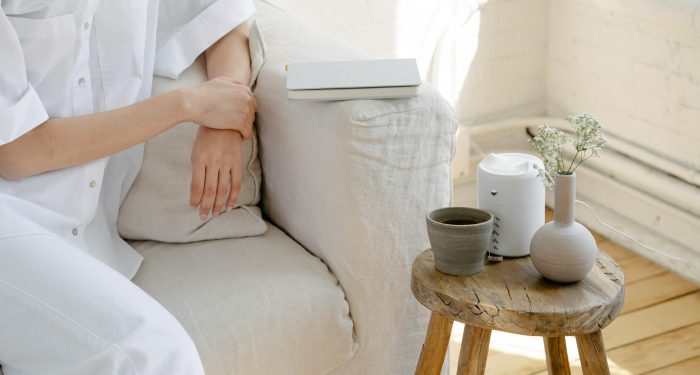
Clear the clutter and learn how minimalist shoppers save money, space, and peace of mind by skipping these ten everyday purchases.

Add VegOut to your Google News feed. 
You don’t have to live in a bare apartment to appreciate minimalism.
For me, it started with one overflowing drawer, the kind that barely closes because of all the “just in case” things.
A few months later, I began to see that the clutter in that drawer reflected the clutter in my thinking.
I used to think having options meant being prepared. Now I see that most of what filled my home was quietly draining my energy, items that took up space without adding any real value.
As Albert Einstein once said, “Out of clutter, find simplicity. From discord, find harmony. In the middle of difficulty lies opportunity.”
That idea sums up how minimalists approach shopping: they buy less, but what they do buy improves life in a meaningful way.
Let’s look at a few things minimalist shoppers skip and why your future self might thank you for doing the same.
1. Decorative knick-knacks
I get it. The little trinkets from vacations, gifts from friends, or impulse buys from home stores can seem harmless. But over time, they collect dust and visual noise.
Minimalist shoppers usually avoid décor that doesn’t serve a purpose or bring lasting joy. Instead, they invest in one or two meaningful pieces that tell a story or create calm.
When I cleared my shelves of random ornaments, I noticed something interesting: my favorite photos and art finally stood out.
2. Excess kitchen gadgets
Have you ever bought a gadget that promised to make cooking easier, only to use it once and shove it in a drawer? I have.
Minimalists tend to favor multipurpose tools: one sharp chef’s knife, a sturdy skillet, and maybe a high-quality blender.
Steve Jobs once said, “Quality is more important than quantity. One home run is much better than two doubles.”
That mindset applies beautifully in the kitchen. A few dependable tools outperform a dozen single-use gadgets that clutter your counters and cabinets.
3. Trendy storage bins and organizers
Here’s the paradox. Many of us try to solve clutter by buying more storage. It feels productive, like we’re “getting organized.”
But often, it just hides the excess instead of fixing the cause.
Minimalist shoppers focus on reducing first, then storing what truly matters. I learned this the hard way after realizing half my bins were filled with things I didn’t even need.
Before buying another organizer, I ask myself, “What would happen if I owned less instead?” Usually, the answer saves both money and space.
4. Bulk cleaning products
Buying in bulk sounds smart until you realize you’ve filled half a closet with oversized detergent bottles and cleaning sprays.
Minimalist shoppers prefer to keep only what they use regularly. They also look for eco-friendly concentrates or refill stations that cut waste and save space.
When I switched to one all-purpose cleaner, I noticed how much easier it was to stay on top of chores.
My cabinets finally closed properly, and I didn’t have to shuffle bottles around every time I needed something.
5. Fast-fashion clothing
It’s easy to fall for sales or trendy pieces that seem like a bargain. But most end up buried at the back of the closet within months.
Minimalists usually focus on timeless, high-quality clothing made from natural fabrics.
This doesn’t mean spending a fortune on designer labels. It means understanding your lifestyle and buying only what fits it.
I’ve learned that a small wardrobe with pieces I actually wear feels far better than a packed closet that stresses me out every morning.
6. Duplicate household items
How many pairs of scissors, spatulas, or extension cords does one home really need?
Minimalists ask this question before buying another. Duplicates often sneak in quietly, especially when we can’t find the original.
Creating designated spots for essentials solves this problem. When everything has a home, you stop repurchasing things you already own.
7. Sentimental clutter
This one is tough. Old birthday cards, childhood trophies, and random souvenirs can feel too emotional to part with.
But here’s what I’ve learned: the memory is in you, not the object.
Minimalist shoppers honor memories without letting them take over their living space. Sometimes that means keeping a photo of an item instead of the item itself.
Once I started doing this, I felt lighter. It was like creating room for new experiences instead of clinging to the past.
8. Overstocked toiletries and beauty products
It’s tempting to buy extras when something’s on sale, but half-used bottles and expired lotions end up filling drawers and baskets.
Minimalists buy as they go, trusting that stores will still exist when they run out.
Good design expert Ilse Crawford once said, “Good design is more than the way it looks. It’s about wellbeing and making life better - not just for us, but for others and the environment.”
That same principle applies to what we put on our bodies. Fewer, better-quality products simplify your routine and support your health and the planet at the same time.
9. Excess tech accessories
Phone cases, cables, chargers, and adapters multiply faster than we realize.
Minimalists often invest in one reliable set that works across multiple devices. The focus is on functionality, not accumulation.
I once found three identical charging cables tangled together in a drawer. That moment was a wake-up call. I didn’t need more cables, I needed better habits around organization.
10. Seasonal décor overload
Every holiday seems to come with its own bins of decorations, much of which gets used for a few weeks before being packed away again.
Minimalists tend to simplify seasonal décor by choosing versatile items that can shift slightly with each season.
Instead of buying new, they might repurpose what’s already there. A few candles, a wreath, and natural textures can bring warmth without overwhelming your space or storage.
Final thoughts
Minimalism teaches you to rethink what ‘enough’ really means and to find contentment in that balance.
Each time I resist buying something I don’t need, I feel a small sense of freedom. My home breathes easier, and so do I.
Reading Laughing in the Face of Chaos by Rudá Iandê reminded me that true peace often begins with simplicity.
He writes, “When we stop resisting ourselves, we become whole. And in that wholeness, we discover a reservoir of strength, creativity, and resilience we never knew we had.”
That line encouraged me to see decluttering not just as organizing, but as coming back to myself.
So next time you’re tempted to buy something “just in case,” ask yourself if it’s adding real value or only adding weight.
Minimalist shoppers don’t skip things because they’re frugal. They do it because they know a clear space often leads to a clearer mind.