I grocery shop almost every weekday morning. Emi is in her stroller, we walk my husband to work, then we swing by our neighborhood market in Itaim Bibi to pick up what we need for that day’s meal. It keeps our kitchen fresh and our budget tight. Living in São Paulo taught me something simple: […]

Add VegOut to your Google News feed. 
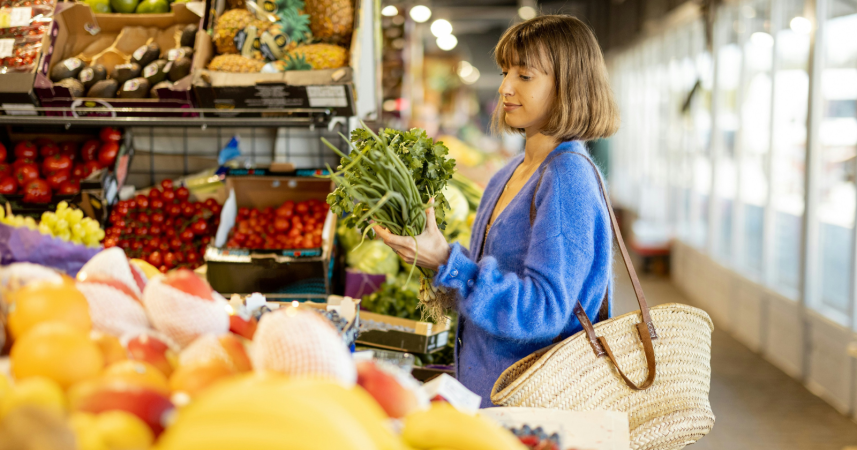
I grocery shop almost every weekday morning. Emi is in her stroller, we walk my husband to work, then we swing by our neighborhood market in Itaim Bibi to pick up what we need for that day’s meal.
It keeps our kitchen fresh and our budget tight. Living in São Paulo taught me something simple: small, repeatable choices save more money than dramatic once-a-year decisions.
As Warren Buffett likes to say, “Price is what you pay, value is what you get.” I think about that line in the pasta aisle every single time.
1. Pick store brand over name brand
If there is a store brand version of pantry basics, I buy it. Flour, oats, canned tomatoes, nut butter, plant milk, pasta, cleaning supplies. The recipe does not care if the label is famous.
Most of the time the ingredients match, and sometimes the store brand wins on taste.
I test this like a game. One week I buy the store brand, the next week the label I grew up seeing on ads. I pay attention to the cooking results. If my chickpea stew tastes the same or better, the cheaper one becomes my new default.
Over a month, this trims a surprising amount without any sacrifice.
If a name brand is truly better, I keep it for that one item. But I never assume. I try, then decide.
2. Choose beans, lentils, and tofu instead of pricey plant-based meats
Half my girlfriends are vegan or vegetarian, so we eat a lot of plant-forward meals together. I love the convenience of plant-based meats for a Friday burger night, but on normal weekdays I lean on beans, lentils, and tofu.
They are affordable, versatile, and gentle on the budget.
If you’re used to buying two or three packs of plant-based sausages each week, swap one of those for a pot of lentils or a tray of baked tofu. Season well, add texture, and build a sauce. Tacos, bolognese, mapo tofu, lentil shepherd’s pie.
The cost per serving drops, the protein stays high, and no one at the table feels shortchanged.
I keep one emergency bag of frozen alt-meat crumbles for last-minute dinners. Everything else is the real basics dressed up.
3. Buy frozen fruits and veggies instead of out-of-season produce
Frozen produce is my secret weapon for savings and speed. I buy berries, peas, spinach, broccoli, and mango in the freezer section.
They get picked at peak ripeness, flash frozen, and they wait for me without wilting in the crisper.
My smoothie routine is cheaper, and our weeknight stir-fries are faster. I still grab fresh produce that is in season in Brazil. But when strawberries are expensive and sad, the frozen bag does a better job for far less money.
As food writer Michael Pollan put it, “Eat food, not too much, mostly plants.” Frozen helps me stick to the “mostly plants” part even when the market display is tempting but pricey.
4. Choose whole produce instead of pre-cut convenience
Pre-cut fruit and veggies are helpful when life is chaotic, but they are a silent budget leak. When I pick the whole pineapple, it costs less and tastes brighter. When I buy whole carrots, onions, broccoli, and squash, I pay for food, not packaging and labor.
Here’s my rhythm. I set a 15-minute timer after we get home. I wash, peel, chop, and store. Some goes straight into the pot, the rest into clear containers for tomorrow.
Those tiny minutes at my kitchen island save us every week. If I’m extra tired, I pick produce that is naturally fast to prep, like grape tomatoes or baby cucumbers, and push the dicing to lunch break.
One more perk of whole produce: less waste. It lasts longer and gives you the scraps for the swap in point 8 below.
5. Buy bulk grains and legumes instead of microwave pouches
Microwave rice pouches and pre-cooked grains are convenient, but cooking a pot is not complicated. I make a big batch of brown rice or quinoa while Emi plays with the neighbor kids.
Once cooked, I freeze some in flat zip bags and keep the rest in the fridge for bowls, stir-fries, and soups.
Dried beans are similar. If I forget to soak, I use the quick soak method while I check email. A pressure cooker helps. One pot of beans gives me tacos, a salad topper, and a freezer stash of ready-to-go portions. The price difference is real, and the flavor is better.
This swap also shrinks our packaging footprint. Fewer pouches, fewer trays, more space in the pantry for basics that stretch far.
6. Go big on tubs and concentrates instead of single-serve
Single-serve is easy, but it punishes the budget. When I buy individual cups of plant-based yogurt, I pay for lids and marketing. A big plain tub plus a jar of jam hits the same craving for much less. The same goes for hummus, applesauce, and guacamole.
I portion them into small containers if we need a grab-and-go option.
For drinks, I keep two money savers on hand. First, I buy seltzer in large bottles or use a carbonator instead of cases of cans. Second, I use concentrates and syrups wisely. A small bottle of strong cold brew or a jar of tea concentrate turns into a week of iced drinks. My afternoon treat stays a treat, not a budget bleed.
If you love variety, rotate flavors week to week. You still get novelty without paying the single-serve tax.
7. Build flavor with whole spices and simple pantry boosters instead of bottled sauces
I used to grab a different sauce for every recipe. Now I keep a short roster of whole spices and pantry boosters that do the heavy lifting: cumin, smoked paprika, coriander, curry powder, chili flakes, garlic, ginger, soy sauce, vinegar, tahini, mustard, and tomato paste.
With those, I can make dressings and sauces in minutes. A spoon of tahini, lemon, and garlic becomes a creamy drizzle. Tomato paste and spices turn into a fast shakshuka base. Soy sauce with rice vinegar and a pinch of sugar becomes a stir-fry sauce. Bottled sauces still visit our fridge, they just don’t dominate the budget.
Buying whole spices in small amounts also helps avoid the sad back-of-the-cupboard graveyard. Use them often, replace them fresh, and you’ll notice the difference.
8. Save scraps for broth instead of buying boxes
I keep a freezer bag labeled “stock.” Onion tops, carrot peels, celery ends, herb stems, corn cobs, mushroom trims. When the bag is full, I simmer it with water, peppercorns, and a bay leaf. Ninety minutes later I have golden broth that tastes like I worked much harder than I did.
That broth anchors a week of soups, risottos, and grains. It replaces the boxes that used to take up half a shelf and a third of my grocery bill. If I need richer body, I add a spoon of miso or a dried tomato. It’s simple cooking, and it feels good to turn scraps into something useful.
There is a calm kind of satisfaction when you pour broth you made yourself into the pot. It’s a small win you can taste.
These eight swaps changed how we spend, eat, and waste. They also changed how I feel about money. I grew up middle class, married into a very organized upper middle class, and now we live comfortably because we build systems like this. We invest, we plan for trips to Santiago to see family, and we still treat dates on Friday like a ritual. The structure gives us freedom.
A few extra tips from my actual weekday routine
I plan one “base” per day, not full menus. Monday beans, Tuesday rice, Wednesday tofu, Thursday lentils, Friday pasta. The base guides my cart and keeps me from impulse buys
I shop with a short list and a flexible eye. If broccoli is pricey, I grab green beans. If mango is sad, I choose frozen pineapple
I check unit prices and do quick mental math. If the bulk bag saves at least 20 percent and I know we’ll use it, it goes in the cart
And I give myself grace. Some weeks I grab the pre-cut squash because Emi didn’t nap. Some Fridays I buy the fancy sauce because I want to eat dinner with my husband, not cook for an hour. Those aren’t failures. They are conscious choices, which is the whole point.
As noted by Pollan’s advice above and Buffett’s reminder on value, the smartest grocery habits are boring. They are repeatable.
They free up money for what actually matters to you. For us, that is family, travel, and quiet nights when the house is clean, the baby is asleep, and there’s a bowl of something warm on the table.
Start with the kitchen and let it ripple outward.
1. Pick store brand over name brand
Quick test: compare ingredient lists. If they match, try the cheaper one this week. If your recipe turns out the same, you just found a permanent downgrade in price without any downgrade in life.
2. Choose beans, lentils, and tofu instead of pricey plant-based meats
Start with one night a week. Make it easy. Lentil tacos with avocado and salsa. Tofu stir-fry with frozen broccoli and rice. Chickpea curry with tomato and coconut milk. You’ll feel the savings in a month.
3. Buy frozen fruits and veggies instead of out-of-season produce
Keep two bags of frozen greens and two bags of frozen fruit in your freezer at all times. Think spinach and peas, mango and berries. Use fresh for salads and frozen for cooking and smoothies.
4. Choose whole produce instead of pre-cut convenience
Make chopping a ritual. I put on a true crime podcast, set a timer for 15 minutes, and knock it out. Future me always says thank you.
5. Buy bulk grains and legumes instead of microwave pouches
Batch once, eat many times. Freeze in thin slabs so you can break off just what you need. Dinner suddenly takes 10 minutes.
6. Go big on tubs and concentrates instead of single-serve
Pick one item this week to switch. Maybe plant yogurt, maybe hummus. Track the savings. Seeing the number is motivating.
7. Build flavor with whole spices and simple pantry boosters instead of bottled sauces
Create a tiny “flavor tray” in your pantry so the good stuff is always front and center. If it is easy to see, you’ll use it.
8. Save scraps for broth instead of buying boxes
Label a freezer bag today. You’ll thank yourself when you pour your first pot of homemade broth next Sunday.
Final thought. Good grocery habits are not about deprivation. They are about attention. When you swap with intention, you get more of what you value.
Time with your people, food that actually nourishes, and money that works quietly in the background while you live your life.