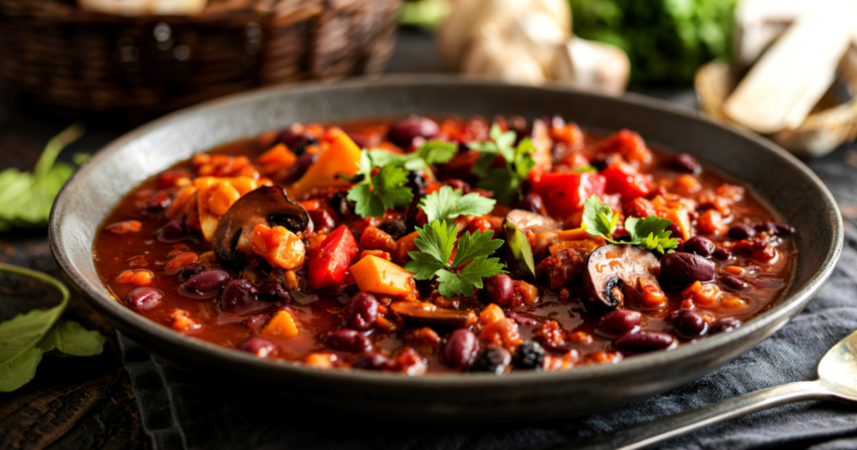
The real secret isn’t what’s missing from the pot, but how simple ingredients transform into a bowl of smoky, slow-simmered comfort.
When I first went vegan, I assumed I’d never get my chili past the “polite nod” stage with my meat-eating friends. You know the look—where they smile, take a spoonful, and then quietly hope the bread basket makes it around the table soon.
But one chilly evening, I served up a pot that changed everything. My friends went back for seconds. A few even asked for the recipe. That’s when I knew I had landed on something special.
This isn’t just a chili recipe. It’s comfort in a bowl, proof that plants can hold their own, and a reminder that sharing food can bridge differences.
Why chili works when nothing else does
Chili is one of those meals that crosses boundaries. Every culture has its own version of “beans and spices simmered until everything becomes greater than the sum of its parts.”
It’s the kind of dish that doesn’t need a fancy setting or delicate plating. Chili belongs in big bowls on a crowded table. It’s the kind of meal where people lean back in their chairs, wipe their mouths, and keep talking.
That’s why chili works so well when introducing plant-based food to skeptical eaters. It doesn’t rely on delicate flavors that can get lost in translation. It’s bold, smoky, and hearty—three qualities everyone recognizes.
And here’s the truth: chili doesn’t demand meat to be filling. It demands layers of flavor.
The unexpected power of texture
Have you ever noticed how much texture shapes your food memories? Think about it—half the reason people cling to traditional chili is the chew.
I leaned on lentils for that earthy bite, crumbled walnuts for a subtle crunch, and chopped mushrooms for their meaty density. Together, they create that “substance” factor without feeling heavy.
The first time I tested this combo, I held my breath as my most carnivorous friend took a bite. He actually paused, squinted at his spoon, and said, “Wait, what is this? Because it’s working.”
Texture is why this recipe feels satisfying. Each ingredient brings something different, but when simmered together, they form a foundation that makes meat unnecessary.
Building layers of flavor
A good chili doesn’t just happen—it’s built in stages.
I start by sautéing onions, bell peppers, and garlic until they’re soft and golden. That’s the base note. Then come the spices: smoked paprika, cumin, oregano, and a touch of cocoa powder.
Yes, cocoa. It sounds odd, but it adds the same richness you’d get from a slow-cooked stew. It doesn’t taste like chocolate—it tastes like depth.
Next, chipotle peppers in adobo sauce add smoke and heat, while fire-roasted tomatoes give it that charred edge. When all of this simmers with beans, lentils, and broth, it transforms into something far more layered than the sum of its ingredients.
Chili is patient food. The longer it sits on the stove, the more the flavors mingle. I often cook it an hour before anyone arrives, then leave it on low heat so the first whiff greets people as they walk in.
The psychology of comfort food
Why does chili matter so much? Because food isn’t just about nutrients—it’s about belonging.
When I served this chili, I noticed something fascinating: people relaxed around it. No one questioned the “vegan” label after the first bite. They were too busy reaching for another scoop.
Comfort food has that effect. It lowers defenses, reminds us of childhood kitchens, and makes us feel safe. A steaming bowl of chili doesn’t ask you to analyze—it just asks you to eat.
I once read that nostalgia and taste share the same pathways in the brain. No wonder certain foods feel like hugs. Chili is one of those dishes that carries a memory even if you didn’t grow up with it.
My go-to recipe
Here’s the version that made my friends believers.
Ingredients
-
2 tbsp olive oil
-
1 large onion, diced
-
1 red bell pepper, diced
-
4 cloves garlic, minced
-
2 cups mushrooms, finely chopped
-
1 cup walnuts, crumbled
-
1 ½ cups cooked brown lentils (or green)
-
2 cans fire-roasted tomatoes
-
1 can black beans, drained
-
1 can kidney beans, drained
-
2 chipotle peppers in adobo, minced
-
2 tbsp tomato paste
-
1 tbsp smoked paprika
-
2 tsp cumin
-
1 tsp oregano
-
1 tsp cocoa powder
-
Salt and pepper to taste
-
2 cups vegetable broth
Method
-
Heat olive oil in a large pot. Add onion and bell pepper; sauté until softened.
-
Stir in garlic, mushrooms, and walnuts. Cook until mushrooms release their juices.
-
Add tomato paste, paprika, cumin, oregano, and cocoa. Let the spices toast for a minute.
-
Pour in tomatoes, beans, lentils, chipotles, and broth. Stir well.
-
Simmer uncovered for 30–40 minutes, stirring occasionally, until thickened.
-
Taste and adjust seasoning. Serve hot with toppings like avocado, cilantro, or vegan sour cream.
Why this recipe works every time
It doesn’t try to be meat—it’s unapologetically plant-based. But the flavors are bold, smoky, and layered. The textures keep your fork moving. And the protein-rich beans and lentils make it satisfying enough for anyone at the table.
One of my friends actually said, “I forgot this was vegan.” That’s the best compliment a plant-based cook can get.
It also scales beautifully. Double the batch and you can feed a crowd without doubling your effort. The leftovers taste even better the next day, which makes it one of those meals that actually rewards patience.
Serving it up
The toppings are where the fun happens. I set out bowls of diced avocado, lime wedges, and tortilla chips. Some nights, I bake a cornbread skillet on the side. Other times, I keep it simple with crusty bread.
Each choice changes the mood. Cornbread makes it feel like a Southern gathering. Tortilla chips bring a Tex-Mex twist. Crusty bread makes it rustic, like something you’d eat after a long hike.
Food like this makes people linger at the table. They go back for seconds not just because it tastes good, but because it feels good.
A chili night to remember
One winter, a few of us gathered after a trail run. We came back chilled to the bone, muddy shoes piled at the door. I had a pot of this chili waiting.
Within minutes, the kitchen smelled of smoked paprika and simmering tomatoes. Bowls were passed, spoons clinked, and the conversation shifted from the cold outside to memories of favorite meals, old stories, and laughter that fogged up the windows.
That night, the chili disappeared before I even noticed. And one of my most skeptical friends—the kind who thinks meals without meat are “snacks”—asked for the recipe. I nearly fell over.
What I learned from this pot of chili
Cooking is more than feeding people—it’s a kind of bridge-building. For years, I thought my vegan meals would always be politely tolerated but never celebrated.
Then this chili changed the story. It reminded me that people are often more open than we assume. Sometimes, they just need an invitation in the form of a hearty bowl.
Food has the power to bypass debates and land straight in the senses. It’s harder to argue when your taste buds are happy.
So if you’ve been searching for that one dish to win over your friends—or maybe even yourself—this might be it.
Because at the end of the day, good food doesn’t need labels. It just needs to be shared.
If You Were a Healing Herb, Which Would You Be?
Each herb holds a unique kind of magic — soothing, awakening, grounding, or clarifying.
This 9-question quiz reveals the healing plant that mirrors your energy right now and what it says about your natural rhythm.
✨ Instant results. Deeply insightful.