Sometimes the simplest recipes become the most powerful conversations starters, and this humble loaf proved that plant-based baking can win over any crowd.
I need to clear something up before we go any further: I don't have a daughter. My bio says no children by choice, and that's still true.
But my niece Lily, who I've been close to since the day she was born, asked me to help with her fifth-grade bake sale last month. And what happened with that banana bread taught me something I'm still thinking about.
When Lily called to ask if I'd contribute something vegan, I heard the hesitation in her voice. She wanted to include me, but she was worried. Would anyone actually buy it? Would her friends think it was weird? I recognized that fear.
It's the same one I felt when I first started bringing plant-based dishes to office potlucks years ago.
The recipe that changed everything
I didn't reach for anything complicated. No fancy ingredients, no elaborate techniques. Just a banana bread recipe I've been making for years, tweaked and refined until it became second nature.
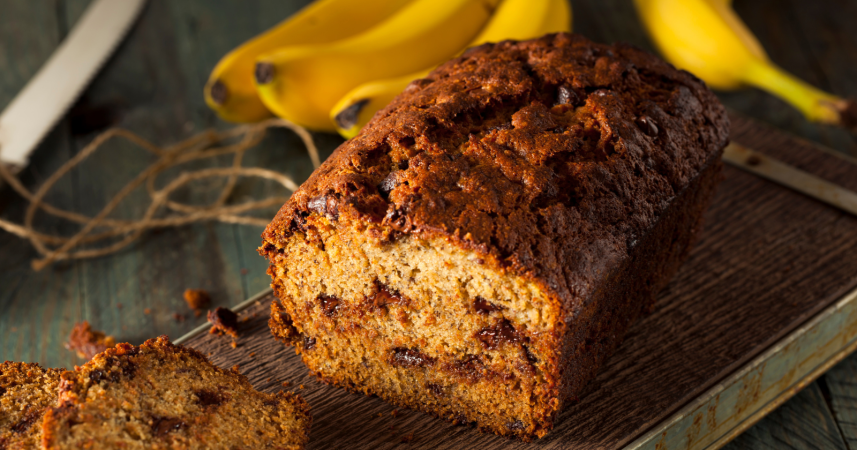
Three overripe bananas, mashed until they're almost liquid. A cup of sugar, half a cup of neutral oil, a splash of vanilla. Two cups of flour, a teaspoon each of baking soda and salt. Sometimes I add walnuts. This time, I folded in chocolate chips because I know what appeals to ten-year-olds.
The magic happens in the bananas themselves. When they're spotted and soft, almost too far gone, they develop a sweetness and moisture that no egg could replicate.
I've made this bread dozens of times, and it never fails to rise into something tender and deeply flavored.
What I didn't expect
Lily and I wrapped the loaf in parchment paper and tied it with twine. We made a small sign: "Vegan Banana Chocolate Chip Bread." I told her to put it wherever she wanted, no pressure. She placed it at the end of the table, almost apologetically.
Two hours later, she called me, breathless. The banana bread sold out in the first forty-five minutes. Not only that, but parents kept asking who made it. They wanted the recipe. One mom, who Lily said "never eats anything healthy," bought two slices and came back for a third.
What struck me wasn't the validation. It was Lily's voice. She sounded proud. Not embarrassed, not defensive. Proud.
Why simple wins
I spent years in finance watching people overcomplicate things. We'd build elaborate models when a straightforward analysis would do. We'd add layers of complexity because we thought sophistication meant value. It took me a long time to unlearn that.
Baking taught me the opposite lesson. The best recipes often have the fewest ingredients. They rely on technique and timing, not novelty. That banana bread doesn't try to be anything other than what it is: sweet, moist, familiar. It doesn't announce itself as vegan. It just tastes good.
Have you ever noticed how the dishes that bring people together are rarely the impressive ones? They're the ones that feel like home.
The conversations that followed
A few days after the bake sale, Lily told me something that made me pause. One of her classmates asked if being vegan meant you couldn't eat anything good.
Before the bake sale, Lily might have shrugged or changed the subject. This time, she said, "My aunt's vegan and she made the banana bread everyone liked."
That small moment matters more than any argument I could make. Research consistently shows that positive food experiences shape dietary attitudes more effectively than information alone. We don't change minds by lecturing.
We change them by offering something delicious and letting people draw their own conclusions.
The recipe, finally
Preheat your oven to 350°F. Mash three very ripe bananas in a large bowl. Stir in one cup of sugar, half a cup of vegetable oil, and one teaspoon of vanilla extract.
In a separate bowl, whisk together two cups of all-purpose flour, one teaspoon of baking soda, and one teaspoon of salt. Fold the dry ingredients into the wet until just combined. Add a cup of chocolate chips if you want to guarantee success with kids.
Pour into a greased loaf pan and bake for 55 to 65 minutes, until a toothpick comes out clean. Let it cool before slicing. Try not to eat half of it before it leaves your kitchen.
Final thoughts
I've been vegan for five years now, and I've learned that the most powerful advocacy rarely looks like advocacy at all. It looks like showing up with something homemade.
It looks like sharing without expectation. It looks like a ten-year-old standing a little taller because the thing her aunt made was the thing everyone wanted.
That banana bread didn't change the world. But it might have changed one classroom's assumptions, even just slightly. And sometimes, that's exactly where change begins.