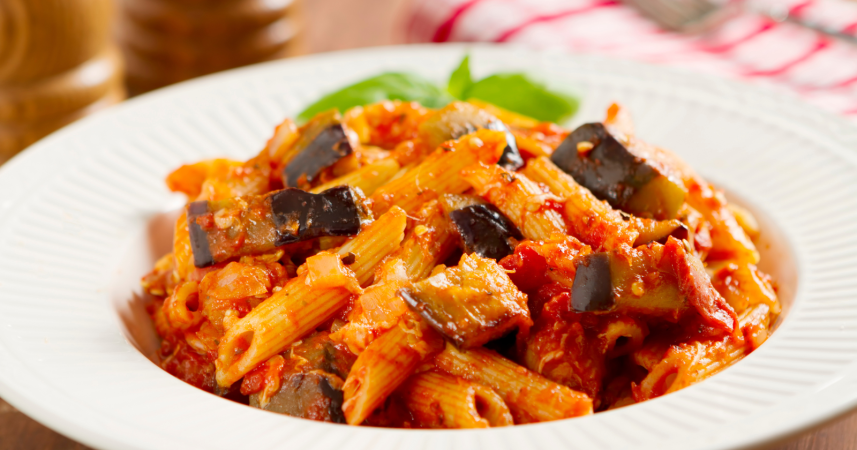
This humble Sicilian pasta somehow gets richer overnight—here’s why.
Every cook I trust has a “tomorrow pasta”—the dish they nudge you to make tonight so you can eat it at its peak after the flavors have had time to marry.
In Sicily, that dish is a cousin of two icons—caponata and pasta alla Norma—and it happens to be gloriously, naturally vegan when you skip the traditional ricotta salata.
Think silky roasted eggplant, bright tomatoes, briny capers and olives, a whisper of agrodolce (that gentle sweet-tart balance Sicilians love), and a shower of golden muddica atturrata—toasted breadcrumbs—standing in for cheese.
The alchemy is patience: you make the sauce, toss it with pasta, and let it rest.
The next day, the edges soften, the acidity rounds, the perfume of basil threads through the whole bowl. It’s Tuesday dinner that tastes like you planned ahead (because you did).
Why it’s better on day two
Three things happen overnight.
First, osmosis: salt and acid help the eggplant and tomatoes release and reabsorb juices, so the sauce gets glossy and coherent instead of watery.
Second, starch absorption: as the pasta cools, it pulls in the sauce and seasonings, turning every noodle into its own flavor capsule.
Finally, agrodolce equilibrium: a teaspoon of vinegar and the tiniest hint of sugar lose their sharp edges and settle into a rounded, savory-sour hum.
The result is no longer “ingredients”—it’s a single voice.
The recipe: Sicilian next-day eggplant pasta (vegan alla Norma + caponata energy)
This makes 4 generous servings tonight or 3 tomorrow with midnight-fridge raids.
Ingredients
-
2 medium eggplants (about 750–900 g), cut into 2–3 cm cubes
-
1 large yellow onion, thinly sliced
-
4–5 tbsp extra-virgin olive oil, plus more for breadcrumbs and finishing
-
4 cloves garlic, thinly sliced
-
1 tsp red pepper flakes (less if you like it mild)
-
1 tbsp capers, rinsed and drained
-
½ cup (75 g) Sicilian or Castelvetrano olives, pitted and roughly chopped
-
1½ tbsp red wine vinegar (or white wine vinegar)
-
1 scant tsp sugar (or a squeeze of agave)—optional but recommended for balance
-
1 × 800 g can whole peeled tomatoes, hand-crushed (or high-quality passata)
-
350–400 g short pasta (rigatoni, casarecce, mezze maniche)
-
Big handful fresh basil leaves, torn
-
Sea salt and black pepper
For the muddica atturrata (toasted breadcrumbs)
-
1 cup coarse breadcrumbs (day-old bread blitzed in a processor works best)
-
2 tbsp olive oil
-
1 small garlic clove, grated or mashed
-
Zest of ½ lemon
-
Pinch of salt
Optional finishing (choose one, all vegan):
-
2 tbsp nutritional yeast (for a cheesy echo)
-
Spoonfuls of almond “ricotta” (store-bought or blitz blanched almonds + lemon + salt + water)
Method
-
Salt and soften the eggplant (10 minutes hands-off).
Toss the eggplant cubes with 1½ tsp salt in a colander and let sit 10–20 minutes. This seasons and draws out some moisture so they brown instead of steam. Pat dry. -
Roast for real browning.
Heat oven to 230°C (450°F). Spread eggplant on two trays, drizzle with 3 tbsp olive oil, and roast 20–25 minutes, flipping once, until deep gold with caramelized spots. Roasting beats pan-frying here—it’s hands-off and uses less oil while getting the same plush texture. -
Build the agrodolce base.
In a wide Dutch oven, warm 1–2 tbsp olive oil over medium. Add onion and a pinch of salt; cook 6–8 minutes until translucent and lightly golden. Stir in garlic and red pepper flakes for 30 seconds. Add capers and olives; cook 1 minute until glassy. Splash in the vinegar and let it hiss; stir in sugar if using. -
Tomatoes + roast back in.
Pour in the crushed tomatoes, season with ½ tsp salt and black pepper, and simmer 12–15 minutes on medium-low, stirring occasionally, until slightly thickened and shiny around the edges. Fold in the roasted eggplant and most of the basil. Taste—this should be bright and savory with gentle tang. Adjust salt/acid to your liking. -
Cook pasta shy of al dente.
Boil in generously salted water until 1–2 minutes short of done. Reserve 1 cup pasta water. Toss pasta into the sauce, adding splashes of pasta water to loosen into a glossy coat. Cook together 1–2 minutes until the noodles drink in the sauce. Off heat, drizzle a ribbon of olive oil and add a last handful of basil. It’s delicious now—but the magic is tomorrow. -
Rest and store.
Let the pot cool 20 minutes uncovered (prevents condensation), then cover and refrigerate overnight. The pasta will look thick and cozy; that’s what you want. -
Make the muddica atturrata.
Right before serving (tonight or tomorrow), warm 2 tbsp olive oil in a small pan over medium. Add garlic; cook 20–30 seconds until fragrant, not brown. Add breadcrumbs and a pinch of salt; toast, stirring, 3–5 minutes until golden. Kill heat; stir in lemon zest. They should be crunchy, aromatic, and lightly salty—the “Parmesan” of Sicily.
Serve it (especially on day two)
Rewarm the pasta gently over low heat with a splash of water or passata to loosen; don’t boil it to death. Spoon into bowls, top with a generous drift of muddica atturrata, then add nutritional yeast or almond ricotta if you like a creamy counterpoint. A last thread of olive oil never hurts.
Make it your own (still Sicilian, still vegan)
-
Zucchini cameo: Roast chunks alongside eggplant and fold in for a Norma-meets-summer vibe.
-
Toasted almonds: A handful of chopped almonds in the breadcrumbs nods to Trapani’s almond-rich cooking.
-
Herb switch: If basil is scarce, fresh mint (common in Sicilian gardens) gives a surprising, beautiful lift.
-
Extra brine, less salt: If your olives are briny, taste before salting aggressively—you want savory, not shouty.
-
Gluten-free: Use a sturdier GF short pasta (corn-rice blends hold up), and swap breadcrumbs for toasted polenta crumbs or crushed GF crackers.
Cook’s notes from the “tomorrow” file
-
Don’t skip the rest. Even a 2–3 hour pause helps; overnight is peak. The sauce and pasta become one dish, not roommates.
-
Salt at every stage, but lightly. Eggplant salting, onion base, tomato pot, and final adjustment are small pinches that add up to depth.
-
Oil is an ingredient, not just lube. Sicilian cooking uses good olive oil the way French cooking uses butter—it carries flavor. Don’t drown the dish, but don’t be stingy either.
-
Breadcrumbs are not optional. They add crunch, aroma, and the savory “finished” note you miss when you skip cheese. Make extra; you’ll sprinkle them on everything all week.
What to pour (with or without alcohol)
A chilled Frappato or Nero d’Avola on the lighter side loves tomato and olive. If you’re skipping alcohol, try iced black tea with a splash of blood orange juice, or sparkling water with lemon and a torn basil leaf. You want acidity and herbs to echo the bowl.
Leftovers of the leftovers
The day after the day-after is still excellent. If the pasta feels too tight, warm with a spoon of water and a drizzle of olive oil.
Any remaining sauce (lucky you) makes an elite bruschetta topping or the base of a quick bean stew with chickpeas.
Final thoughts
There are flashier pastas, but few are as generous. This one asks you for an hour when you’ve got it and gives you two dinners when you don’t.
It’s proof that vegan Sicilian food doesn’t need substitutes to be satisfying; it just needs ripe tomatoes, patient eggplant, salt that knows what it’s doing, and tomorrow.
Make it once and you’ll start planning around the second day—because that’s when the bowl tastes like someone’s nonna whispered to it all night.
Buon appetito—today, and especially tomorrow.