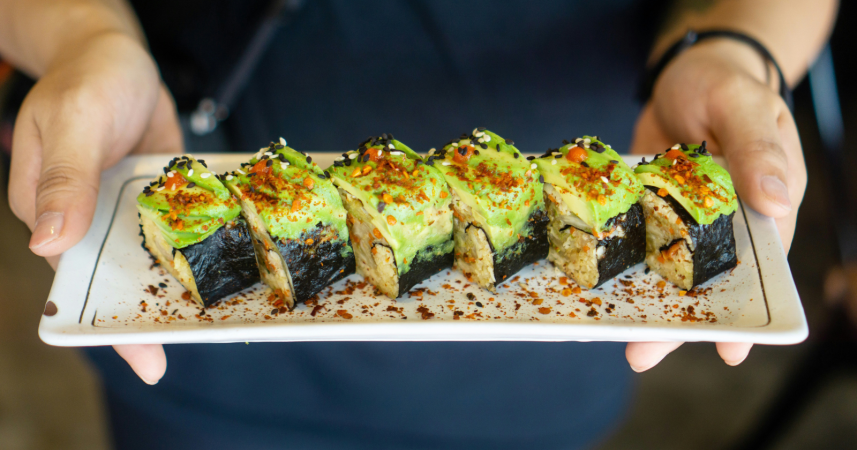
Making vegan sushi at home feels impressive but is actually pretty simple once you get the rhythm down, and the imperfect rolls still taste delicious while you're learning.
There's something almost meditative about making sushi at home.
I'll be honest, the first time I attempted it, I was intimidated. The rice was too mushy, my rolls fell apart, and I used way too much filling. But after a few tries, I realized that vegan sushi is actually more forgiving than you'd think.
What I love most about making plant-based sushi is the creativity it invites. Without relying on raw fish, you get to play with textures, colors, and flavors in ways that feel fresh and exciting. Crispy vegetables, creamy avocado, tangy pickled ingredients, and that perfect bite of seasoned rice.
This recipe has become my go-to. It's straightforward, uses ingredients you can find at most grocery stores, and once you get the hang of it, you'll be rolling sushi like a pro. Whether you're making it for a dinner party or just a quiet night in, this is one of those recipes that feels special without being fussy.
Let's get into it.
Ingredients
For the sushi rice:
2 cups short-grain sushi rice
2½ cups water
¼ cup rice vinegar
2 tablespoons sugar
1 teaspoon salt
For the rolls:
6-8 nori sheets (seaweed)
1 ripe avocado, sliced thin
1 cucumber, cut into matchsticks
1 carrot, cut into matchsticks
1 red bell pepper, cut into thin strips
4-5 green onions, trimmed
Optional: mango strips, pickled radish, marinated tofu, or tempura sweet potato
For serving:
Soy sauce or tamari
Pickled ginger
Wasabi
Sesame seeds (optional)
Method
Step 1: Prepare the rice
Rinse the sushi rice under cold water until the water runs clear. This removes excess starch and prevents the rice from getting too sticky or gummy.
Add the rinsed rice and water to a rice cooker or pot. If using a pot, bring to a boil, then reduce heat to low, cover, and simmer for about 18-20 minutes until the water is absorbed. Let it sit covered for another 10 minutes off the heat.
While the rice is still warm, transfer it to a large bowl. In a small saucepan, heat the rice vinegar, sugar, and salt until dissolved. Pour this mixture over the rice and gently fold it in using a wooden spoon or rice paddle. Fan the rice as you mix to help it cool and develop that signature glossy finish. Let it cool to room temperature.
Step 2: Prep your fillings
This is where you can get creative. Slice all your vegetables into thin, uniform pieces. I like to arrange everything on a large plate or cutting board so it's easy to grab while rolling.
If you're using tofu, press it well and marinate it in soy sauce, sesame oil, and a touch of maple syrup for at least 15 minutes before slicing.
Step 3: Set up your rolling station
Place a bamboo sushi mat on your work surface and cover it with plastic wrap. This prevents rice from sticking and makes cleanup easier.
Keep a small bowl of water nearby. You'll use it to wet your hands, which keeps the rice from sticking to your fingers.
Step 4: Roll the sushi
Lay one nori sheet shiny side down on the bamboo mat. Wet your hands and grab a handful of rice (about ¾ cup). Spread it evenly across the nori, leaving about an inch of space at the top edge. Press gently so the rice sticks but isn't smashed.
Arrange your fillings in a horizontal line across the center of the rice. Don't overfill. I learned this the hard way when my rolls exploded mid-slice.
Using the bamboo mat, lift the bottom edge of the nori and fold it over the fillings. Roll forward firmly but gently, using the mat to shape it into a tight cylinder. When you reach the bare edge of nori, dab it with a little water to seal the roll.
Step 5: Slice and serve
Wet a sharp knife and wipe it clean between each cut. Slice the roll in half, then cut each half into three or four pieces.
Arrange the sushi on a plate, sprinkle with sesame seeds if you like, and serve with soy sauce, pickled ginger, and wasabi.
Tips and substitutions
If you can't find short-grain sushi rice, medium-grain will work in a pinch, though the texture won't be quite as sticky.
Not a fan of nori? Try wrapping your rolls in thinly sliced cucumber or soy paper for a milder flavor.
To make inside-out rolls (uramaki), flip the nori sheet after spreading the rice so the rice is on the outside. Sprinkle sesame seeds on the rice before rolling for extra flavor and crunch.
Leftover sushi rice can be stored in the fridge for up to two days. Just cover it with a damp towel to keep it from drying out.
For a protein boost, add marinated tempeh, edamame, or even spiced chickpeas to your rolls.
If your rolls keep falling apart, you're likely overfilling them or not rolling tightly enough. Less filling and a firm roll make all the difference.
Conclusion
Making vegan sushi at home is one of those things that feels impressive but is actually pretty simple once you get the rhythm down.
The beauty of this recipe is that it's flexible. You can stick to the classic veggie combo or experiment with whatever you have on hand. I've made rolls with roasted sweet potato, spicy kimchi, and even fresh herbs like cilantro and mint.
What matters most is the rice. Get that right, and everything else falls into place.
So grab your ingredients, put on some music, and give yourself permission to make a few wonky rolls before you hit your stride. The imperfect ones still taste delicious, and by the third or fourth try, you'll be rolling with confidence.
This is a recipe you'll come back to again and again.
What’s Your Plant-Powered Archetype?
Ever wonder what your everyday habits say about your deeper purpose—and how they ripple out to impact the planet?
This 90-second quiz reveals the plant-powered role you’re here to play, and the tiny shift that makes it even more powerful.
12 fun questions. Instant results. Surprisingly accurate.