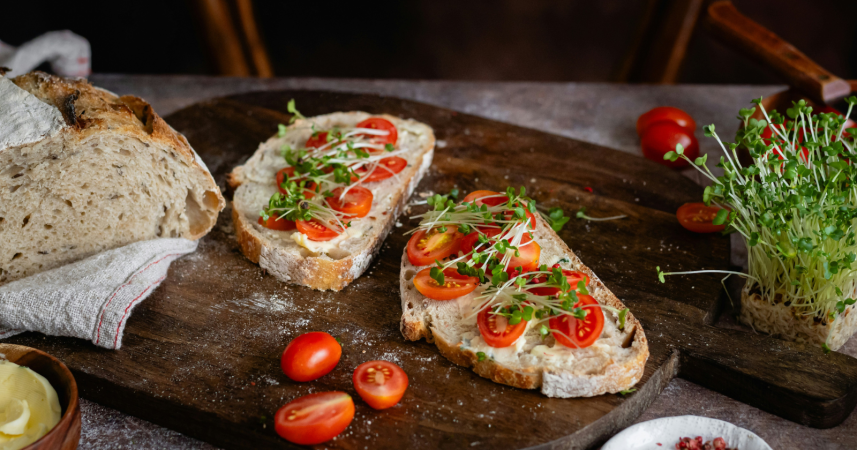
The best bread is a product of time more than technique, and you'll find this absolutely true when you don't rush the fermentation stage.

Add VegOut to your Google News feed. 
There's something almost magical about pulling a loaf of sourdough from the oven. The crackle of the crust, the tangy aroma filling your kitchen, the satisfaction of knowing you created it from scratch using nothing but flour, water, salt, and time.
I'll be honest: my first attempt at sourdough was a disaster. A dense, gummy brick that could've doubled as a doorstop. But here's what I learned after years of trial and error: sourdough isn't about perfection. It's about patience, observation, and developing a relationship with your starter.
This recipe will guide you through the entire process, from mixing to baking. Whether you're a complete beginner or someone who's tried and failed before, I promise this method will transform your baking.
Let's get started.
What you'll need
For the sourdough starter (if you don't have one yet):
100g all-purpose or bread flour
100g lukewarm water
Time and patience (about 5-7 days to get it active)
For the bread:
500g bread flour (or all-purpose flour)
350g water (room temperature)
100g active sourdough starter (fed and bubbly)
10g salt
That's it. Four simple ingredients.
1. Building your starter
If you already have an active starter, skip ahead. If not, here's the quick version of how to create one from scratch.
Mix equal parts flour and water in a jar. Leave it loosely covered at room temperature. Each day, discard half and feed it with fresh flour and water. You'll start seeing bubbles after a few days. By day five to seven, it should double in size within 4-6 hours of feeding.
That's when you know it's ready to bake with.
I keep my starter in the fridge between bakes and feed it once a week. The night before I want to bake, I pull it out and give it a feeding so it's active and bubbly by morning.
2. Mixing the dough
In a large bowl, combine your water and active starter. Mix until the starter dissolves into the water. It doesn't need to be perfect, just mostly incorporated.
Add the flour and mix with your hands or a wooden spoon until no dry flour remains. The dough will look shaggy and rough. That's exactly what you want.
Cover the bowl with a damp towel and let it rest for 30-60 minutes. This is called autolyse, and it allows the flour to fully hydrate. I usually use this time to clean up or prep my workspace.
After the rest, sprinkle the salt over the dough and work it in with wet hands. Pinch and fold until the salt is fully incorporated.
3. Bulk fermentation and folding
This is where the magic happens.
Leave your dough covered at room temperature for about 4-5 hours. During the first 2-3 hours, you'll perform a series of "stretch and folds" every 30 minutes.
Here's how: wet your hands, grab one side of the dough, stretch it up, and fold it over itself. Rotate the bowl 90 degrees and repeat. Do this four times (once on each "side" of the dough).
After your last fold, just let the dough rest undisturbed. You're looking for it to increase in volume by about 50%, with visible bubbles on the surface and along the sides of the bowl.
4. Shaping
Turn your dough out onto a lightly floured surface. It should feel soft, airy, and slightly sticky.
Gently shape it into a round by folding the edges toward the center, then flip it over so the seam is on the bottom. Using your hands or a bench scraper, drag the dough in small circles to create tension on the surface.
Let it rest for 20-30 minutes (this is called the bench rest), then perform your final shaping. I usually go for a round boule, but you can shape it into an oval batard if you prefer.
5. Cold fermentation
Place your shaped dough seam-side up in a bowl or banneton lined with a well-floured kitchen towel. Cover it tightly with plastic wrap or a shower cap (yes, really) and pop it in the fridge.
Let it cold ferment for 8-24 hours. I typically do an overnight ferment and bake the next morning.
This slow fermentation is where sourdough develops its complex flavor. The longer you let it rest in the fridge (within reason), the tangier your bread will be.
6. Baking
About 45 minutes before you're ready to bake, place a Dutch oven (with the lid on) in your oven and preheat to 450°F (230°C).
When your oven is hot, carefully remove the Dutch oven. Turn your dough out onto a piece of parchment paper. Score the top with a sharp knife or razor blade. This isn't just for looks, it controls where the bread expands as it bakes.
Lower the dough (parchment and all) into the hot Dutch oven, put the lid on, and bake for 20 minutes.
After 20 minutes, remove the lid and continue baking for another 25-30 minutes, until the crust is deep golden brown.
The sound of bread is as important as the taste. When you tap the bottom of your finished loaf, it should sound hollow.
Let it cool completely before slicing. I know this is torture, but cutting into hot bread will give you a gummy texture. Trust me on this one.
Tips and substitutions
Flour choices: While bread flour gives the best rise and structure, you can use all-purpose flour. You can also replace up to 100g of the bread flour with whole wheat or rye for more complex flavor.
Timing flexibility: Can't do the stretch and folds every 30 minutes? Do them when you can. Sourdough is forgiving. I've done three folds instead of four and the bread turned out fine.
No Dutch oven? You can bake the bread on a baking stone or sheet pan. Just add a pan of water to the bottom of your oven to create steam for the first 20 minutes.
Temperature matters: If your kitchen is cold (below 68°F), bulk fermentation might take 6-8 hours instead of 4-5. If it's warm (above 75°F), it could be done in 3-4 hours. Watch the dough, not the clock.
Starter strength: Your starter should be fed and doubled in size before you use it. If you're not sure it's ready, do the float test. Drop a spoonful in water. If it floats, you're good to go.
Bread baking is about observation and adjustment. Every batch teaches you something new about how dough behaves in your specific kitchen environment.
Final thoughts
Your first loaf might not be Instagram-perfect. Mine wasn't. But I guarantee it will taste better than anything you can buy at the store.
Sourdough has this way of slowing you down, of making you present. It's taught me patience in ways I didn't expect. You can't rush fermentation. You can't force the process. You simply have to show up, pay attention, and trust that time will do its work.
Keep notes on your first few bakes. What did the dough feel like? How long did bulk fermentation take? How did the bread taste? These observations will help you refine your process.
And remember, even experienced bakers have off days. Sometimes the starter is sluggish. Sometimes the kitchen is too cold. Sometimes life gets in the way and you forget about your dough for an extra hour.
That's okay. The beauty of sourdough is that it's resilient, adaptable, and forgiving.
So grab your flour, wake up your starter, and give it a try. Your kitchen (and your taste buds) will thank you.
If You Were a Healing Herb, Which Would You Be?
Each herb holds a unique kind of magic — soothing, awakening, grounding, or clarifying.
This 9-question quiz reveals the healing plant that mirrors your energy right now and what it says about your natural rhythm.
✨ Instant results. Deeply insightful.

Avery White
Formerly a financial analyst, Avery translates complex research into clear, informative narratives. Her evidence-based approach provides readers with reliable insights, presented with clarity and warmth. Outside of work, Avery enjoys trail running, gardening, and volunteering at local farmers’ markets.
More Articles by Avery