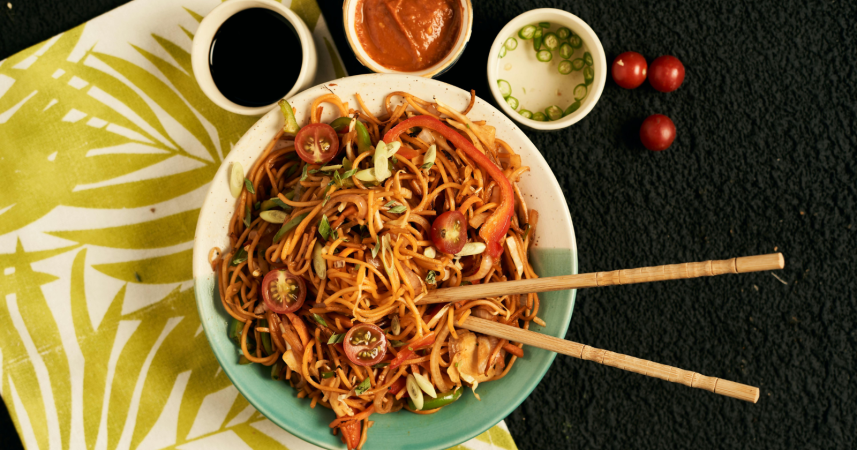
These noodles are what happens when creamy tomato pasta meets cozy coconut curry—and they’re weeknight-easy.
There’s a certain kind of evening that calls for a bowl you can cradle like a hand warmer—steam fogging your glasses, sauce clinging to noodles in a glossy coat.
That’s exactly what these tomato-coconut noodles deliver.
They’re weeknight-simple, deeply comforting, and they use pantry staples you probably already have.
Why these noodles hit the spot
Think of this dish as the cozy midpoint between a tomato basil pasta and a Thai-inspired coconut curry—without trying to be either.
Tomato paste brings concentrated umami and tang; full-fat coconut milk adds silk. Together they make a quick, creamy emulsion that hugs every strand.
I reach for this recipe when the weather turns and I want something soothing that doesn’t put me to sleep after. The acidity in tomatoes keeps the sauce bright, while the coconut rounds it out so you feel comforted, not heavy.
A splash of soy (or tamari), a hint of maple, and a squeeze of lime round the edges. Chili heat is optional, but I usually add just enough to warm, not scorch.
Recipe at a glance
-
Time: 20–25 minutes
-
Yield: 4 bowls
-
Dietary: Vegan, dairy-free; easily gluten-free with rice noodles or GF spaghetti
-
Effort: Easy weeknight
-
Key moves for silkiness: reserve starchy noodle water, simmer gently, finish with off-heat emulsification
Ingredients
Noodles & aromatics
-
12 oz (340 g) noodles: rice noodles, spaghetti, or linguine (GF if needed)
-
1 tbsp neutral oil (avocado, grapeseed, or light olive)
-
4 garlic cloves, thinly sliced or minced
-
1 tbsp fresh ginger, grated (optional but lovely)
-
3 scallions, thinly sliced (white and green parts divided)
Sauce base
-
3 tbsp tomato paste
-
1 cup (240 ml) full-fat coconut milk (well shaken; see tip below)
-
½ cup (120 ml) hot, starchy noodle water (plus more as needed)
-
1–2 tsp soy sauce or tamari (start with 1 tsp; add to taste)
-
1 tsp maple syrup (or sugar), to balance acidity
-
½–1 tsp red pepper flakes or 1 tsp sambal oelek (optional)
-
½ tsp kosher salt, plus more to taste
-
1–2 tsp fresh lime juice (to finish)
Veg & finishes (mix and match)
-
3 cups baby spinach or chopped kale
-
1 small bell pepper, thinly sliced (or 1 cup frozen peas)
-
1 tbsp toasted sesame oil (finish)
-
Handful fresh basil or cilantro, torn
-
Toasted peanuts or cashews for crunch
-
Lime wedges, to serve
Protein add-ins (optional, pick one)
-
1 block (14 oz / 400 g) firm tofu, crisped in a pan
-
1 can (15 oz / 425 g) chickpeas, drained and warmed
-
1 cup edamame, thawed
Ingredient note: Use full-fat coconut milk for a luxurious, stable emulsion. Light coconut milk can split or taste watery. If your can looks separated, whisk or blend before using.
Step-by-step: from pot to bowl
-
Boil the noodles. Salt the water generously (it should taste like the sea). Cook noodles to just shy of al dente. Before draining, scoop out 1½ cups (360 ml) starchy water and set aside. Drain and do not rinse.
-
Bloom the aromatics. While noodles cook, heat oil in a large deep skillet or Dutch oven over medium heat. Add garlic and ginger, plus the white parts of the scallions. Cook 1–2 minutes until fragrant but not browned.
-
Toast the tomato paste. Add tomato paste and cook 1–2 minutes, stirring, until slightly darker and glossy. This deepens the flavor.
-
Build the sauce. Whisk in coconut milk, ½ cup hot noodle water, soy/tamari, maple, chili flakes/sambal, and salt. Bring to a gentle simmer. Let it burble for 2–3 minutes to meld—don’t boil hard.
-
Add veg. Stir in spinach (or kale/peas/pepper) and simmer 1–2 minutes until just wilted or tender.
-
Emulsify with noodles. Add drained noodles to the pan. Toss over low heat, dribbling in more hot noodle water as needed (I usually use ¾–1 cup total) until the sauce turns glossy and clings to the strands. You’re aiming for silky, not soupy.
-
Finish and balance. Off the heat, stir in sesame oil and lime juice to taste. Fold in the green parts of the scallions. Taste and adjust salt, soy, chili, and lime until it makes you go “ohhh yes.”
-
Serve. Twirl into bowls. Top with herbs and crunchy peanuts. Add tofu, chickpeas, or edamame if using. Extra lime on the side is non-negotiable in my kitchen.
What makes them silky (and how to fix common pitfalls)
The magic is emulsion—fat from coconut milk plus starch from noodle water, whisked with acid and umami. A few small habits keep everything velvety:
-
Toast the paste. Cooking tomato paste first concentrates savoriness and removes its raw edge.
-
Gentle heat. High heat can cause coconut milk to split. Keep it to a lively simmer.
-
Starch control. Noodle water is liquid gold. Add slowly; stop when the sauce glosses and coats the back of a spoon.
-
Finish off-heat. Stir in sesame oil and lime at the end so they stay bright and fragrant.
If your sauce is too thin: keep tossing noodles over low heat; the starch will tighten it. Or simmer 1–2 minutes without noodles, stirring, to reduce.
Too thick: splash in more hot noodle water 1–2 tablespoons at a time.
Too tangy: a pinch more maple or a dribble of coconut milk brings balance.
Too mild: up the chili or add a teaspoon of miso or extra soy for depth.
Variations to match your mood (and pantry)
-
Roasted tomato boost: Roast a pint of cherry tomatoes at 425°F (220°C) with olive oil and salt until blistered; fold in at the end for pops of sweetness.
-
Smoky chili: Swap red pepper flakes for a chopped chipotle in adobo (a fusion twist that works surprisingly well).
-
Curry-ish: Add 1 teaspoon red curry paste with the tomato paste and reduce chili flakes.
-
Vegetable forward: Double the greens, add mushrooms, or stir-fry shredded cabbage in the pan before the sauce.
-
Nut-free crunch: Try toasted pumpkin seeds or crispy shallots.
Gluten-free? Use rice noodles or certified GF spaghetti and tamari.
Soy-free? Use coconut aminos and extra salt to taste.
Oil-free? Sauté aromatics in a tablespoon of coconut milk instead of oil.
Make-ahead, storage, and reheating
This is best the minute it’s made—the sauce’s silkiness is peak-fresh. But leftovers happen (and they’re still great).
-
Fridge: Store in an airtight container up to 3 days.
-
Reheat: Add a splash of water or coconut milk and warm gently on the stove, tossing until glossy again. Microwave in 45-second bursts, stirring between.
-
Freeze: The sauce alone freezes well for 2 months. I don’t recommend freezing assembled noodles—the texture suffers.
Meal prep tip: Make the sauce base through Step 4 and refrigerate (or freeze) it. When cravings hit, cook fresh noodles, warm the sauce, and combine. Dinner in 10.
The mindful cook’s corner
Why a tiny bit of sweetness? Tomatoes are naturally acidic. A teaspoon of maple doesn’t make the dish sweet; it smooths sharp edges so other flavors shine. And the squeeze of lime at the end? That’s your “wake-up” note—the difference between good and can’t-stop-eating.
I also like to ask myself: What texture am I missing? If everything is soft, I’ll add peanuts or crispy tofu for crunch. If the bowl is rich, I’ll add herbs and lime for lift. Cooking on chilly evenings is less about perfection and more about small decisions that make you feel cared for.
Nutrition snapshot (approx. per serving, without optional proteins)
-
Calories: ~480
-
Protein: ~11 g
-
Carbs: ~66 g
-
Fat: ~18 g
-
Fiber: ~4 g
-
Sodium: varies with soy/tamari; start low and taste as you go
(Estimates will shift with noodle type, salt level, and add-ins.)
FAQ for cozy noodle nights
Can I use crushed tomatoes instead of paste?
Yes—use 1 cup (240 ml) crushed tomatoes. Simmer 5–7 minutes to reduce before adding coconut milk, and taste for sweetness since crushed tomatoes can be tarter.
Light coconut milk okay?
It works, but won’t be as silky. If using, reduce the noodle water slightly and keep the simmer extra gentle.
What protein pairs best?
Crispy tofu for contrast, chickpeas for ease, edamame if you want high protein with minimal fuss.
Is the heat level kid-friendly?
Skip the flakes and serve chili oil at the table. You keep the warmth; they keep the peace.
Silky vegan tomato-coconut noodles (print-friendly card)
Ingredients
-
12 oz (340 g) noodles (rice noodles or spaghetti)
-
1 tbsp neutral oil
-
4 cloves garlic, minced
-
1 tbsp grated ginger (optional)
-
3 scallions, sliced (white and green parts divided)
-
3 tbsp tomato paste
-
1 cup (240 ml) full-fat coconut milk
-
½–1 cup (120–240 ml) hot noodle water, divided
-
1–2 tsp soy sauce or tamari
-
1 tsp maple syrup
-
½–1 tsp red pepper flakes or 1 tsp sambal (optional)
-
½ tsp kosher salt
-
1–2 tsp lime juice
-
3 cups spinach (or other veg)
-
1 tbsp toasted sesame oil
-
Herbs, peanuts, lime wedges to finish
-
Optional protein: crispy tofu, chickpeas, or edamame
Directions
-
Boil noodles; reserve 1½ cups noodle water; drain.
-
Sauté garlic, ginger, and white scallions in oil over medium 1–2 minutes.
-
Toast tomato paste 1–2 minutes.
-
Whisk in coconut milk, ½ cup noodle water, soy/tamari, maple, chili, and salt. Simmer gently 2–3 minutes.
-
Add spinach; wilt 1–2 minutes.
-
Toss in noodles; add noodle water as needed until glossy and clinging.
-
Off heat, stir in sesame oil, lime, and green scallions.
-
Taste, adjust, and serve with herbs, peanuts, and protein if using.
If you make these, I’d love to hear how you personalize your bowl—extra lime? More heat? A blizzard of basil?
Chilly evenings were made for fiddling at the stove until dinner tastes like a hug.
If You Were a Healing Herb, Which Would You Be?
Each herb holds a unique kind of magic — soothing, awakening, grounding, or clarifying.
This 9-question quiz reveals the healing plant that mirrors your energy right now and what it says about your natural rhythm.
✨ Instant results. Deeply insightful.