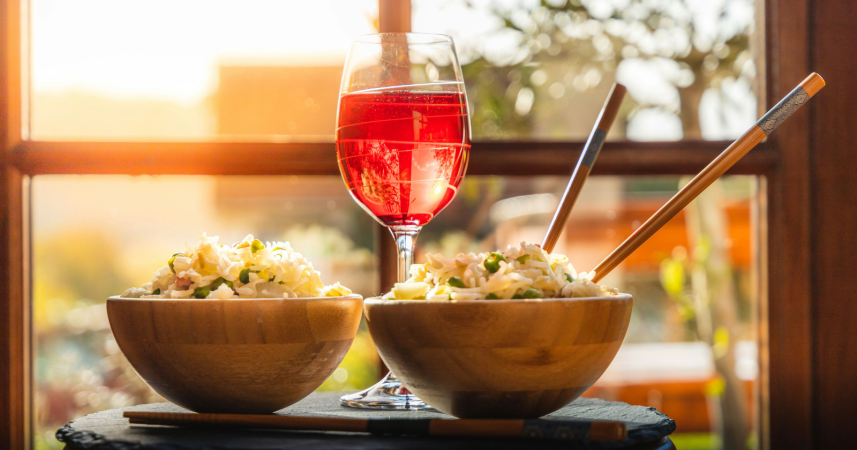
Turns out, the secret to quitting weeknight delivery wasn’t discipline. It was this $1.50 bowl I could make on autopilot.
Let me start with a confession: I love the thrill of a hot, saucy takeout container. The little cloud of steam, the salty-sweet smell, the promise that dinner will be ready in ten minutes with zero dishes?
Irresistible.
Until I looked at my budget.
As a former financial analyst, my habit of “just one more bowl” added up fast. So I gave myself a challenge: pick one recipe that scratches the same itch as takeout—fast, comforting, and deeply flavorful—and make it my default on weeknights.
One month later, my spending dropped, my energy went up, and my kitchen started to feel like a quiet little restaurant I run for myself after work.
That one recipe? A big-batch, skillet-fried rice that’s crispy at the edges, glossy with ginger-scallion oil, studded with veggies, and anchored by protein-packed tofu or chickpeas. It’s vegan, wildly flexible, and ready in the time it takes to find your delivery app password.
Below I’ll share what changed for me, how much I saved, the exact recipe, and how to tweak it so you never get bored.
Why I landed on fried rice
Could I have gone with pasta, sheet-pan everything, or grain bowls? Absolutely. But I wanted something that tasted like a Friday night treat even on a Tuesday. Fried rice is perfect because:
-
It’s a “use-what-you-have” meal. Day-old rice, frozen veg, stray scallions, the last knob of ginger—you’re in business.
-
It satisfies the takeout vibe—salty, savory, slightly smoky—without sinking your budget or your energy.
-
It scales like a dream. You can cook once and eat three or four times.
-
It’s naturally vegan if you skip the egg (I don’t miss it here) and lean on tofu or chickpeas for protein.
And if you like variety, fried rice is a blank canvas. Swap sauces, change the aromatics, or throw in a spoon of chili crisp. It’s not a “meal prep” you’ll dread by day three.
The budget breakdown (aka how the numbers made me a believer)
I started tracking one typical week. Here’s what a single skillet of my fried rice costs me at my local grocery store:
-
3 cups cooked rice (from 1 cup dry): ~$0.60
-
1 block extra-firm tofu or 1 can chickpeas: $1.29–$2.49
-
2 cups frozen mixed veggies: ~$1.20
-
4 scallions + 1 thumb of ginger + 3 cloves garlic: ~$1.10
-
Soy sauce/tamari, rice vinegar, toasted sesame oil, optional gochujang or chili paste: ~$0.60 (amortized pantry cost)
Total: roughly $4.79–$6.00 for 4–5 generous portions. That’s about $1.00–$1.50 per serving.
My usual takeout bowl in the same category runs $12–$16 before tip and fees. If I replace just three takeout meals a week with this skillet, I save $30–$45 weekly. Over a month? That’s a couple hundred bucks—without feeling deprived. The bonus I didn’t expect: because I batch it, I stop “just grabbing something” at lunch the next day.
The recipe (big-batch ginger-scallion fried rice, vegan)
Time: 35 minutes
Yield: 4–5 servings
Good for: meal prep, quick dinners, late-night “I’m starving” moments
Ingredients
-
3 cups cold, cooked rice (day-old is best; jasmine or long-grain)
-
14 oz extra-firm tofu (pressed and cubed) or 1 can chickpeas, drained and patted dry
-
2 cups frozen mixed vegetables (peas, carrots, corn, edamame, or whatever you like)
-
4 scallions, white and green parts separated, thinly sliced
-
1 thumb of fresh ginger, peeled and finely minced (about 1½ Tbsp)
-
3 garlic cloves, minced
-
2–3 Tbsp neutral oil (avocado, canola) for frying
-
1½ Tbsp soy sauce or tamari (gluten-free option)
-
2 tsp toasted sesame oil
-
1–2 tsp rice vinegar
-
Optional heat: 1–2 tsp gochujang, chili-garlic sauce, or chili crisp (choose a vegan brand)
-
Optional add-ins: sliced mushrooms, shredded cabbage, diced bell pepper, or a handful of spinach
-
To finish: sesame seeds, extra scallion greens, lime wedges
Method
-
Dry and crisp the protein.
Heat 1 Tbsp neutral oil in a large skillet or wok over medium-high. Add tofu cubes or chickpeas in a single layer. Sprinkle with a pinch of salt. Let them sit until golden on one side, then toss and continue until crispy all over, 6–8 minutes. Transfer to a plate. -
Build the flavor base.
In the same pan, add another 1 Tbsp oil if the pan looks dry. Add the white parts of the scallions, ginger, and garlic. Stir-fry 30–60 seconds until fragrant, not browned. -
Veg time.
Add frozen vegetables (and any quick-cooking fresh veg). Stir-fry 3–4 minutes until hot and bright. If using mushrooms or cabbage, give them an extra minute. -
Rice + sauce.
Add the cold rice, breaking up clumps with the back of a spoon. Drizzle in soy sauce/tamari, sesame oil, and rice vinegar. If using gochujang or another chili paste, stir it into a corner of the pan with a splash of water, then fold through. Keep the heat high so the rice sizzles. -
Crisp, don’t steam.
Spread the rice out in the pan and let it sit 60–90 seconds so it gets those toasty bits. Toss, then repeat once more. -
Bring it together.
Return the crispy tofu or chickpeas to the skillet. Toss in the scallion greens. Taste and adjust—more soy for salt, splash of vinegar for brightness, extra sesame oil for nuttiness. -
Finish.
Top with sesame seeds and a squeeze of lime. Eat from a bowl with your favorite spoon.
Gluten-free notes: Use tamari or certified gluten-free soy sauce and a certified gluten-free gochujang or skip it and use chili crisp you trust.
How I batch, store, and reheat (so it stays crave-worthy)
I usually make a double batch on Sunday. I divide it into glass containers and leave one out for that night’s dinner. The rest goes into the fridge (up to four days) or freezer (up to two months).
Reheating secrets so it tastes like you just made it:
-
Skillet method: splash of water or broth, medium-high heat, two minutes covered, then uncover and let it crisp.
-
Microwave: short bursts, stir halfway, then finish with a few drops of sesame oil and a squeeze of lime to wake up the flavors.
-
Air fryer: yes, really—spread a thin layer at 350°F/175°C for 5–6 minutes, shaking once.
If you’re freezing, pack it flat in zip bags (space saver!), then thaw overnight in the fridge for best texture.
How I keep it exciting without spending more
Fried rice is a theme; the variations are the fun part. I rotate through these low-cost flavor paths:
-
Garlic-black pepper: extra garlic, cracked pepper, splash of soy, finish with scallion greens.
-
Sweet-spicy: a little brown sugar or maple, chili flakes, and pineapple chunks from the pantry.
-
Miso-maple: whisk 1 tsp white miso with a splash of warm water, ½ tsp maple, and 1 tsp rice vinegar; stir in at the end.
-
Kimchi kick: a chopped handful stirred through right before serving (check label for anchovies—many brands are vegan).
-
Curry-ish: a teaspoon of curry powder and a knob of vegan butter folded in at the end for richness.
Sometimes I “go deluxe” by adding five-minute toppings: quick-pickled cucumbers (cuke + rice vinegar + pinch of sugar), shredded nori, or toasted peanuts. Still cheaper than delivery and way more personal.
How the habit stuck (and why it matters)
Here’s the real win: I didn’t just save money. I rewired a nightly decision.
Instead of “Should I order?” I started asking, “Is my skillet clean?” That tiny reframing lowered the friction to cook. Once I knew the steps by heart—crisp protein, aromatics, veg, rice, sauce—I stopped negotiating with myself. I could start dinner before my willpower had a chance to wander.
Another benefit I didn’t expect: calmer evenings. Cooking forces me to slow down, rinse a handful of scallions, listen to ginger sizzle. It’s a small, edible boundary between day and night. I also like knowing exactly what’s in my bowl. Whole grains, plant protein, fiber, and a heap of vegetables leave me satisfied without the heaviness that sometimes follows takeout.
If you care about sustainability, this habit cuts down on packaging too. I volunteer at our local farmers’ market on weekends, and repurposing scrappy veggies from my crisper for this dish means I waste less. Small choices add up.
Troubleshooting (because even “simple” has a learning curve)
-
My rice is mushy. Use day-old, cold rice. If you only have fresh, spread it on a sheet pan and chill it fast (20–30 minutes) to dry the surface.
-
It’s bland. Add acidity (rice vinegar or lime) and fat (a few drops of sesame oil). Also, salt perception jumps when food is hot, so serve it right away.
-
No wok? No problem. A wide, heavy skillet works better than a small one. You want moisture to escape so the rice can crisp.
-
Tofu won’t crisp. Pat it very dry, use enough oil, and don’t crowd the pan. Give it time to brown before you stir.
-
I get bored by Wednesday. Pick two flavor paths per week. Make a base batch, then finish half with one sauce and half with another.
The mindset shift that saves me the most
For ages, I tried to “stop ordering out” with sheer willpower. That never worked. What finally did was a substitution, not a restriction.
I gave myself the same pleasure—speed, comfort, big flavor—but with a system that supports my goals. I still order once in a while (I’m not a martyr), but now it’s a treat, not a Tuesday reflex.
If you want to try this, start with one week. Buy the few pantry ingredients you might not have (toasted sesame oil is the MVP), cook one big skillet, and see how you feel. If you love it, do it again. Habits don’t have to be dramatic to be life-changing; they just have to be repeatable.
As always, I wrote this piece with VegOutMag’s community in mind and the brief we use for tone and structure .
Quick reference (pin this)
Vegan big-batch fried rice (serves 4–5)
-
Base: 3 cups cold cooked rice
-
Protein: 1 block tofu (pressed, cubed) or 1 can chickpeas (dried well)
-
Veg: 2 cups frozen mix
-
Aromatics: 4 scallions (whites + greens divided), 1 thumb ginger, 3 garlic cloves
-
Sauce: 1½ Tbsp soy/tamari, 2 tsp toasted sesame oil, 1–2 tsp rice vinegar, optional 1–2 tsp gochujang/chili sauce
-
Method: Crisp protein → sauté aromatics → add veg → add rice + sauce → let it crisp → finish with scallion greens, sesame seeds, and lime.
If a steaming bowl of comfort for about a buck fifty isn’t motivation enough, I don’t know what is.
What’s Your Plant-Powered Archetype?
Ever wonder what your everyday habits say about your deeper purpose—and how they ripple out to impact the planet?
This 90-second quiz reveals the plant-powered role you’re here to play, and the tiny shift that makes it even more powerful.
12 fun questions. Instant results. Surprisingly accurate.