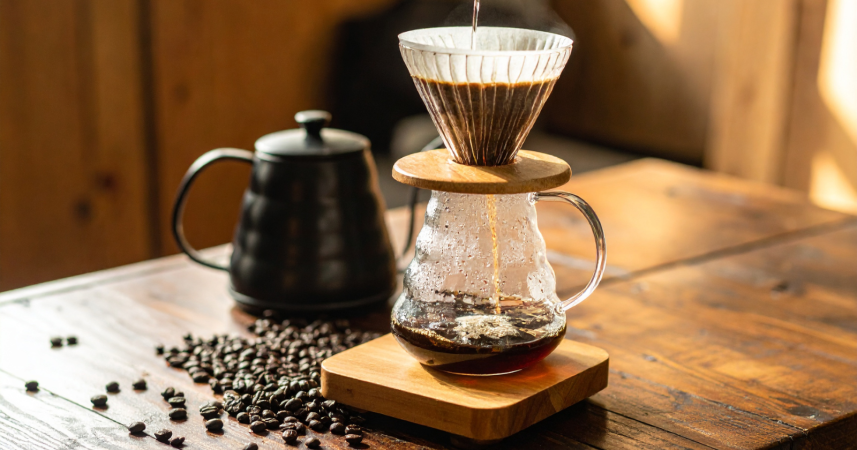
I’m not a barista. I just got tired of bitter coffee. Here’s how five tiny upgrades made my morning cup café-good—without the café.

Add VegOut to your Google News feed. 
If you’re anything like me, the first cup sets the tone for the whole day. When it’s rich, balanced, and smooth, everything else feels easier.
When it’s dull or bitter? Not so much.
The good news: you don’t need a $2,000 setup or a barista badge to make café-level coffee at home. You just need to control a few key variables—consistently. That’s the analyst in me talking; I spent years in finance, and precision quietly wins there too.
Below are the five upgrades that made the biggest difference in my own kitchen, with simple steps you can apply today.
1. Get your water right
Here’s a quick reality check: coffee is ~98% water. So if your tap water smells like a swimming pool or tastes flat, your cup will too.
I keep this dead simple:
-
If your tap water tastes great on its own, use it—ideally after running through a basic carbon filter to strip chlorine.
-
If it tastes off, grab an inexpensive filter pitcher or brew with a neutral bottled spring water (not distilled; pure distilled can make coffee taste hollow).
-
Bonus move: if you’re curious, try a mineral packet once and compare. You’ll learn fast how water chemistry nudges flavor toward sweeter or sharper.
Do you need to memorize hardness and alkalinity numbers? Not unless you want to nerd out (welcome to the club).
What actually matters day-to-day is consistency. Once your water tastes good and stays the same, dialing in everything else gets easy.
If you like having a guardrail for brew temperature and ratio (next tip), the Specialty Coffee Association’s “Golden Cup” gives solid target ranges many cafés use in training.
2. Weigh it—don’t wing it
A $15 digital scale may be the single cheapest way to upgrade your coffee. Eyeballing “two heaping scoops” swings wildly from day to day. When you weigh both coffee and water, you lock in flavor.
Start with a ratio of 1:16 (for example, 20 grams of coffee to 320 grams of water).
Prefer stronger? Nudge toward 1:15.
Like it lighter and tea-like? Drift toward 1:17.
Keep everything else the same while you test; you’ll taste the shift clearly.
For water temperature, aim for about 93°C/200°F at the coffee bed. If you don’t have a temperature-controlled kettle, bring water to a boil, wait 30–45 seconds, then pour. These targets sit right inside the SCA’s guidance used by many professionals.
A quick routine I use every morning:
-
Zero the scale with my mug or carafe.
-
Add beans, note the number, grind.
-
Brew and pour water to the exact target.
Two minutes of precision, miles of difference.
3. Tune your grind (and use the brew time as your compass)
Have you ever brewed a cup that tasted sour, lemony, and thin? That’s usually under-extraction—grind too coarse, water rushed through. If it’s harsh, bitter, and drying, you probably went too fine and over-extracted.
You don’t need a new machine to fix this; you need to adjust grind size until your brew time and taste line up:
-
Pour-over/Chemex: Aim for a total brew around 2:30–4:00. Running fast? Go finer. Draining slowly? Go coarser.
-
French press: Coarser grind, 4 minutes steep, then plunge. If it’s silty and bitter, go coarser or reduce total time.
-
Drip machine: If the basket floods, you’re too fine; if the coffee tastes weak and watery, you’re too coarse.
If you’re still using a blade grinder, consider a burr grinder when you can. Burrs create a more uniform grind, which means fewer bitter fines and fewer sour boulders in the same cup. It’s not about snobbery—it’s about reducing chaos so your coffee tastes like it’s supposed to, every single day.
4. Bloom the grounds and mind your pour
If you brew pour-over or use a drip machine with a fresh bag of beans, try this: bloom the coffee.
That means pre-wetting the grounds with a small amount of hot water (roughly 2–3x the coffee’s weight) and letting it sit for 30–45 seconds before the main pour. The bloom releases trapped CO₂ that would otherwise repel water and hinder extraction.
Taste-tests and technical writeups agree that a proper bloom often produces a fuller, rounder cup—especially with fresher beans that still hold more gas from roasting.
A few tiny habits here add up:
-
Pre-wet your paper filter to rinse papery taste and pre-heat your brewer.
-
Pour in pulses or a gentle spiral, keeping the bed just submerged instead of drenching and then starving it.
-
Keep the kettle spout close to avoid splashing water up the sides of the filter, which bypasses the grounds.
These are the “barista-like” touches your favorite café already does. They’re quick once you’ve done them a few times.
5. Keep everything clean—and your beans fresh
Coffee oils are delicious in the cup, but they’re stubborn on equipment. Over time they go rancid and muddy the flavor, especially in drip machines and carafes. A simple cleaning routine protects taste and your gear.
What works:
-
Daily: Rinse and air-dry parts that touch coffee—carafes, filters, press screens, drippers.
-
Weekly to monthly (depending on use and water): Descale and use a coffee-specific cleaner to break down oils you can’t see. Kitchen tests and expert guides consistently note that cleaning removes rancid residues and mineral buildup that dull flavor.
And the beans? Whole, recently roasted, and stored well. I keep mine in an opaque, airtight canister on the counter—away from heat and sunlight. Grind right before brewing whenever possible.
If you can only buy pre-ground, store smaller amounts and finish them quickly; pre-ground stales rapidly because of all that exposed surface area.
Putting it all together (my 2-minute morning playbook)
Here’s exactly how I brew when I’m in a hurry before a trail run or a farmers’ market shift:
-
Water: Fill the kettle with filtered water.
-
Weigh: 20 g coffee → 320 g water (1:16 ratio).
-
Grind: Medium for pour-over (adjust tomorrow if today’s cup is off).
-
Bloom: 40–60 g water, wait ~40 seconds.
-
Pour: Finish in gentle pulses; total brew ~3 minutes.
-
Clean: Quick rinse of dripper and kettle spout; carafe gets a real wash later.
That’s it. No latte art required.
Troubleshooting quick hits
-
Sour/too bright: Grind slightly finer, or raise water temp a touch.
-
Bitter/ashy: Grind slightly coarser, or lower water temp a bit.
-
Flat/no aroma: Try different water (or a fresh filter), and check your beans’ age.
-
Weak body: Increase dose (try 1:15) or shorten total brew time by a few seconds.
Final sip
Café-quality coffee at home isn’t mysterious—it’s repeatable. Nail your water, weigh your inputs, tune your grind by taste, bloom when it helps, and keep your kit clean. Five small habits, one consistently stellar cup.
If you try these, I’d love to hear what changed most for you. Was it the scale? The bloom? Or the moment you realized your tap water was selling your beans short?
Either way, give yourself room to experiment. Curiosity is the best part of this ritual.
What’s Your Plant-Powered Archetype?
Ever wonder what your everyday habits say about your deeper purpose—and how they ripple out to impact the planet?
This 90-second quiz reveals the plant-powered role you’re here to play, and the tiny shift that makes it even more powerful.
12 fun questions. Instant results. Surprisingly accurate.