We’re trading our ability for deep, sustained focus for fleeting bursts of stimulation — and the swap is happening faster than we think.
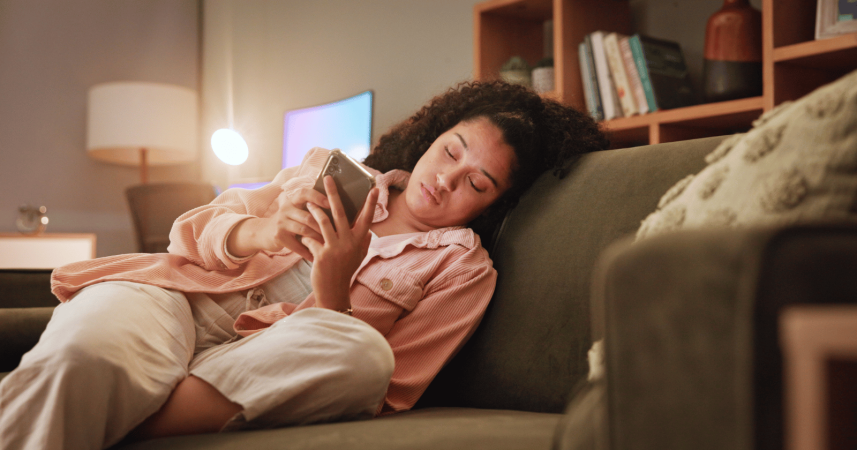
Ever open your phone to check the weather and, twenty minutes later, you’re watching a guy in Portugal make pancakes shaped like celebrities?
Yeah. That’s not an accident.
We like to think our attention is a fixed trait — you’re either “good at focusing” or you’re not. But the truth is, your brain is shaped by what you feed it. And if you’ve been feeding it bite-sized, dopamine-charged videos all day…well, it’s been rewiring itself accordingly.
That’s not a dramatic metaphor — it’s actual brain science. And if you’ve been wondering why it feels harder to read a book, watch a movie without checking your phone, or even follow a conversation without your mind drifting…there’s a good chance your brain has quietly shifted into TikTok mode.
How our brains are actually changing
TikTok didn’t invent distraction, but it’s perfected it.
Neuroscientists have been warning for years that our brains are plastic — meaning they adapt to the environments we place them in. Short-form video is an environment built for rapid novelty.
Novelty is like catnip for the brain. Each new clip, sound effect, or visual pattern gives you a tiny hit of “Hey, pay attention to this!” That constant reset changes how your neural pathways fire. The more often you expose yourself to it, the more your brain starts craving it.
Eventually, slower forms of engagement — reading a book, sitting through a meeting, even having an unhurried conversation — don’t just feel boring. They feel uncomfortable.
I’ve felt it myself. I’ll pick up a novel, and my mind starts tapping its foot after three pages, like “Where’s the twist? Where’s the jump cut?” That’s TikTok brain talking.
It’s not just about distraction — it’s about dopamine
Dopamine has gotten a bad rap lately, but it’s not inherently evil. It’s the brain’s way of rewarding us for things that might be good for survival.
The problem? Apps like TikTok have figured out how to give you dopamine bursts with almost no effort on your part. No hunting, no building, no problem-solving — just a quick scroll and another hit.
As noted by neuroscientist Dr. Anna Lembke, “The quantity and potency of dopamine-triggering stimuli we are now exposed to is unprecedented in human history.”
That means your brain’s reward system gets hijacked, making everything else — from work projects to laundry — feel slow and unrewarding in comparison. Even things you used to enjoy can feel oddly “flat” because they can’t compete with the sheer speed and intensity of digital stimulation.
Why your attention span feels “broken”
If you’ve noticed that you can’t seem to focus the way you used to, you’re not imagining it.
Think of your attention like a muscle. If you’ve been training it for sprints — 15-second bursts of novelty — it’s going to struggle with a marathon. And anything over three minutes now feels like a marathon.
There’s also the “context switching” problem. Every time you swipe, your brain has to adjust to a new set of visuals, sounds, and topics. That constant shifting taxes your cognitive resources.
So by the time you try to sit down and write that email or focus on a work project, your mental energy is already depleted. You’ve been burning fuel all day without realizing it.
The sneaky emotional side effect
Here’s something I didn’t expect when I started paying attention to my own habits: short-form video doesn’t just mess with focus — it messes with mood.
Rapid-fire entertainment makes real life feel slower and less stimulating. Waiting in line at the grocery store becomes intolerable. A quiet weekend feels “empty” unless you’re filling it with a steady drip of content.
And here’s the kicker: the more you feed that need for stimulation, the more restless and dissatisfied you feel when you’re not getting it.
It’s like eating candy all day — the sweetness becomes the baseline, and anything less feels bland. The problem is, life isn’t meant to be one continuous sugar rush.
The illusion of multitasking
Some people defend their scrolling habits by saying, “Well, I can multitask. I can watch TikTok and still get stuff done.”
Here’s the truth: multitasking is usually just rapid task-switching. And every switch comes with a “reorientation cost” — a few seconds (or minutes) where your brain scrambles to remember what it was doing before.
Over time, those tiny delays add up to a lot of lost productivity. But more than that, they add to the mental clutter that leaves you feeling fried by the end of the day.
What helped me retrain my brain
I’m not going to tell you to delete every app. That’s like telling someone to give up sugar forever — possible, sure, but for most people, it won’t stick.
Instead, I started treating short-form content like dessert. Something I can enjoy, but not something I build my whole diet around.
One small shift that made a big difference: I started giving myself “boredom windows.” No podcasts, no videos, no background noise — just letting my mind wander while I cooked or walked. At first, it felt itchy. Now, it feels like a mental reset.
Another trick? I started timing my deep work in short bursts — 20 minutes on, 5 minutes off. That way, I’m not asking my attention to go from sprinting to running a marathon overnight.
And maybe the most important thing — I stopped using my phone as my default filler for every small gap in the day. Waiting for the coffee to brew? I let my eyes rest on something in the room instead of the screen. It’s amazing how quickly those tiny changes add up.
The power of “single-tasking”
One habit I underestimated until I tried it: single-tasking.
I picked one activity — like making breakfast — and committed to doing just that. No checking emails between stirring the eggs. No glancing at headlines.
At first, it felt unnatural. But after a week, I noticed a huge drop in that restless “I should be doing more” energy. My brain seemed calmer, less jumpy.
And here’s the kicker: the more I practiced single-tasking, the easier it was to focus for longer stretches in other areas of life.
How to spot if you’ve got it
You don’t need a brain scan to know if you’ve trained your brain for TikTok mode. Ask yourself:
-
Do you reach for your phone the moment you feel a hint of boredom?
-
Does reading a long article feel harder than it used to?
-
Do you find yourself “multi-tasking” but actually just jumping between tabs?
-
Do conversations sometimes feel “too slow” to hold your attention?
If the answer is yes to most of those, it’s not a moral failing — it’s your brain adapting to the input you’ve given it.
The bigger picture
We’ve been through versions of this before. Television changed how we consumed information. The internet sped it up. Social media condensed it even further. Now we’re in the era of hyper-compressed entertainment.
Each shift has benefits — more access to ideas, more voices being heard — but also costs. And the cost right now seems to be sustained attention and satisfaction with slower, quieter experiences.
As Gloria Mark, a leading psychologist in the study of attention, reminds us: our attentional capacity is limited and precious—and we’ve been spending it fast, often without realizing it.
The good news? Brain plasticity works both ways. The same way you trained your brain for short bursts, you can train it back for depth. It just takes intention and patience.
Reclaiming your focus
Here’s what’s worked for me, and what you can try without feeling like you’re giving up everything fun:
-
Start small: Pick one hour a day where you avoid short-form content.
-
Swap in slower media: Podcasts, long-form articles, or even just sitting with music.
-
Move your body: Physical activity helps reset dopamine pathways.
-
Set app timers: Most phones can nudge you when you’ve hit a limit.
None of these are about perfection — they’re about shifting the balance so your brain gets used to slower, deeper forms of engagement again.
If you’ve been feeling like your mind’s a bit more scattered lately, you’re not alone. The trick isn’t to panic — it’s to recognize the pattern and start nudging your habits back toward the kind of focus you want.
Because the ability to stay with something — a project, a conversation, a thought — is worth protecting. And in a world that’s moving faster every day, that ability might just become your competitive advantage.
And here’s the secret: when you get even a little of that focus back, it’s not just about getting more done. It’s about feeling more present, more grounded, and less like life is passing by in 15-second clips.
If You Were a Healing Herb, Which Would You Be?
Each herb holds a unique kind of magic — soothing, awakening, grounding, or clarifying.
This 9-question quiz reveals the healing plant that mirrors your energy right now and what it says about your natural rhythm.
✨ Instant results. Deeply insightful.