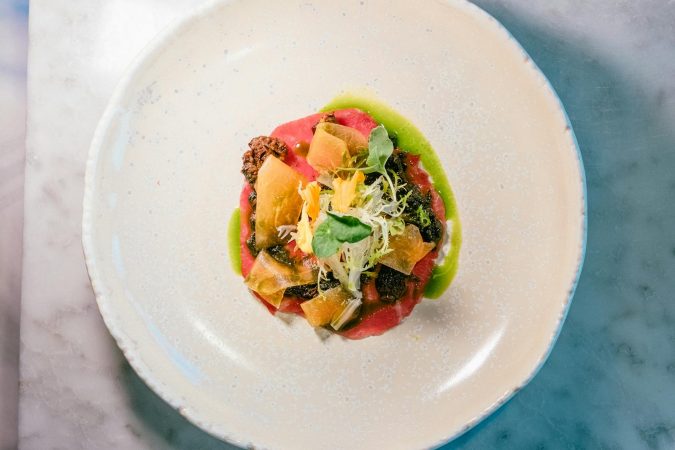
Noma's $1,500-per-person residency has landed in a Los Angeles still recovering from wildfires and restaurant closures — and the city's chefs, farmers, and producers are navigating a complicated mix of hope, frustration, and opportunity.

Add VegOut to your Google News feed. 
I'll admit something: I have complicated feelings about $1,500 dinners. Part of me — the part that gets genuinely giddy about a perfectly roasted carrot — understands the artistry. Another part wonders who exactly gets to participate in that kind of experience, and who's left watching from outside. That tension is playing out in real time right now in Los Angeles, where the arrival of the world's most famous restaurant is forcing a bruised city to reckon with what it actually needs from fine dining.
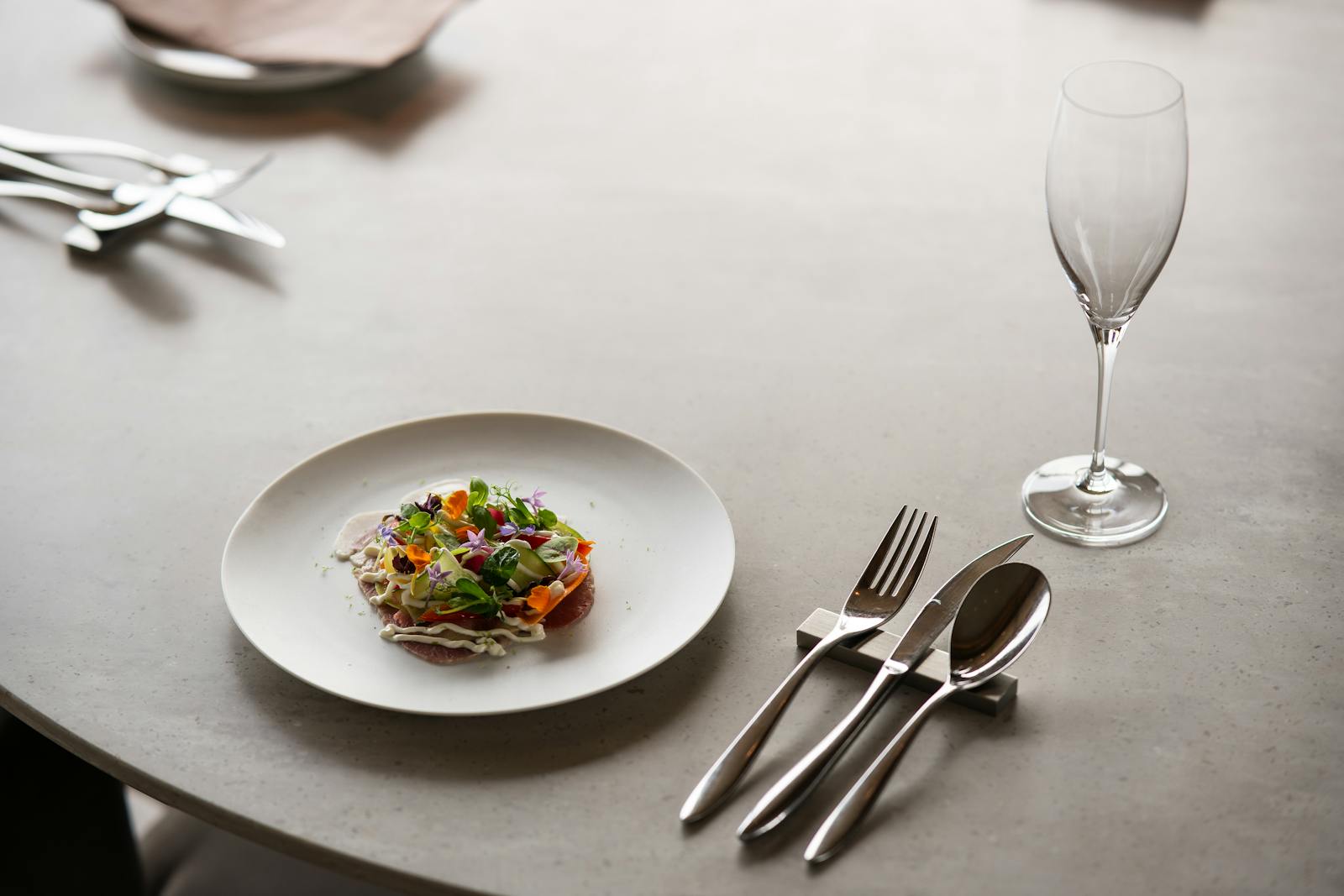
Noma Lands in Silver Lake
Noma, René Redzepi's Copenhagen-born culinary institution, has reportedly launched a residency in Silver Lake, Los Angeles, this spring. The pop-up is committed to showcasing California's regional ingredients, featuring an all-natural, all-California wine list and sourcing from local farmers and producers.
Reports suggest a price point of around $1,500 per person.
For a city still reeling from one of the roughest stretches in its modern restaurant history, the timing is loaded with meaning.
A City Still Healing
Los Angeles lost a significant number of restaurants in recent years, according to industry observers. The causes were devastating and compounding: wildfires that destroyed businesses and displaced communities, and immigration enforcement actions that disrupted workforces across the city. For an industry that runs on thin margins and thinner labor pools, the hits were existential.
Into this landscape rolls one of the most celebrated restaurants on Earth, carrying both enormous cultural cachet and an enormous check average. Whether that amounts to a lifeline or a tone-deaf spectacle depends entirely on who you ask.
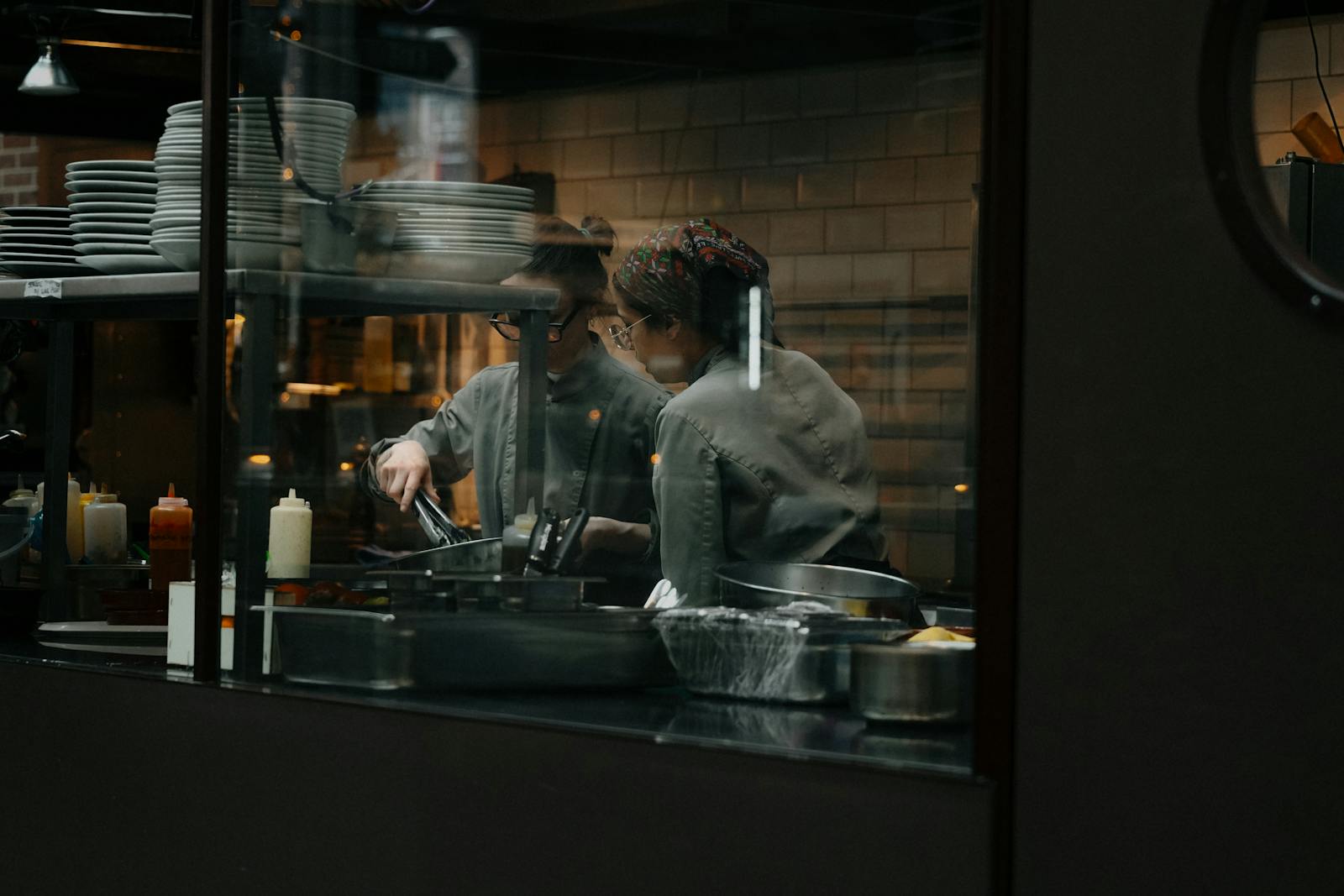
The Case for Optimism
Several prominent LA food figures are reportedly in the "this is good for us" camp, according to industry reporting. Local chefs have expressed enthusiasm about the attention the residency brings to the city's culinary scene.
The logic is straightforward. Food tourists flying in to experience Noma's residency will eat other meals, too. They'll wander into neighborhood spots, hit local wine bars, and maybe discover that LA's food scene extends far beyond the Hollywood clichés. A rising tide, the argument goes.
California farmers have also noted the opportunity to showcase the state's geographic diversity. "We have the coast, the high desert, and the mountain valley all within driving distance," as the potential to highlight this range has been described.
That geographic diversity is a genuine asset. California's range of microclimates and growing regions is staggering, and Noma's commitment to sourcing exclusively within the state could put a spotlight on producers who rarely get international attention.
California on the Plate (and in the Glass)
One of the more interesting commitments from the residency is the all-California, all-natural wine list. Noma has been working with local natural winemakers to build a program that reflects the state's evolving wine identity. For a long time, California wine meant Napa Cab and Sonoma Chardonnay. The natural wine movement has pushed that conversation into wilder, more interesting territory — Malibu, the Central Coast, the Sierra Foothills — and Noma's platform could accelerate that shift dramatically.
During Redzepi's appearance on KCRW's Good Food, the team reportedly showcased innovative preparations of native California ingredients. It's the kind of move that reads as either visionary or absurd depending on your perspective, but it signals a deep engagement with California's native ingredients and foraging traditions.
Local food suppliers have expressed both excitement and curiosity about the opportunity, with some noting that even those who can't afford to attend can observe the culinary innovation taking place.
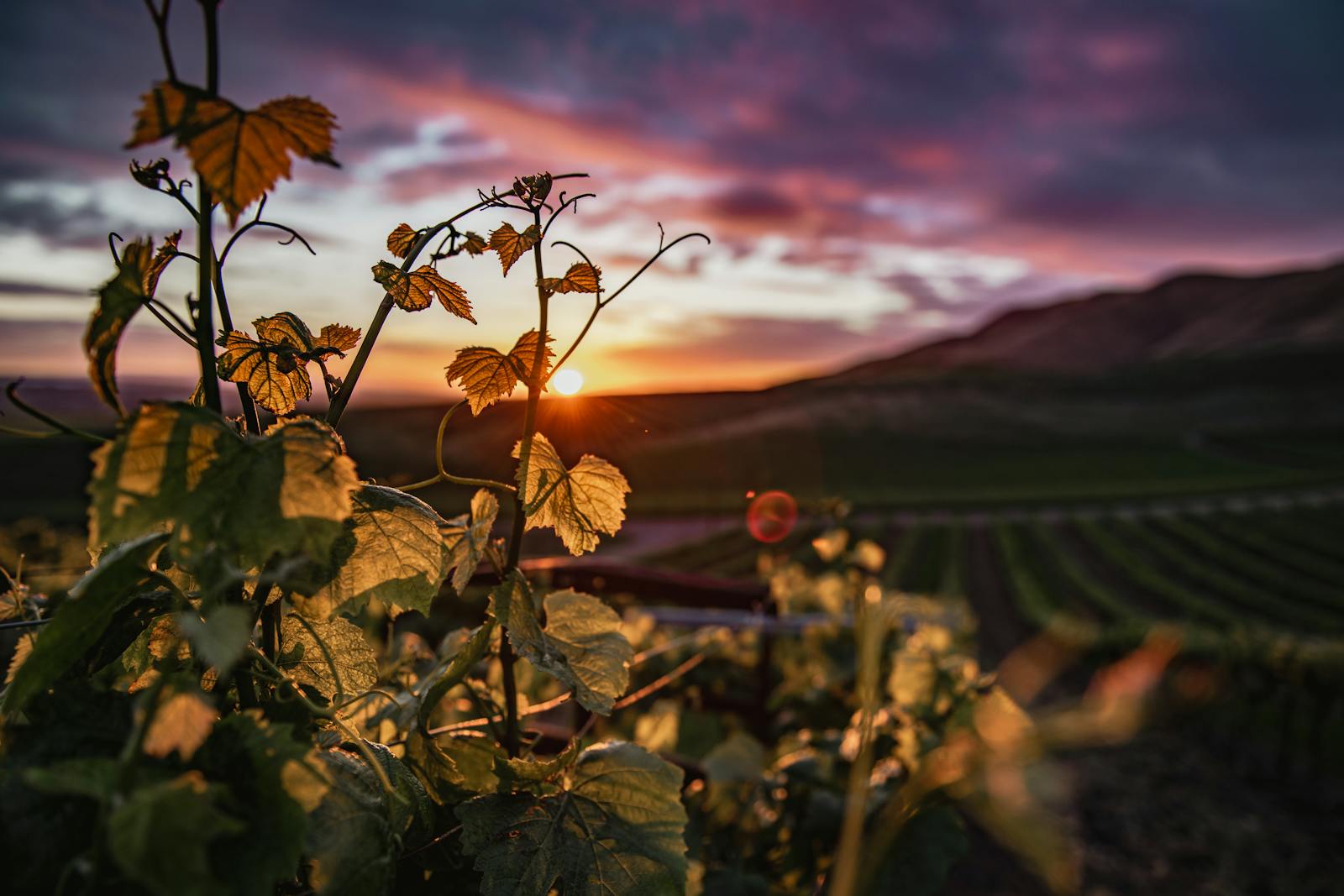
The $1,500 Elephant in the Room
And yet. Fifteen hundred dollars.
There's a real conversation happening about who fine dining actually serves, and Noma's price point makes it impossible to avoid. Observers have noted how humble ingredients get marked up dramatically once they enter the farm-to-table pipeline, and Noma represents perhaps the furthest extreme of that phenomenon. Foraged food can be transformed through extraordinary skill, but also comes with an extraordinary markup.
Industry reporting suggests that some local suppliers and food industry professionals have found challenges in understanding the operation's sourcing practices and partnership structures.
When a restaurant charges that much and sources from a community in recovery, the expectations around transparency are naturally higher. Suppliers want to know they're partners, not props.
The Redzepi Question
Then there's the René Redzepi of it all.
Redzepi has publicly addressed past workplace behavior, describing personal growth and a commitment to change. The acknowledgment was notable in an industry where kitchen abuse has been normalized for decades.
However, subsequent reporting has raised questions about workplace culture at Noma, including accounts from former workers about challenging conditions. These concerns haven't gone away, and they sit uncomfortably alongside Noma's arrival in a city where restaurant workers have already been through extraordinary hardship. For many in LA's food community, the question isn't whether Redzepi has grown — it's whether the systems around him have actually changed.
The Bigger Picture for Plant-Forward Dining
Here's where it gets interesting for anyone who cares about the future of food. Noma has been one of the most influential forces in pushing fine dining toward vegetables, foraging, and fermentation. Redzepi's kitchens have spent years exploring what happens when plants, fungi, and grains are treated with the same technical precision usually reserved for proteins. The residency's focus on California's biodiversity — its native plants, its agricultural range, its coastline — could produce a menu that's more plant-forward than anything most diners have experienced at this level.
That matters beyond the 50-seat dining room. When Noma highlights an ingredient, it ripples outward. Farmers get calls. Other chefs pay attention. Home cooks get curious. The restaurant's influence on plant-based techniques has been significant over the years, and a California-focused menu has the potential to showcase regional produce in ways that shift perceptions.
Restaurants approaching food with genuine regional intent — like Corridor in Indianapolis — have demonstrated how they can reshape a city's dining identity. Noma operates on a different scale, obviously, but the principle holds: when a high-profile kitchen commits to local sourcing, the downstream effects can be significant.
Complicated Can Still Be Useful
LA's food scene doesn't need saving. It needs support, attention, and customers. Whether Noma provides that or simply extracts cultural capital from a vulnerable moment is something that will play out over the coming months.
Many in the local food community seem cautiously hopeful. They recognize the contradictions but see practical upside. More food tourists in the city. More eyes on California producers. More proof that LA belongs in any conversation about the world's great food cities.
The rest of us get to watch, ask questions, and — most importantly — actually go eat at the local restaurants that could use the business right now. You don't need a $1,500 reservation to support LA's food community. You just need to show up.
Feature image by Deane Bayas on Pexels