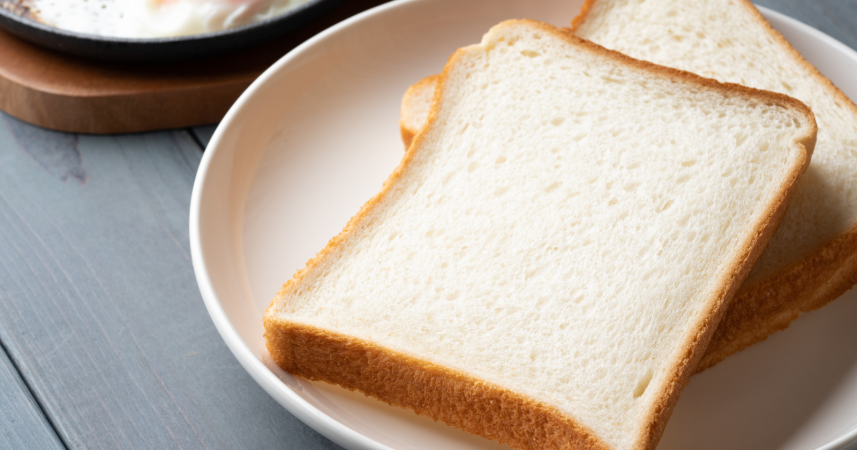
A chemical linked to cancer has been banned across the European Union, China, Canada, Brazil, and India. But walk into any American grocery store, and you'll likely find it on the shelves.

Add VegOut to your Google News feed. 
Potassium bromate was first patented for use in baking in 1914, when no regulatory agencies existed to oversee food additive safety. More than a century later, this white crystalline powder remains in hundreds of American bread products despite being classified as possibly carcinogenic to humans by the International Agency for Research on Cancer.
The compound strengthens gluten and allows bread to rise higher with a lighter texture. For commercial bakeries, it's cheap and efficient. The problem is what happens when it doesn't fully break down during baking.
The food industry maintains that potassium bromate converts to harmless potassium bromide when bread is properly baked. But testing in the United Kingdom found measurable levels remaining in thirteen out of twenty-eight breads tested, including all six unwrapped loaves. When too much is used, or when baking time or temperature falls short, residues persist.
The research that changed everything
In 1982, Japanese researchers made a discovery that should have changed American bread forever. Their study found potassium bromate induced kidney and thyroid tumors in laboratory rats. Subsequent research identified it as a "complete carcinogen," possessing both initiating and promoting activities for tumor development.
The studies kept coming. In 1983, researchers found significantly higher rates of renal cell tumors in rats given potassium bromate, with the highest-dose group having the shortest survival time. By 1990, Japanese scientists concluded the additive is a "genotoxic carcinogen" capable of damaging DNA and triggering chromosome aberrations.
The International Agency for Research on Cancer reviewed this evidence in 1999 and classified potassium bromate as a category 2B carcinogen, noting it produced kidney tumors, thyroid tumors, and peritoneal mesotheliomas in animals of both sexes.
A tale of two regulatory philosophies
The European Union didn't wait for certainty. In 1990, it banned potassium bromate entirely. The United Kingdom followed the same year, then Canada in 1994. Nigeria, Sri Lanka, Brazil, Colombia, China, South Korea, Argentina, Peru, Australia, New Zealand, and India eventually joined them. Between the EU's twenty-seven member nations and these individual bans, the ingredient is now prohibited across most of the developed world.
These countries operate under what's called the precautionary principle, which allows regulators to restrict substances when scientific evidence suggests possible harm, even without definitive proof.
The FDA takes a different approach, using risk assessment to determine safe levels. The agency permits potassium bromate at 0.0075 parts per 100 parts of flour, with finished products allowed up to 20 parts per billion. But here's where things get strange: the FDA first approved the additive in the 1960s, announced a planned literature review in 1973, and hasn't formally reassessed it since. That's over fifty years without comprehensive review, during which hundreds of peer-reviewed studies have been published.
The grandfather clause that won't die
When the Food Additive Amendments of 1958 required new additives to be determined "generally recognized as safe" before going to market, substances already in use were simply grandfathered in. Potassium bromate, having entered the market decades earlier, slipped through this loophole.
In 1991, the FDA urged bakers to voluntarily stop using it rather than issuing a ban. The American Bakers Association released industry guidelines in 2008 recommending residue limits below 20 parts per billion. Some manufacturers have quietly reformulated. King Arthur Flour has never used bromated flour, citing health risks.
But voluntary measures have limits. The Environmental Working Group has identified over two hundred products still containing the additive, including flour tortillas, frozen pastries, soft pretzels, and numerous breads on supermarket shelves nationwide.
California breaks ranks
In October 2023, Governor Gavin Newsom signed the California Food Safety Act, making California the first state to ban food additives the FDA still considers safe. Potassium bromate is on the list, alongside brominated vegetable oil, propylparaben, and Red Dye No. 3. The law takes effect January 2027.
Its passage has sparked nationwide momentum. Eighteen other states have introduced bills to regulate or ban potassium bromate, and Utah has prohibited its use in school meals.
Assemblymember Jesse Gabriel, who authored the California bill, noted these chemicals have been banned across all twenty-seven EU nations for years. The implicit question: if Europe's bread rises just fine without potassium bromate, why can't America's?
Safe alternatives already exist
The baking industry has options. Ascorbic acid (vitamin C) acts as a natural oxidizing agent that strengthens gluten and improves dough volume. Enzymes like amylases and xylanases modify starches and proteins to enhance texture. Longer fermentation times naturally develop gluten structure. Many artisan bakeries already use these methods.
Bakers who have switched report needing slightly longer mixing times and modest fermentation adjustments. Companies operating in European and Canadian markets made the transition years ago. Major international brands reformulated to maintain access to markets where potassium bromate is prohibited.
What consumers can do
Reading labels remains the most reliable way to avoid potassium bromate. Look for "potassium bromate" or "bromated flour" in the ingredients list. Organic certification typically prohibits its use, and products labeled "bromate-free" offer explicit assurance. Whole grain breads from artisan bakeries are less likely to contain the additive.
Final thoughts
More than four decades after researchers first linked potassium bromate to cancer, America remains one of the few developed nations where the ingredient is still permitted. The FDA's last meaningful assessment predates the discovery of its carcinogenic potential. Safe alternatives have been available for years, and much of the global baking industry has moved on without incident.
The question isn't whether removing potassium bromate from American bread is possible. Companies have proven it is. The question is why, with so much evidence of potential harm, regulators continue to allow it.
What’s Your Plant-Powered Archetype?
Ever wonder what your everyday habits say about your deeper purpose—and how they ripple out to impact the planet?
This 90-second quiz reveals the plant-powered role you’re here to play, and the tiny shift that makes it even more powerful.
12 fun questions. Instant results. Surprisingly accurate.