
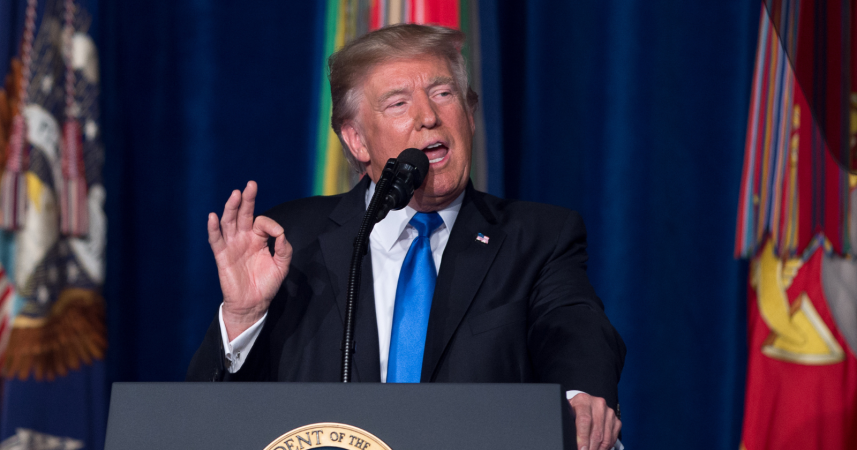
Cutting ties with organizations from UN Women to the Intergovernmental Panel on Climate Change, the U.S. has entered uncharted diplomatic territory—just as global crises demand unified action.

Add VegOut to your Google News feed. 
The Trump administration has launched one of the most sweeping retreats from international cooperation in modern American history, signing a presidential memorandum Wednesday evening to withdraw from 66 international organizations spanning climate, health, human rights, and democracy initiatives.
The move follows an ongoing review of international engagements that Secretary of State Marco Rubio characterized as targeting institutions that are "redundant in their scope, mismanaged, unnecessary, wasteful, poorly run, captured by the interests of actors advancing their own agendas contrary to our own, or a threat to our nation's sovereignty."
The withdrawal encompasses 31 United Nations entities and 35 non-UN organizations, representing a dramatic escalation of what began as selective disengagement. Among the most consequential departures is the UN Framework Convention on Climate Change, the 1992 Senate-ratified treaty that forms the foundation for international climate cooperation and serves as the parent agreement to the Paris climate accord.
The decision makes the United States the first country to withdraw from this bedrock treaty, creating a vacuum in global climate governance at a time when international coordination remains critical to addressing rising temperatures and extreme weather events.
The financial fallout for global operations
The implications extend far beyond diplomatic symbolism. The United States has historically served as the United Nations' single largest financial contributor, responsible for 22 percent of the UN's regular budget and approximately 26 percent of its peacekeeping budget in 2025.
While American funding to international organizations had already faced significant cuts throughout Trump's second term, with Congress recently rescinding approximately $1 billion in previously approved UN funding, Wednesday's announcement formalizes a comprehensive exit strategy that will leave numerous agencies scrambling for resources.
Climate-focused entities face particularly severe disruption. The Intergovernmental Panel on Climate Change, the Nobel Prize-winning scientific body that produces authoritative reports on global warming, now finds itself without American participation. Rob Jackson, a Stanford University climate scientist who chairs the Global Carbon Project, warned that the withdrawal could hinder global efforts to curb greenhouse gases because it "gives other nations the excuse to delay their own actions and commitments."
The challenge becomes even more acute given that achieving meaningful climate progress requires cooperation from the United States, one of the world's largest economies and carbon emitters.
Women's health and democracy programs lose critical support
Beyond climate, organizations focused on gender equality, reproductive health, and democratic governance face uncertain futures.
The withdrawal includes UN Women, which promotes gender equality and women's empowerment globally, and the UN Population Fund, which provides sexual and reproductive health services in more than 150 countries.
The latter has long been a point of contention for Republican administrations, with Trump having previously cut funding during his first term based on accusations of involvement in "coercive abortion practices" in countries like China.
The administration has already terminated dozens of grants for the Population Fund totaling roughly $380 million that funded health care in emergency humanitarian settings.
The exit from the International Institute for Democracy and Electoral Assistance, along with the UN Democracy Fund and various peace and security bodies, signals a broader shift away from promoting democratic institutions abroad.
Several entities targeting protections for at-risk groups during armed conflicts, including the UN Office of the Special Representative of the Secretary General for Children in Armed Conflict, also appear on the departure list.
A strategic vacuum and geopolitical consequences
The administration frames these withdrawals as ending "American taxpayer funding and involvement in entities that advance globalist agendas over U.S. priorities." Yet the decision arrives at a moment when the vacuum left by American retreat creates opportunities for geopolitical competitors.
China, now the second-largest financial contributor to UN regular and peacekeeping budgets, stands positioned to expand its influence across international institutions where American presence has historically shaped norms and standards.
Notably absent from the withdrawal list are organizations the administration deems essential to security or humanitarian functions, including the UN Security Council, the World Food Programme, and the UN Refugee Agency. Officials have indicated intentions to focus remaining engagement on bodies where competition with China factors prominently, such as the International Telecommunications Union, International Maritime Organization, and International Labor Organization.
The breadth of Wednesday's announcement extends to seemingly technical bodies including the International Cotton Advisory Committee, International Tropical Timber Organization, Pan-American Institute for Geography and History, and International Lead and Zinc Study Group. The State Department has indicated that additional reviews remain ongoing, suggesting further withdrawals may follow.
The uncertain path forward
Legal challenges appear likely, particularly regarding withdrawal from the UN Framework Convention on Climate Change, which received Senate ratification and therefore carries treaty status under constitutional law.
The administration's authority to unilaterally exit such agreements without congressional approval has not been definitively established. Former Secretary of State and climate envoy John Kerry has already characterized the climate withdrawal as "a gift to China and a get out of jail free card to countries and polluters who want to avoid responsibility."
The cumulative effect of these departures represents a fundamental reordering of America's relationship with multilateral institutions developed over eight decades since World War II. Whether this retrenchment serves American interests, as the administration claims, or damages the country's diplomatic standing and ability to shape global affairs will likely become clearer as the consequences unfold across climate negotiations, humanitarian crises, and international standard-setting in the years ahead.
If You Were a Healing Herb, Which Would You Be?
Each herb holds a unique kind of magic — soothing, awakening, grounding, or clarifying.
This 9-question quiz reveals the healing plant that mirrors your energy right now and what it says about your natural rhythm.
✨ Instant results. Deeply insightful.

Avery White
Formerly a financial analyst, Avery translates complex research into clear, informative narratives. Her evidence-based approach provides readers with reliable insights, presented with clarity and warmth. Outside of work, Avery enjoys trail running, gardening, and volunteering at local farmers’ markets.
More Articles by Avery










