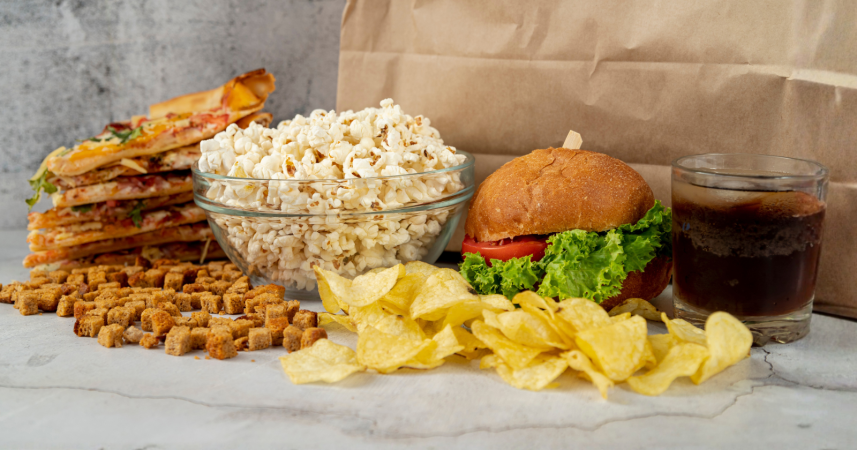
How did ultra-processed foods become a delivery system for plastic fragments now embedding themselves in the human brain?

Add VegOut to your Google News feed. 
When scientists at the University of New Mexico examined brain tissue from deceased individuals, they discovered something alarming: the human brain now contains roughly a spoonful's worth of plastic. Even more disturbing, the amount has increased by 50% in just eight years, according to research published in Nature Medicine.
The findings reveal that microplastics have crossed the blood-brain barrier, accumulating at concentrations higher than in the liver or kidneys. These tiny fragments of degraded polymers, some as small as one-thousandth the width of a human hair, are now embedded in the organ that defines human consciousness and memory.
What makes these discoveries particularly troubling is the source. While microplastics pervade our air, water, and soil, researchers increasingly point to ultra-processed foods as a primary delivery mechanism for plastic particles entering our bodies and brains.
How your diet delivers plastic to your brain
Ultra-processed foods now comprise more than half of the calories consumed in countries like the United States. These convenience foods go through extensive industrial processing involving plastic machinery, storage containers, and packaging materials. Each point of contact represents an opportunity for plastic contamination.
Research demonstrates that chicken nuggets contain nearly 30 times more microplastics per gram than chicken breasts, primarily because of the intensive processing and multiple interactions with plastic equipment. The pattern holds across processed food categories. Highly processed items contain significantly more microplastic particles than minimally processed alternatives.
The contamination occurs at multiple stages. Plastic irrigation systems introduce particles into crops. Commercial meat production concentrates plastics through the food chain as animals consume contaminated feed. Processing equipment made from plastic sheds particles during grinding, puréeing, and packaging operations. Finally, plastic packaging materials continue releasing particles when consumers open containers, heat products, or store leftovers.
A special issue of Brain Medicine published four interconnected papers exploring this contamination pathway. The researchers propose that microplastic exposure from ultra-processed foods may contribute to rising global rates of depression, dementia, and other mental health disorders.
The dementia connection raises urgent questions
One of the most striking findings from the University of New Mexico research involves dementia patients. Brain tissue from individuals diagnosed with dementia contained three to five times more plastic than brains without dementia. While researchers caution that the study design cannot prove causation, the correlation demands attention.
Matthew Campen, who led the research team, expressed his shock at the levels detected. The plastic accumulates particularly in the myelin sheath, the fatty insulation wrapping around neurons that regulates signal transmission. This strategic positioning could theoretically interfere with normal brain function, though scientists emphasize much remains unknown about the biological effects.
The timing of the increased accumulation mirrors the exponential growth in global plastic production over the past half century. Brain samples from 2024 contained 50% more plastic than samples from 2016, suggesting the problem accelerates as environmental plastic pollution intensifies.
Multiple pathways of potential harm
Microplastics function as what one expert called "Trojan horses" for toxic chemicals. The particles carry thousands of chemical additives used in plastic manufacturing, including phthalates, bisphenols, and other compounds linked to health concerns. When ultra-processed food consumption increases, so do levels of these chemicals in the body, including among children and pregnant women.
Beyond serving as chemical carriers, microplastics may directly trigger biological responses. These particles can provoke immune reactions, generate oxidative stress, interfere with mitochondrial energy production, and potentially alter gene expression. Animal studies have documented anxiety-like behaviors and changes in brain neurotransmitter function following microplastic exposure.
The smallest particles, called nanoplastics, pose particular concern because their tiny size allows them to penetrate cells and potentially disrupt cellular machinery. Once inside the brain, these particles accumulate over time with no clear mechanism for removal.
Scientists at the University of New Mexico found that polyethylene, the most common plastic polymer, predominated in brain samples. The plastic appeared as aged, shard-like fragments across a wide range of sizes, suggesting long-term accumulation of environmental plastics rather than recent contamination.
Rethinking food choices in a plastic world
The convergence of ultra-processed food health risks and plastic contamination creates a compelling argument for dietary change. While microplastics prove difficult to avoid entirely given their ubiquitous presence, reducing consumption of heavily processed foods offers one practical strategy for limiting exposure.
Choosing minimally processed whole foods reduces multiple points of contact with plastic machinery and packaging. Fresh produce, whole grains, and unprocessed proteins typically contain fewer microplastics than their processed counterparts. When purchasing packaged items, glass containers offer an alternative to plastic, though even glass bottles with plastic-sealed caps can release particles.
The research team behind the Brain Medicine papers proposes developing a Dietary Microplastic Index to quantify exposure through food consumption. Such a tool could help individuals and policymakers better understand and address this emerging health concern.
However, dietary changes alone cannot solve a problem of this magnitude. Scientists call for broader efforts to reduce plastic production, improve waste management, and develop safer food contact materials. Some researchers are even exploring medical interventions, such as blood filtration techniques that might remove microplastic particles from circulation.
As one researcher starkly put it, plastic production continues unabated, creating a ticking timebomb even if manufacturing stopped tomorrow. The plastics already dispersed throughout the environment will continue degrading into smaller particles for generations to come, ensuring ongoing exposure regardless of future policy changes.
The question facing both individuals and society extends beyond whether processed foods damage health through their nutritional profile. Now we must also consider whether these foods serve as vehicles for plastic contamination that accumulates in our most vital organ, with consequences we're only beginning to understand.
If You Were a Healing Herb, Which Would You Be?
Each herb holds a unique kind of magic — soothing, awakening, grounding, or clarifying.
This 9-question quiz reveals the healing plant that mirrors your energy right now and what it says about your natural rhythm.
✨ Instant results. Deeply insightful.

Avery White
Formerly a financial analyst, Avery translates complex research into clear, informative narratives. Her evidence-based approach provides readers with reliable insights, presented with clarity and warmth. Outside of work, Avery enjoys trail running, gardening, and volunteering at local farmers’ markets.
More Articles by Avery