
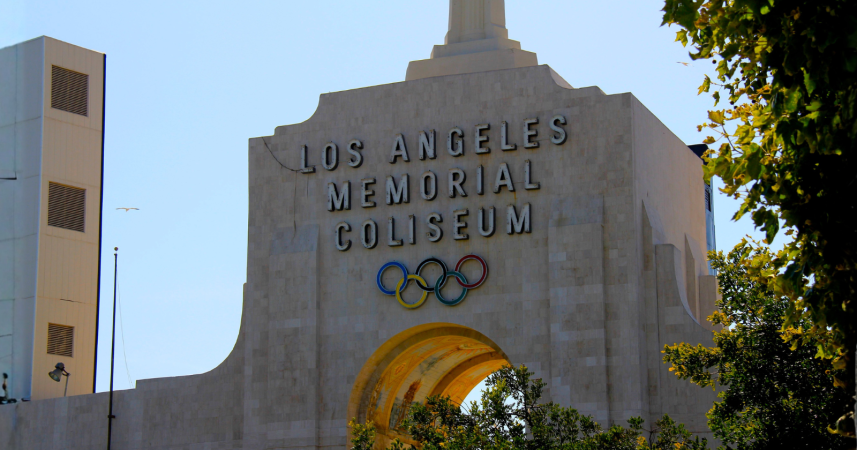
Could Los Angeles turn Olympic dining into the biggest plant-based experiment the world has ever seen?

Add VegOut to your Google News feed. 
Could Los Angeles host the world's first fully plant-based Olympics? It sounds far-fetched, but the city has already taken steps that make the idea less radical than you might think.
In June 2024, West Hollywood passed a groundbreaking resolution requiring plant-based food by default at all city-sponsored events. Animal products are only available upon request. The policy took effect immediately.
A few months earlier, Los Angeles County passed a similar motion requiring all departmental food to be plant-based by default. When LA hosted its inaugural Climate Week in September 2024, all catering for the week's hundreds of events was 100% vegan.
These aren't isolated incidents. They're part of a deliberate push toward sustainable food policy in one of America's most influential cities. And now, advocacy groups are asking: if LA can do this for local events, why not for the 2028 Olympics?
Olympic athletes are asking for it
A coalition of Olympic athletes recently signed an open letter calling for the 2028 Los Angeles Games to be entirely plant-based. The signatories include Olympic weightlifter Kendrick J. Farris, Olympic rock climber Alexander Megos, Paralympic swimmer Sarah Bofinger, and vegan strongman Patrik Baboumian.
"As a vegan athlete, I've experienced how a plant-based lifestyle not only fuels peak performance but also aligns with a vision of sustainability and compassion," Farris told Plant Based News. He's been vegan for over a decade and appeared in the 2018 documentary "The Game Changers."
The letter, organized by Animal Outlook, addresses LA28 CEO Reynold Hoover directly. It acknowledges the progress made at the 2024 Paris Olympics, where 60% of meals were plant-based. But it suggests Los Angeles can go further, making 100% of Olympic food vegan.
Olympic medalist Dotsie Bausch has been pushing for a plant-based Olympics since before the Paris Games. She's presented to LA28's sustainability director and sees this as the natural next step for a city already leading on plant-based policy.
Why activists think LA can pull this off
The push for a vegan Olympics rests on three main arguments: environmental impact, health benefits, and LA's existing commitment to sustainability.
Animal agriculture contributes between 14.5% and 18% of global greenhouse gas emissions. Research from the University of Colorado shows that animal agriculture produces 65% of the world's nitrous oxide emissions, which has a global warming impact 296 times greater than carbon dioxide.
Plant-based meals have, on average, a 63% lower carbon footprint than animal-based meals according to data cited in West Hollywood's resolution. A 2022 study from the World Health Organization found that transitioning to plant-based diets could reduce land used for food production by 76% and slash diet-related emissions by 46%.
For an event trying to minimize its environmental footprint, those numbers matter. LA28 has already committed to ambitious sustainability goals, including no new building construction and the elimination of single-use plastics.
The food component represents one of the largest opportunities to reduce the Games' carbon impact. At the 2024 Paris Olympics, hundreds of chefs prepared more than 40,000 meals every day. Multiply that by the 15,000 athletes expected at LA28, plus millions of visitors, and the potential environmental impact becomes enormous.
The practical challenges nobody's talking about
Making the Olympics entirely plant-based sounds inspiring in theory. In practice, it presents massive logistical and political challenges that advocates tend to downplay.
First, there's the sheer scale. The Olympics aren't just one dining hall. Food needs to be served at dozens of venues across the Los Angeles area, from athlete villages to spectator concessions to VIP hospitality suites. Coordinating a 100% plant-based menu system across all these locations while maintaining quality and variety would be unprecedented.
Second, athletes have extremely specific nutritional needs that vary wildly by sport. Endurance athletes, weightlifters, gymnasts, and swimmers all require different macronutrient balances. While plant-based diets can absolutely meet these needs, forcing all athletes into one dietary framework removes their autonomy over fueling decisions they've spent years perfecting.
Cultural considerations matter too. The Olympics bring together athletes from 200+ countries, each with distinct food traditions and dietary norms. What reads as progressive sustainability in Los Angeles might feel like cultural imperialism to athletes whose traditional diets center around specific animal products tied to their heritage.
What Paris actually proved
Paris's 60% plant-based approach offers a middle ground worth examining. By making most food vegan while still offering animal products, the 2024 Games demonstrated that major sustainability gains are possible without eliminating choice entirely.
The Paris model reduced environmental impact significantly while respecting athlete autonomy and cultural diversity. Athletes who thrived on plant-based diets had abundant options. Those who wanted animal protein could access it. Spectators got introduced to high-quality vegan food without feeling forced into anything.
This approach also sidestepped the political backlash that a mandatory vegan Olympics would inevitably face. Conservative media would have a field day with stories about California forcing its values on the world. That controversy could overshadow the actual sustainability achievements and turn the Olympics into a culture war battleground.
The unspoken class dynamics
There's something worth noting about who's pushing for a vegan Olympics and who would be most affected by it. The loudest advocates tend to be affluent, educated activists in coastal cities where vegan options are abundant and normalized.
Athletes from wealthy countries with robust sports programs have access to nutritionists, dietitians, and customized meal planning. They can thrive on any well-designed diet. Athletes from less-resourced countries often don't have those luxuries. They've trained their entire lives eating what's available and affordable where they come from.
Telling an athlete from a developing nation that they can't eat the foods their body is accustomed to because Los Angeles decided to make a statement about climate change feels tone-deaf at best. It risks turning sustainability into another way privileged people impose their preferences on others.
A more realistic path forward
Animal Outlook and other advocacy groups have launched campaigns calling for a fully vegan 2028 Olympics. They've built momentum, gathered athlete support, and made compelling environmental arguments.
But perhaps the better goal is making LA28 the most plant-forward Olympics ever, not necessarily 100% vegan. Aim for 75% or 80% plant-based meals. Make vegan options the default in most settings while keeping animal products available. Invest in making plant-based food so delicious and abundant that people choose it willingly rather than feeling forced into it.
LA could showcase innovative plant-based cuisine from its world-class food scene. Feature vegan options from diverse cultural traditions. Educate visitors about the environmental benefits of plant-based eating without making it mandatory. Create a model that other cities can actually replicate rather than a one-time stunt that requires unique local political will.
West Hollywood's policy works because it's a small, progressive city with strong support for animal welfare and environmental causes. The Olympics are a global event that needs to balance competing interests and values. What works in West Hollywood won't necessarily translate to an international stage.
The question isn't whether LA should increase plant-based food at the Olympics. That's clearly the right move for sustainability. The question is whether mandating 100% vegan menus serves the goal better than creating abundant, appealing plant-based options while respecting choice. Given the practical and political realities, the latter approach seems more likely to succeed and create lasting change beyond 2028.
If You Were a Healing Herb, Which Would You Be?
Each herb holds a unique kind of magic — soothing, awakening, grounding, or clarifying.
This 9-question quiz reveals the healing plant that mirrors your energy right now and what it says about your natural rhythm.
✨ Instant results. Deeply insightful.

Avery White
Formerly a financial analyst, Avery translates complex research into clear, informative narratives. Her evidence-based approach provides readers with reliable insights, presented with clarity and warmth. Outside of work, Avery enjoys trail running, gardening, and volunteering at local farmers’ markets.
More Articles by Avery










