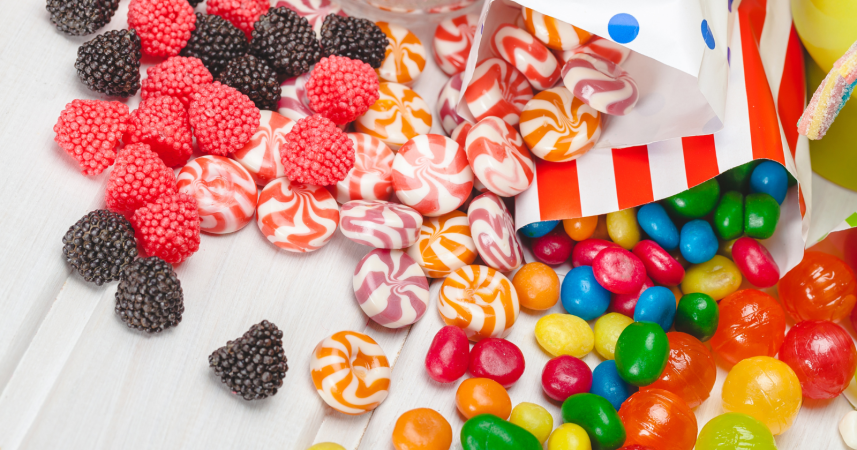
Bright reds and yellows aren’t just eye candy—they’re behavioral nudges engineered to make ultra-processed foods irresistible.

Add VegOut to your Google News feed. 
When I first traded my spreadsheet-heavy finance career for food systems journalism, I thought I'd left behind the most shocking data discoveries.
Then I read the latest study from the Journal of the Academy of Nutrition and Dietetics, and suddenly those quarterly earnings surprises seemed quaint by comparison.
The numbers are stark: one in five food and beverage products in the US contains synthetic dyes. That's 20% of what's lining our grocery shelves, painted in laboratory-created colors that serve no nutritional purpose.
But here's the kicker—products marketed to children show even higher rates of synthetic dye use.
This isn't just about aesthetics or corporate cost-cutting. It's about a food system that prioritizes visual appeal over human health, and the findings reveal how deeply entrenched these additives have become in the American diet.
The data tells a colorful story
Dr. Elizabeth Dunford, a research fellow at The George Institute for Global Health, led the comprehensive analysis that uncovered these patterns. Working with researchers from the University of North Carolina and the Center for Science in the Public Interest, her team examined thousands of products across the US food supply.
The results paint a concerning picture. Candy manufacturers like Ferrero and Mars topped the list of frequent synthetic dye users, alongside beverage giants like PepsiCo.
But the most troubling finding? Many products containing synthetic dyes also packed high sugar content—a double hit of ingredients linked to poor health outcomes.
"Given the accumulation of evidence over the last 40 years pointing to the health harms of synthetic dyes, it's disappointing to see that they're still so prevalent in our food system," Dunford explained.
Meanwhile, other countries have taken decisive action. The UK passed the Colors in Food Regulations Act in 1995, restricting certain additives. The European Union allows some dyes but requires warning labels. Even the FDA banned Red No. 3 earlier this year, following 1990s research linking it to cancer in rats.
The health equation doesn't add up
The science on synthetic dyes reveals a troubling pattern.
Yellow 5 has been associated with increased irritability and restlessness in children, potentially worsening ADHD symptoms. Red No. 3 shows concerning cancer links in animal studies. Yet no large-scale human studies have definitively mapped these risks.
Critics argue this uncertainty shouldn't justify continued use. After all, synthetic dyes provide zero nutritional benefit and no flavor enhancement. They exist purely for visual appeal—making processed foods look more enticing, particularly to young consumers.
Health and Human Services Secretary Robert F. Kennedy Jr. has called for a complete phase-out by next year, describing these petroleum-based compounds as "poisonous" with "no nutritional benefit."
The FDA takes a more measured stance, acknowledging that while most children show no adverse effects, some may be sensitive to these additives.
But here's what the data-driven part of me finds most compelling: the behavioral economics at play. Bright reds and yellows make sugary snacks and drinks look fun and exciting.
This visual manipulation encourages overconsumption of ultra-processed foods, which research increasingly links to heart disease and cancer.
Industry promises meet skeptical reality
Corporate America is starting to respond to consumer pressure.
General Mills announced it will remove synthetic colors from all cereals and school foods by next summer, with complete elimination by 2027. Kraft Heinz committed to the same timeline.
The upshot? These pledges sound impressive until you dig deeper. Dr. Thomas Galligan, a principal scientist at the Center for Science in the Public Interest, brings a healthy dose of skepticism to these announcements.
"Many companies had previously made promises to stop using them and then failed to keep those promises," he noted. "So, it remains to be seen if food companies will comply with this new request."
This pattern reflects a broader challenge in food system reform: the gap between corporate commitments and actual implementation. As someone who spent years analyzing quarterly reports, I've seen how easily timelines can shift when profits are at stake.
The plant-based advantage emerges
Here's where the sustainability conversation gets interesting. Removing artificial colors could actually reduce the visual appeal of ultra-processed foods—and that's not necessarily bad news.
Think about it: when brightly colored snacks lose their neon glow, whole foods start looking more appealing by comparison. A fresh red bell pepper or vibrant purple cabbage suddenly seems more exciting than a dulled-down processed alternative.
This shift creates space for plant-based foods to shine. Natural colors from fruits and vegetables—anthocyanins from berries, carotenoids from carrots, chlorophyll from leafy greens—offer the visual appeal consumers crave while delivering actual nutrition.
The climate benefits stack up too. Synthetic dyes require petroleum-based manufacturing processes with significant carbon footprints. Plant-based alternatives often come from agricultural waste streams, turning food byproducts into valuable colorants.
Taking action in your own kitchen
While we wait for industry-wide changes, there are immediate steps you can take to reduce synthetic dye exposure:
Audit your pantry. Check ingredient lists for Red 40, Yellow 5, Yellow 6, and Blue 1—the most common synthetic dyes. You'll likely find them in unexpected places like pickles, salad dressings, and even some plant-based products.
Embrace natural color sources. Turmeric creates gorgeous yellows, beet juice delivers vibrant reds, and spirulina powder adds striking blues and greens. These alternatives bring flavor and nutrition along with their color.
Read labels like a detective. "Natural flavors" and "artificial colors" often hide together on ingredient lists. Look for products that specify their color sources—"colored with fruit and vegetable extracts" signals a cleaner approach.
Support transparent brands. Companies like Annie's, Clif Bar, and many plant-based startups have already eliminated synthetic dyes. Your purchasing power sends a clear market signal.
The bigger picture comes into focus
This synthetic dye research reveals something deeper about our food system: the disconnect between what looks good and what is good.
For too long, we've accepted that food should be unnaturally bright, unnaturally shelf-stable, and unnaturally appealing to our most basic visual instincts.
The plant-based movement offers a different path forward. When we center whole foods in their natural colors and forms, we reconnect with ingredients that nourish rather than simply stimulate. We support agricultural systems that work with nature rather than against it.
This isn't about perfection or purity. It's about making informed choices in a food system that's slowly but surely moving toward greater transparency. Every time you choose a product with natural colors over synthetic ones, you're voting for a food system that prioritizes health over visual manipulation.
The data is clear: synthetic dyes are widespread, potentially harmful, and completely unnecessary. The question isn't whether we should reduce their use—it's how quickly we can build the food system we actually want to live in.
And that food system, colorful as it may be, draws its palette from the earth itself.
What’s Your Plant-Powered Archetype?
Ever wonder what your everyday habits say about your deeper purpose—and how they ripple out to impact the planet?
This 90-second quiz reveals the plant-powered role you’re here to play, and the tiny shift that makes it even more powerful.
12 fun questions. Instant results. Surprisingly accurate.