Climbing gyms are becoming unlikely therapy spaces for Parkinson’s patients—and the results go far beyond stronger muscles.

Add VegOut to your Google News feed. 
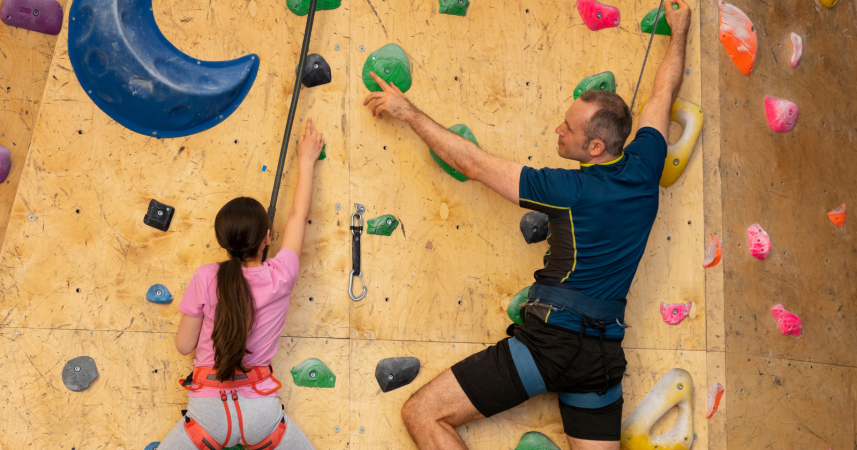
When CBS’s 60 Minutes aired a segment titled “Combating Parkinson’s with Rock Climbing,” viewers watched older adults scale vertical walls in bright harnesses — and then walk away with steadier gaits and sharper focus.
The report highlighted a growing number of U.S. programs using indoor climbing as adjunct therapy for Parkinson’s disease, an incurable neurodegenerative disorder that affects nearly one million Americans.
Participants told correspondent Lesley Stahl the sport had boosted their balance, mobility, upper‑body strength and even word‑recall skills, echoing feedback their physical therapists had tracked in clinic notes.
The segment quickly racked up shares on social media, prompting neurologists to field a new wave of questions: Could climbing really rival traditional rehab tools like cycling, boxing or Tai Chi?
Early evidence—and mounting anecdotal success—suggests the answer is yes.
The science: a randomized trial shows measurable motor gains
Skeptics often ask whether those inspiring anecdotes translate into data.
A 2021 randomized controlled trial published in NPJ Parkinson’s Disease offers a clear yes.
Forty‑eight adults with mild‑to‑moderate Parkinson’s (average age 64) were assigned either to supervised sport‑climbing sessions twice a week or to an unsupervised exercise control group.
After 12 weeks, the climbers improved their Movement Disorder Society UPDRS‑III motor scores by 13 points — roughly four times the improvement seen in the control condition.
Subscores for bradykinesia, tremor, and rigidity each dropped significantly, and researchers reported 99% adherence with no adverse events. In other words, not only was climbing safe; it was engaging enough that almost everyone kept showing up.
These findings reinforce broader exercise‑for‑Parkinson’s literature — but they stand out for combining aerobic, resistance, balance and cognitive challenge in a single activity.
Why climbing “checks every rehab box,” say therapists
Why does clinging to plastic hold beat yet another session on a stationary bike?
Neurologic physical therapists point to climbing’s built‑in external cues: brightly colored routes force climbers to reach, rotate and plan sequenced movements — skills that counteract Parkinson’s hallmark symptoms of stiffness and step‑shortening.
The nonprofit UpENDing Parkinson’s tells new participants that routes not only stretch stride length but also stimulate problem‑solving, turning therapy into a three‑dimensional puzzle.
Clinicians interviewed by the Davis Phinney Foundation add that climbing promotes trunk rotation, weight‑shifting, and limb dissociation—patterns eroded by the disease—while the rope‑and‑belay system makes falls rare.
Unlike treadmills or recumbent bikes, climbing also feeds the brain novelty, which research shows boosts neuroplasticity and motivation.
Scaling up: from pilot gyms to hospital partnerships
Grass‑roots programs are now popping up across the U.S. and Europe.
Marymount University researchers, for instance, recently partnered with local gyms and the nonprofit UpENDing Parkinson’s to run community‑based climbing cohorts. Early results echo the 2021 trial, reporting gains in gait symmetry and mood alongside social‑connection bonuses.
Large health systems are paying attention: a Denver hospital added supervised climbing walls to its outpatient neurology wing this spring, citing demand from patients who saw the CBS segment.
Insurance isn’t yet on board, but advocates hope mounting evidence will persuade payers to reimburse climbing the way many now cover Rock Steady Boxing or dance therapy.
Gyms, meanwhile, see a chance to diversify membership and fill weekday slots — with some chains training staff in adaptive belay techniques to serve neurological clients safely.
Wider impact: reframing risk, empowerment and aging
Climbing’s appeal extends beyond motor scores.
Participants in Minnesota’s Climb4Parkinson’s group told local CBS reporters the sport restored a sense of agency often lost after diagnosis; every conquered hold becomes proof they can still learn, adapt and trust their bodies.
Psychologists note this empowerment may buffer the depression and apathy that affect up to 50% of people with Parkinson’s. On a societal level, the trend challenges stereotypes of older adults—or those with disabilities—as fragile.
Catching sight of a 70‑year‑old climber cruising a 30‑foot wall rewires public expectations about aging, potentially influencing everything from urban park design to Medicare’s wellness‑visit guidelines.
There’s even an environmental upside: many therapeutic‑climbing nonprofits operate in existing gyms, repurposing infrastructure rather than building new facilities.
Caveats and next questions for research
While results are promising, experts caution that climbing isn’t a silver bullet.
The 2021 trial was small, and long‑term disease‑progression data are still pending. People with advanced Parkinson’s or severe orthostatic hypotension may not tolerate harness pressure or sustained overhead reaching.
Proper supervision, harness fit, and belay safety are non‑negotiable.
Researchers also want to know whether climbing’s cognitive benefits outpace other complex exercises like dance, and whether outdoor climbing adds anxiety or benefits compared to controlled indoor walls.
Researchers are calling for larger, multi-center studies to confirm climbing’s long-term benefits and cost-effectiveness. At present, most published data come from single-site trials.
Bottom line
From televised features to published research, rock climbing is quickly gaining ground as a promising therapy for people with Parkinson’s disease.
Unlike many traditional rehab approaches, it delivers a rare combination of aerobic exertion, strength training, dynamic balance work, and cognitive challenge — all within a single activity.
That blend matters.
Parkinson’s doesn’t just affect the body — it clouds memory, limits confidence, and alters how people perceive their independence.
Climbing counters those losses head-on. It forces participants to think through movement, make decisions mid-motion, and overcome fear—sometimes literally, one foothold at a time.
Therapists say the benefits aren’t just biomechanical but deeply psychological. For many, conquering a wall becomes a metaphor for reclaiming agency over a condition that often feels like a slow erasure.
While more long-term research is needed and safety considerations remain essential, the momentum is clear: this isn’t just a fitness trend.
It’s a values shift — one that reimagines what rehabilitation can look like, and who gets to be seen as capable of challenge, progress, and joy.