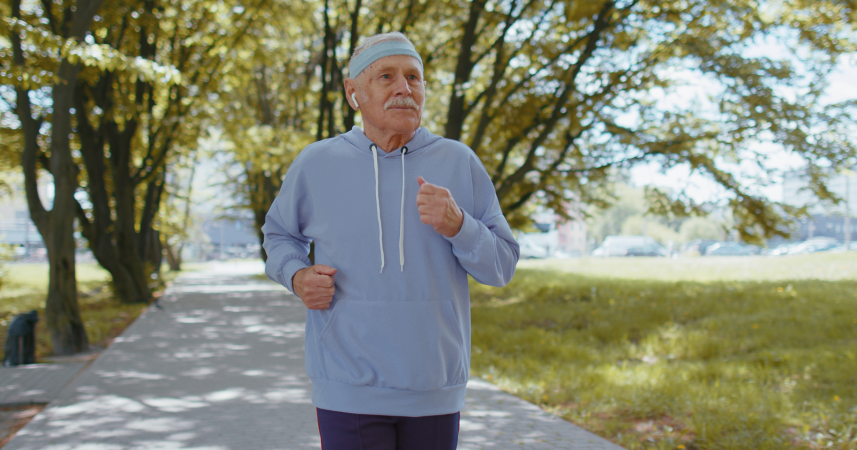
At 103, his five morning rituals outpace most fortysomethings—none involve supplements.

Add VegOut to your Google News feed. 
This summer’s local coverage out of Cincinnati revisited centenarian runner and canoe racer Mike Fremont — still showing up at community races and morning park sessions at age 103.
He even took part in Flying Pig weekend festivities, becoming the oldest participant in the event’s 27-year history. The write-ups were remarkably low-drama: early daylight, gentle movement, plain food, clean hydration, steady sleep.
No gizmos, just consistency that adds up over decades.
Strip away the headlines and what’s left is a spreadsheet of tiny inputs done on loop. That’s the part many of us drop when life gets loud. Below are five morning habits threaded through the latest reports and earlier profiles of Fremont—habits that travel well, scale with age, and don’t require perfect genetics or a wide-open calendar.
Where relevant, I’ve included a simple “borrow it by Monday” nudge so this doesn’t just stay inspiring—it becomes useful.
1) Step outside within 30 minutes of waking
Fremont’s mornings start outdoors.
Some days it’s an easy jog at conversational pace — other days it’s a brisk walk or stair loops before breakfast. The common denominator is light and light movement: a few minutes of natural morning sun and a gentle rise in heart rate to cue the day’s rhythm.
That one-two combo lifts mood, anchors circadian timing, and builds momentum before screens start negotiating for attention. The recent Cincinnati pieces emphasize his bias for parks and fresh air over gadgets — when “outside first” becomes the default, the rest of the day has to work around a non-negotiable.
Borrow it by Monday: stage shoes and a light layer by the door the night before; collect 10–15 minutes of daylight before checking your phone. If running isn’t on the menu, walk loops, climb a few flights, or sweep your block.
The aim is rhythm, not records.
2) Lead with a fiber-first, plant-forward breakfast
Across profiles, Fremont’s eating pattern is simple and minimally processed—especially in the morning.
Think whole grains, fruit, greens, and legumes. Trim the sugary, ultra-processed items that make energy seesaw by 10 a.m. It isn’t flashy, but it’s potent. People love to debate “best” breakfasts; what outlives trends is a small set of ingredients you can prep half-asleep and repeat for years.
Recent lifestyle coverage about him underscores the plant-forward core of his routine, built long before it was fashionable.
Borrow it by Monday: build around one whole grain (oats or whole-grain toast), one legume or nut/seed (tofu scramble, leftover lentils, or nut butter), and one green (a quick handful of sautéed spinach). If you crave variety, rotate toppings; don’t reinvent the base.
3) Hydrate plainly and early
It’s tempting to reach for neon sports drinks or complicated “morning tonics.”
Fremont’s routine tilts the other way: plain water, sipped early, often paired with that first movement block outdoors.
The logic is deliberately boring—overnight dehydration impersonates fatigue, crankiness, and brain fog, and the fix is to refill before you caffeinate.
Reporters who’ve followed him keep coming back to his preference for simple inputs and clean environments—gardens, parks, river time—over complicated biohacks.
Borrow it by Monday: put a glass by the sink at night and drink 300–500 ml on waking, then coffee.
If you’re out longer than ~45 minutes, carry a small bottle; otherwise, another glass post-session covers most people.
4) Move like you plan to do this for decades
What jumps off the page in both the fresh pieces and older local segments isn’t heroism—it’s repeatability.
At 99, Fremont was still logging park miles three mornings a week, often with a small crew — in 2025 at age 103, he continued to appear at community running events.
The point isn’t mileage — it’s cadence.
Frequent, modest strain lets connective tissue adapt; predictable sessions remove decision fatigue; training with friends adds social glue. Daily activity is the constant; intensity and modality flex with the season.
Borrow it by Monday: choose three fixed morning slots (say, Mon/Wed/Fri 7:00–7:40). Commit to easy miles or a brisk walk, conversation pace only.
On off-days, spend 10 minutes on hips-ankles-thoracic mobility while the kettle heats.
And if you want a deeper mindset reframe on routine versus “hacks,” Rudá Iandê’s new book Laughing in the Face of Chaos argues—provocatively—that sustainable change comes from renegotiating your relationship with discomfort and attention.
5) Guard last night’s sleep to protect this morning’s run
A thread that runs through the coverage is the discipline many people half his age neglect: consistent, generous sleep.
Fremont treats bedtime like part of training—same window most nights—so the morning session isn’t bargaining with exhaustion. That doesn’t require perfection; it requires structure.
When sleep becomes routine instead of a nightly negotiation, your morning effort stops feeling like a fight and starts feeling like the natural next step.
The “boring backbone” of longevity looks exactly like this.
Borrow it by Monday: set a lights-out alarm 30–45 minutes earlier, keep the bedroom cool and dark, and pair wake-up with your step-outside ritual so your brain relearns the loop: night ends, light begins, body moves.
The wider impact
Fremont’s story is inspirational because he’s exceptional—but it’s useful because he isn’t.
The behaviors on display—early daylight and gentle motion, fiber-first food, plain hydration, repeatable training, protected sleep—are the same levers clinicians ask mid-career patients to pull when energy, mood, and joints start grumbling.
The current news cycle simply gave us a living case study at age 103, including a verified appearance at Cincinnati’s Flying Pig weekend this spring.
If workplaces want durable performance, they can make these morning levers easier, not harder: flexible start times for outdoor commutes, kitchen setups that privilege whole-food breakfasts, and team norms that stop rewarding late-night emails.
The payoff is compounding: fewer injuries, stabler mood, and better decision quality in the hours when work actually matters.
What’s Your Plant-Powered Archetype?
Ever wonder what your everyday habits say about your deeper purpose—and how they ripple out to impact the planet?
This 90-second quiz reveals the plant-powered role you’re here to play, and the tiny shift that makes it even more powerful.
12 fun questions. Instant results. Surprisingly accurate.