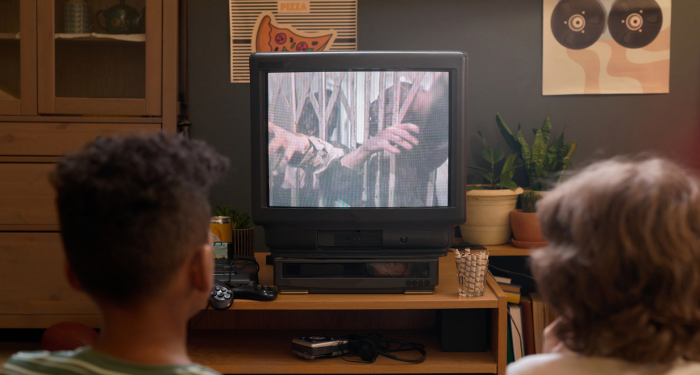
Many Gen Zers spent their college years predominantly in remote or hybrid settings, missing out on the informal education that happens when you're physically around other people. The coffee runs. The overheard phone calls. The subtle art of reading a room.
When I first saw the headline, I'll admit I rolled my eyes. Another think piece dunking on young people? Please. Every generation gets its turn being called lazy, entitled, and impossible to work with. I remember the endless articles about millennials killing industries and refusing to grow up.
But then I actually read the data.
Resume Genius surveyed 625 U.S. hiring managers and found that 45% consider Gen Z the most difficult generation to work with. Not second most difficult. The most. And here's where it gets interesting: even Gen Z hiring managers largely agree. Half of them admitted their own generation is the hardest to manage.
That stopped me in my tracks.
When your own peers are struggling to work with you, something beyond generational bias is happening. So I started digging into what's actually going on, and what I found was more complicated than the usual "kids these days" narrative.
The pandemic stole something we can't easily replace
Let's talk about what nobody mentions in these viral headlines.
Gen Z entered the workforce during an unprecedented disruption. Many spent their college years on Zoom, in their childhood bedrooms, missing out on the informal education that happens when you're physically around other people. The coffee runs. The overheard phone calls. The subtle art of reading a room.
Stacie Haller, Chief Career Advisor at ResumeBuilder, puts it clearly: many Gen Zers "spent their college years predominantly in remote or hybrid settings, and upon entering the workforce, they often started in remote roles."
Think about what that means. No summer internships where you learn that flip-flops aren't appropriate for client meetings. No observing how your manager handles a difficult conversation. No absorbing the thousand tiny lessons about professional behavior that previous generations picked up through sheer proximity.
I learned more about workplace dynamics from eating lunch with colleagues than from any training manual. Gen Z missed years of those informal moments.
The skills gap is real, but it's not what you think
Here's what hiring managers are actually reporting. Candidates who don't make eye contact. Job seekers who dress inappropriately for interviews. Young professionals who struggle to take constructive criticism. And in some truly bewildering cases, college graduates bringing parents to job interviews.
Yes, that last one surprised me too.
But before we start pointing fingers at helicopter parenting or smartphone addiction, consider what ResumeBuilder found when they surveyed business leaders: 45% of companies now offer workplace etiquette training. And 60% make it mandatory for employees across all age groups. This isn't just a Gen Z problem. The pandemic eroded professional norms for everyone. It just hit the youngest workers hardest because they had the least foundation to begin with.
When you've never seen business casual in action, how would you know what it looks like? When your college presentations happened over video with your camera optional, why would you understand the importance of in-person presence?
What the Big Four are doing about it
The world's largest consulting firms have quietly acknowledged what the headlines make dramatic.
Deloitte, PwC, KPMG, and EY are all offering incoming junior hires soft-skills training. We're talking about lessons on how to speak up in meetings, how to give presentations, how to communicate face-to-face. The basics that used to be absorbed through osmosis.
Ian Elliott, chief people officer at PwC UK, framed it sympathetically: students who missed face-to-face activities during COVID may be stronger in some areas, like working independently, while being less confident in others, like presentations to groups.
That strikes me as the most honest assessment I've read. Gen Z isn't deficient. They're differently skilled. They came of age in circumstances that built certain capabilities while limiting others.
The hiring paradox
Here's where things get ironic.
Despite 45% of hiring managers calling Gen Z difficult to work with, guess who they're still planning to hire? That's right. A third of hiring managers expect to bring on Gen Z candidates in the coming year. Only 4% plan to hire baby boomers, who were rated as the easiest to manage.
Let that sink in. The "easiest" generation to work with is the last one employers want to hire.
What does this tell us? Difficulty isn't the whole story. Companies need what Gen Z brings: digital fluency, fresh perspectives, and frankly, they need warm bodies in entry-level positions. Millennials are moving into management. Gen X is eyeing the finish line. Baby boomers are retiring. The youngest generation will fill the gaps whether hiring managers find them challenging or not.
The mutual ghosting problem
I'd be dishonest if I didn't mention the behavior flowing in both directions.
Almost 80% of hiring managers admitted they've stopped responding to candidates during the application process. Ghosting isn't just something young applicants do. It's baked into hiring culture now. Gen Z sees this and responds in kind. More than a third of applicants who've purposefully dropped contact say it was because a recruiter was rude or misled them about a position.
This is a broken system, not a broken generation. When companies ghost candidates, candidates learn that ghosting is normal. When the hiring process feels like a one-sided power play, candidates start playing games too.
What actually needs to change
I've spent years helping people navigate workplace dynamics, and what I see here isn't a generational character flaw. It's a training gap that nobody wants to own.
Universities assumed students would pick up professional skills through internships. Internships disappeared during the pandemic. Companies assumed new hires would absorb workplace norms through observation. Remote work eliminated that opportunity. Parents assumed schools would prepare their kids for professional life. Schools assumed employers would handle that part.
Everyone pointed to someone else, and Gen Z fell through the cracks.
The companies getting this right are the ones treating the skills gap as exactly that: a gap to be filled, not a character deficiency to be criticized. They're investing in structured onboarding, mentorship programs, and explicit training on the unspoken rules that previous generations learned through trial and error.
A generation worth understanding
Geoffrey Scott, a senior hiring manager at Resume Genius, offered what I think is the most balanced take: Gen Z has already shaken things up, but they're not here to break things. They bring unique talent and bold ideas that can rejuvenate any workforce.
They also push organizations to live up to stated values around transparency, flexibility, and inclusion. Half of Gen Z workers would turn down a position that doesn't align with their convictions. You can call that idealistic. You can also call it principled.
When I look at the full picture, I don't see a generation that's impossible to work with. I see a generation that entered the workforce during the worst possible circumstances, missed critical developmental experiences, and is now being judged by standards they were never given the chance to learn.
The question isn't whether Gen Z is difficult. The question is whether employers are willing to do the work of actually preparing them for success.
Based on what the Big Four are doing, the answer seems to be yes. At least for the companies smart enough to see past the headlines.
What’s Your Plant-Powered Archetype?
Ever wonder what your everyday habits say about your deeper purpose—and how they ripple out to impact the planet?
This 90-second quiz reveals the plant-powered role you’re here to play, and the tiny shift that makes it even more powerful.
12 fun questions. Instant results. Surprisingly accurate.