When we expect kindness, we engage. When we engage, we experience it. And that loop might be the hidden engine of national wellbeing.
On a drizzly Tuesday I dropped my transit card sprinting for the bus.
I didn’t notice until a stranger jogged up, tapped my shoulder, and pressed it into my palm with a quick “you’ll need this.” No big speech, no selfie. Just a tiny act that fixed my morning.
Moments like that are easy to shrug off, but they add up—quietly shaping what we expect from other people and how safe or hopeful we feel moving through daily life. And when those expectations tilt toward kindness, entire countries register the difference.
This year’s numbers put that intuition under a microscope. They suggest the happiest places aren’t merely richer or healthier; they’re places where small courtesies are common enough to be assumed—where a lost wallet is likely to come back, neighbors check in, and sharing a meal isn’t rare.
Here’s what the new data shows, and why that one returned transit card might matter more than it seems.
What the new report shows
At the heart of the 2025 findings is a striking gap between perception and reality.
People across countries underestimate how kind their neighbors will be, yet those neighbors tend to be kinder than expected. One widely discussed data point is the “lost wallet” evidence: across countries, the share of wallets actually returned is about twice as high as people think it will be.
In other words, we’re walking around with a dimmer view of one another than the evidence warrants—and that pessimism correlates with lower happiness.
The report also reframes what counts as “drivers” of national wellbeing.
Yes, classic indicators still matter—healthy life expectancy, GDP per capita, freedom, social support, generosity and perceptions of corruption remain part of the picture—but this year places unusual weight on small-scale social life: sharing meals, trusting others, and expecting benevolence are stronger predictors of wellbeing than many assumed.
As Jan-Emmanuel De Neve, director of Oxford’s Wellbeing Research Centre and an editor of the report, puts it: “This year’s report pushes us to look beyond traditional determinants like health and wealth. It turns out that sharing meals and trusting others are even stronger predictors of wellbeing than expected.”
Kindness as the quiet driver of national happiness
Why would tiny acts matter at a population level?
The report’s thematic chapters on “caring and sharing” synthesize a decade of studies showing that benevolence benefits both the helper and the recipient—and that context matters.
Kindness that’s chosen freely, done within caring relationships, and felt to have a clear positive impact tends to boost wellbeing more than perfunctory help. That’s the micro-level story; the macro-level story is about expectations.
When people believe others in their community will act kindly—return the wallet, help a stranger, chip in when it counts—they report higher life satisfaction. Societies where that belief is widespread also tend to post higher national scores.
There’s a policy implication here, but it’s not only for legislators.
When a culture normalizes small, pro-social behaviors—queue courtesy, neighborly check-ins, the “I’ve got your coffee” gesture—those interactions don’t just brighten mornings. They accumulate into social trust, and trust is the scaffold on which everything else (from safe streets to inclusive institutions) is built.
The report even suggests kindness reduces inequality in wellbeing within countries—another quiet multiplier effect.
The Nordic pattern—and the U.S. slide
If you’ve followed these rankings, you won’t be shocked by the leaderboard: Finland sits on top for an eighth consecutive year, with Denmark, Iceland and Sweden close behind.
The top tier is, once again, largely Nordic.
What’s new is how explicitly the report ties those results to social life: the countries that rank high on happiness also rank high on both expected and actual kindness. It’s not just that those societies are prosperous; it’s that people assume others will look out for them—and, crucially, those assumptions are validated in daily life.
The United States, meanwhile, dropped to its lowest ranking to date (24th), continuing a multi-year slide. It’s tempting to read that as purely economic, but the report points to social explanations as well: declining social trust and an erosion in everyday connection.
One stat leapt out at me: the share of Americans dining alone has climbed 53% over two decades, even as the report shows shared meals correlate strongly with wellbeing across world regions. It’s a tidy micro-macro contrast—more solo dinners, lower collective joy.
Why expectations matter (the lost wallet test)
Let’s linger on the wallet data because it illustrates the core point.
Across cultures, when people are asked, “If you dropped a wallet on the street, what are the chances it would be returned?” their answers are consistently more pessimistic than what actually happens.
The report aggregates global evidence showing the return rate outstrips expectations by a wide margin. That gap turns out to be more than a fun fact: believing your wallet will not come back is associated with lower life satisfaction at the individual level, and countries in which people expect returns to be common tend to be happier overall.
Expecting kindness and seeing it validated can function like a psychological safety net.
This should change the way we talk about “declining civility.” The data suggest kindness hasn’t collapsed; in fact, the so-called pandemic “benevolence bump”—a rise in helping, donating, and volunteering—has persisted above pre-2020 levels worldwide, even if it has cooled from its 2020–23 peak.
Our perceptions, however, haven’t kept up; many of us still assume a colder world than the one we actually inhabit. That mismatch is costly.
Everyday rituals that move the needle
The section of the report that surprised me most wasn’t the rankings; it was the mundane details with outsized impact.
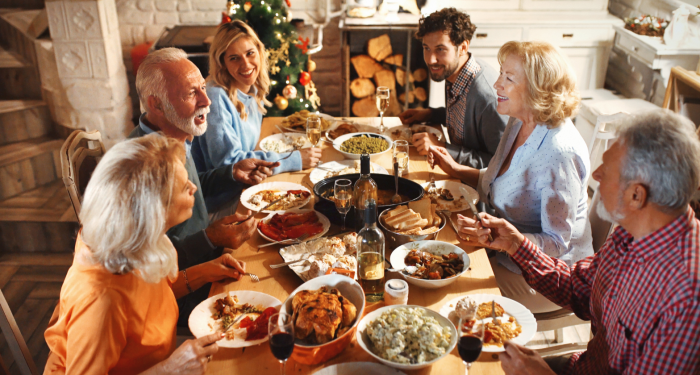
Shared meals correlate with higher wellbeing in every global region they analyzed. Household size tracks with happiness too: in Mexico and parts of Europe, households of four to five report the highest levels.
And the social safety net of “having someone to count on” shows a worrying generational dip: in 2023, 19% of young adults worldwide said they had no one for social support—a 39% increase since 2006. These are not abstract econometric curves; they’re the dinner table, the roommate group chat, the neighbor who has a spare key.
To me, the most actionable takeaway is that micro-acts are not a sideshow. The report’s kindness focus dovetails with recent large-scale studies showing that brief, daily acts—checking in on a friend, expressing gratitude, doing a tiny favor—can measurably lift mood and connection within a week.
That’s a remarkably low bar for entry if you’re trying to feel better fast, and it aligns with the WHR’s broader theme: the smallest gears often drive the biggest wheels.
A note on polarization and public life
The 2025 report is blunt about a trend many of us feel: lower happiness and social trust are now entwined with political polarization and anti-system voting in parts of Europe and the United States.
That’s consistent with the kindness narrative, not in tension with it. When people expect little from strangers and institutions—and encounter fewer daily reminders that others can be trusted—withdrawal and suspicion take hold.
Restoring social trust isn’t a “soft” project; it’s a precondition for functioning democracies. And that restoration starts in spaces we control: our tables, teams, and sidewalks.
What this means for you and me
This is a news story, but it lands personally. I write about habits, and I used to treat “be kind” as a moral stance rather than a strategic one. The WHR nudges me to see it as both. Consider the loop it describes:
-
Expect a neighbor to be kind → you’re more likely to engage.
-
Engage → you experience more kindness than you predicted.
-
Experience kindness → your expectations rise, which boosts your own wellbeing and your willingness to keep engaging.
It’s the social equivalent of compound interest. A tiny deposit (send the text, share the snack, walk the extra block with your elderly neighbor) pays out far beyond its face value because it shifts what you and others expect from the community. And according to this year’s data, that expectation is itself a powerful driver of national happiness.
This also explains why loneliness is so stubborn. If 19% of young adults report having no one to count on, the “kindness expectation” loop gets interrupted.
Rebuilding it requires both sides of the handshake: institutions that make pro-social behavior easy (public spaces for shared meals, safe streets, workplace norms that invite check-ins) and individuals willing to make the first move.
Method and context
A quick reminder of how these rankings work helps keep the headlines in perspective.
The scoreboard you see each March is based on self-reported life evaluations—how people rate their current life on a 0–10 ladder—averaged over three years (this edition draws on 2022–2024 data).
Researchers then analyze differences using the now-familiar factors (GDP per capita, social support, healthy life expectancy, freedom, generosity, perceptions of corruption), while this year layering in focused analyses of “caring and sharing” behaviors and expectations. That approach is what allows the report to connect the dots between a country’s generosity profile, its trust levels, and its happiness outcomes.
For readers who follow the list like a sports table: yes, Finland held the top spot again, and the United States and United Kingdom posted their lowest marks in years. But the rankings are an entry point—not the whole story.
The substance this year is that tiny kindnesses add up, especially when people expect them. And the happiest countries are the ones where those expectations are both strong and frequently confirmed in daily life.
The bottom line
I started reading the report as a writer; I finished it as a neighbor.
If policy makers want to raise national happiness, investing in the social architecture that makes kindness easy—shared spaces, inclusive rituals, trustworthy institutions—looks like a high-leverage move.
If you and I want to feel better where we live, we don’t have to wait for a bill to pass. We can engineer more shared meals, practice the two-minute favor, and assume the best a bit more often, because the data say we’ll usually be right.
The 2025 World Happiness Report is not naïve. It confronts loneliness, polarization, and declining trust. But it also documents something hopeful: we are, by and large, kinder than we think—and that quiet kindness is part of what separates the happiest countries from the rest.
Or, as De Neve summed it up, bringing people back around the table is “critical for our individual and collective wellbeing.”
That’s not just a warm sentiment; in 2025, it’s a measurable advantage.
If You Were a Healing Herb, Which Would You Be?
Each herb holds a unique kind of magic — soothing, awakening, grounding, or clarifying.
This 9-question quiz reveals the healing plant that mirrors your energy right now and what it says about your natural rhythm.
✨ Instant results. Deeply insightful.