Connection isn’t a luxury to squeeze in after the to-do list—it’s part of the health plan.

Add VegOut to your Google News feed. 
Last week at a tiny café, I noticed something sweet.
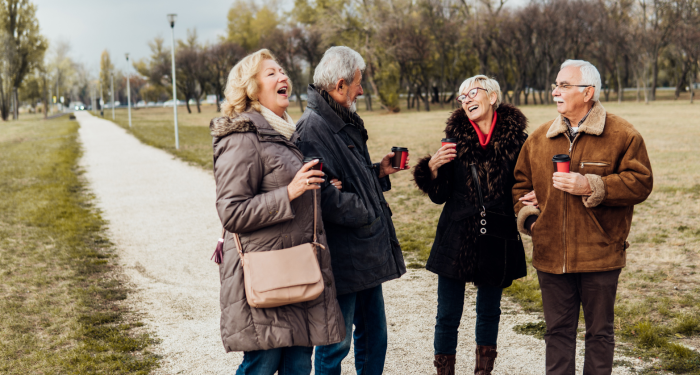
Two women in their 60s were laughing so hard they had to stop to catch their breath.
Their plates sat mostly untouched. Their faces were soft. I caught myself thinking: this is what youth looks like, no matter the number on your ID.
So when I read a new study suggesting that lifelong, supportive relationships are linked with slower biological aging, it felt less like a surprise and more like science catching up with what our bodies already know.
Here’s the big picture in plain language. A Cornell-led team analyzed data from more than two thousand adults in the long-running MIDUS project and found that people with richer, steadier social ties across life showed younger biological profiles on DNA methylation “aging clocks” and lower inflammation.
The paper was published in Brain, Behavior, and Immunity – Health, and it’s the root of the headlines you’ve probably seen.
What the researchers actually measured
When we talk about aging in this study, we’re not talking about the candles on your cake.
The team looked at biological aging, estimated by patterns of chemical tags on DNA known as methylation. These tags shift with lifestyle and stress in ways that predict disease risk and mortality. Two clocks in particular matter here: GrimAge and DunedinPACE.
Both are widely used and considered sensitive to real health risk, not just vanity metrics. In the Cornell write-up, the authors note that adults with stronger, sustained social networks had more youthful profiles on both clocks, and they also had lower levels of interleukin-6, a pro-inflammatory molecule linked to heart disease, diabetes and neurodegeneration.
What counts as “cumulative social advantage”
This part is important, because we can be tempted to reduce the whole story to “have more friends.”
The Cornell team went broader and deeper. As first author Anthony Ong explains, “[c]umulative social advantage is really about the depth and breadth of your social connections over a lifetime,” including parental warmth in childhood, neighborhood and community belonging, participation in faith communities if that applies to you, and ongoing emotional support from family and friends. That’s not a single friendship or a season of networking. It is an accumulation of steady, nourishing ties across decades.
If you’re thinking this sounds a bit like compounding interest, Ong offers the same image: [“Think of social connections like a retirement account. The earlier you start investing and the more consistently you contribute, the greater your returns.”] It’s a helpful way to frame it. Small, regular deposits of time and care can change your body’s trajectory in ways you cannot see in the mirror today.
How this fits with other evidence
One study never tells the whole story, and this one sits in a growing stack.
Another 2025 paper using the same MIDUS cohort found that positive social experiences like marriage and regular social meetings were associated with decelerated epigenetic aging, while negative experiences like parental substance problems or incarceration were associated with acceleration.
The authors showed that having a “net positive” balance of social experiences related to slower clock readings. That independent analysis strengthens the signal that our social world leaves marks in our biology.
The Cornell team also looked beyond the clocks. They reported links between sustained social advantage and lower interleukin-6. If you follow inflammation research, you know IL-6 keeps popping up in studies of chronic disease.
Lower is generally better. The fact that the social measure tracks with both methylation clocks and inflammatory signaling is what makes these findings compelling. It suggests a coherent story, not a one-off correlation.
What this means for a real Tuesday
I live by routines because that’s the only way our family life works right now. We wake up at seven, have breakfast together at the kitchen island, and walk my husband to work before the São Paulo traffic truly wakes up.
On the way back with the stroller, I pick up ingredients for dinner. Work, nap windows, bath time, bedtime. Then an hour with my husband before we finally call it a night. It’s a full life, and some days I feel every minute of it.
But reading this research shifted my lens in a small but significant way. It reminded me that the WhatsApp voice notes I send to my closest friends are not trivial.
The neighbor chats while the kids play downstairs are not filler. Even coordinating a quick dinner with another couple after Emilia’s asleep is doing work that my cells may thank me for later. Connection is not a luxury to squeeze in after the to-do list. It is part of the health plan.
Caveats you should know
Let’s keep our feet on the ground. This is observational research. It identifies associations, not proof that if you join a community group your GrimAge score will drop by a precise amount.
People who are more connected often have other advantages that help health, like stable income or safer neighborhoods. The authors acknowledge this, and they adjust for standard confounders, but there are limits to what statistics can cleanly separate. The sample is also U.S.-based and midlife weighted, which may not map perfectly to other cultures or to very young or very old adults.
Still, the pattern is consistent across datasets, measures and labs. That matters. The Cornell team’s report stands on its own in a reputable journal, and it lines up with independent analyses using the same cohort that arrive at similar conclusions with different modeling choices.
For science readers, that replication across teams is one of the healthiest signs of a real effect.
Why social ties would touch your DNA
The biology here is not mystical. Chronic loneliness and relational stress can keep the body’s stress systems running hot.
Over time, that has ripple effects on inflammation, immune function and the chemical state of your DNA that aging clocks capture. Conversely, steady support and belonging can lower perceived threat, improve sleep quality, help with adherence to healthy routines and encourage us to seek care when we need it.
The study’s lower IL-6 association is one example of how that might show up in your bloodwork.
I like to imagine it this way: your relationships are the environment your cells grow up in. When that environment is predictably warm and responsive, your biology can do its repair work more cleanly.
What I’m changing at home
I’m not adding anything dramatic. I do not have hours to spare and neither do my friends. But I am making three small shifts.
First, I’m revisiting consistency. It’s easy to let weeks drift by. I set recurring calendar nudges for quick check-ins with two close friends who don’t live nearby. Fifteen minutes on a Tuesday afternoon counts.
Second, I’m strengthening local ties. In São Paulo, extended family support comes in bursts when we fly to Santiago and the grandparents take over for a while. That’s a gift.
Third, I’m investing in the friendships that feel like exhale. Not every connection needs to be a lifelong bond, but the research nudges me to put more attention on the relationships that already show up for me.
As Ong puts it, “[w]hat’s striking is the cumulative effect. These social resources build on each other over time.” That means I do not need to chase novelty. I can deepen what I have.
A note on access and fairness
One line in the Cornell coverage sat heavy with me. Access to social resources is not evenly distributed.
If you grow up with unstable housing, unsafe streets, or few community anchors, building lifetime support is objectively harder. That is a structural reality, not a personal failure. The study’s lens of “cumulative social advantage” acknowledges that advantages cluster and compound, which is why policies that strengthen community institutions matter for public health.
At the personal level, it’s also a reminder to be the friend who makes inclusion a habit. Invite the new neighbor. Share your childcare hack. Check on the person who went quiet. The health benefits travel in both directions.
If you want one simple takeaway
You do not need to overhaul your social life or suddenly become a social butterfly. Aim for steady, nourishing contact with a few people you trust. Put it on your calendar the same way you schedule a workout or meal prep.
The evidence suggests that over time, those small deposits may slow the cellular wear and tear that shows up on the most predictive aging clocks we have. That is a quiet kind of power.
I keep thinking about the women in the café. Their laughter did not erase their years. It did something else.
It made those years look well lived.