Why does a string of hot days leave us creaky, foggy, and spent—as if we’ve aged a few years overnight?
The first time I noticed it, I’d spent the afternoon weeding under a blazing sun.
That evening my knees felt creaky, my brain foggy, and my patience thin—as if I’d aged five years between lunch and dinner.
If you’ve felt that way after a heatwave, you’re in good company. And no, it’s not all in your head. A new study in Nature Climate Change suggests repeated exposure to heatwaves can nudge our bodies to age faster—not by the calendar, but biologically, under the hood where organs and cells do their work.
Published 25 August 2025 and based on 15 years of data from 24,922 adults in Taiwan, the research is one of the clearest signals yet that hotter days don’t just feel hard; they can make us older in a measurable way.
Before we get into what to do about it, here’s what the science actually says—and why it matters for how you structure your days, your workload, and your energy.
What the study actually found
Researchers tracked participants’ biological age using routine health metrics (think: blood pressure, kidney and liver function, lung function, markers of inflammation) over 2008–2022.
They compared those numbers with each person’s cumulative heatwave exposure over the preceding two years, using both relative and absolute temperature thresholds to define “heatwave.”
The headline: for each interquartile-range increase in cumulative heatwave exposure, people’s biological age ticked ahead by 0.023 to 0.031 years—that’s roughly 8 to 11 days of extra biological aging for the same amount of time lived.
In plain English, the more heatwaves you racked up, the older your body looked on paper.
What’s striking is who felt it most. Manual workers, rural residents, and people living in communities with fewer air conditioners carried a heavier burden—likely because they had more heat exposure and fewer ways to cool down.
The team also found something hopeful: across the 15-year window, people showed signs of gradual adaptation, with the heat-aging effect easing a bit over time.
Even so, the core message stands: chronic heat exposure can tax your system in ways that add up.
Why heat can push your body’s “biological clock” forward
Biological age isn’t a mystical number.
It’s a composite snapshot of how your organs and systems are performing. Heat stresses the cardiovascular system (your heart works harder to shed heat), shifts blood flow, and can ramp up inflammation and oxidative stress.
Over months and years, those repeated “micro-stresses” show up in the very biomarkers researchers use to estimate biological age.
If you’ve ever felt oddly wiped out—or noticed your blood pressure or recovery metrics go sideways—after a run of hot days, you’ve had a preview of the pathways scientists are measuring.
This is why a research news summary from Nature framed the study’s punchline starkly: the aging effect of repeated heatwave exposure is in the same ballpark as regular smoking or alcohol use—not identical, but comparable in magnitude and public-health relevance.
“I feel older in heat”—connecting the dots with daily life
I notice it most after back-to-back hot mornings in the garden or on the trail: my joints protest, sleep feels shallow, and I reach for salty snacks more than usual.
Maybe for you it’s brain fog at the office, or needing longer to recover between workouts. That “instant old” feeling lines up with what the data shows. Heat tips your body into extra effort—cooling your core, maintaining fluid balance, keeping blood pressure stable.
If you stack enough hot days without enough recovery or cooling, those systems accumulate wear. Over time, that wear looks a lot like aging.
The study also explains why some people feel it more intensely: If your job keeps you outdoors, if your home traps heat, or if you live far from cooling centers and shaded streets, your baseline load is higher.
When a heatwave hits, you’re starting from a more fatigued place.
Adaptation is real—but it’s not a free pass
One of the most encouraging findings is that people adapted over the 15-year period.
Adaptation here doesn’t mean heat stopped mattering; it means communities gained more cooling access, people changed routines, and bodies made small physiological adjustments. Think of adaptation as a buffer, not a shield.
You can increase your capacity—but every capacity still has a limit.
Here’s how I translate that: you can train smart. Just as runners acclimate to summer long runs by easing in and hydrating well, all of us can build sensible habits that lower heat’s toll.
But the goal isn’t to become heatproof; it’s to reduce the frequency, intensity, and duration of your highest-heat exposures. The study suggests that even moderate increases in cumulative heat add up—so the everyday choices matter.
The practical playbook for hot spells
“Heat health” advice can feel abstract until your apartment won’t cool down and your brain is mush. I keep a simple plan for heat alerts—no perfection required:
-
Re-time the hard stuff. Schedule heavy lifting (literal or mental) for early morning or later evening. Aim your errands and hard workouts toward cooler hours.
-
Pre-cool, then keep cool. Start the day topped up on fluids and use cool showers, damp cloths, or misting to knock your core temperature down before stressors stack.
-
Hydrate on a clock. Sipping casually rarely keeps up. Heat dulls thirst, so I set reminders and pair water with a little salt and fruit.
-
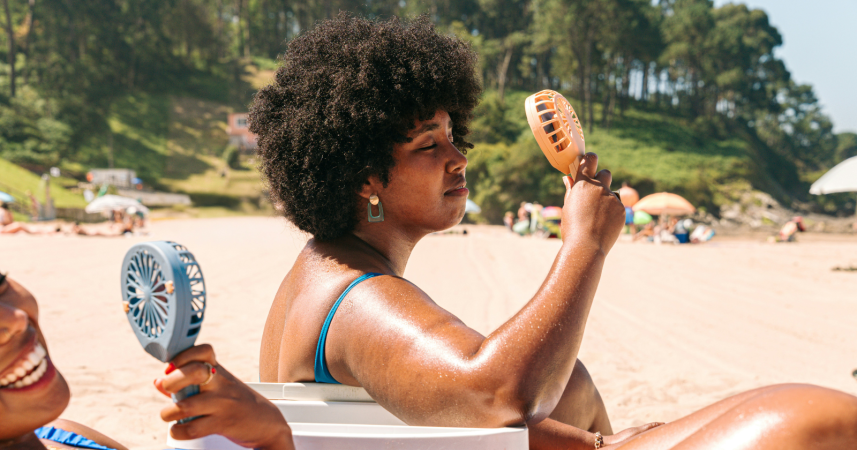
Cool the space you’re actually in. Close blinds by mid-morning, ventilate at night, and use a fan with a cooling method (like a damp shirt) if you don’t have AC. If you do have AC, set it higher and add a fan—you’ll feel cooler while using less energy.
-
Line up a “third place” to cool down. Know your nearest library, mall, or community center and plan a two-hour cooldown window on the hottest days.
-
Check on people. A quick text to a neighbor or a parent—“Do you have cool air and water?”—matters more than we think.
As the World Health Organization puts it, the health impacts of hot weather are “largely preventable” when we pair smart personal choices with community and policy action. That last part is key: a lot of heat risk isn’t about willpower; it’s about access to cooling, shade, and information.
If you work with your hands—or lead a team—read this twice
The study is especially relevant to manual workers. If you’re on a crew, in a kitchen, or at a warehouse, your body may already be pushing heat out while you push to hit a quota.
That combination—high metabolic heat plus environmental heat—drives faster strain and, per the data, more biological aging. Here are a few conversation starters I’ve used with clients and managers:
-
Water, rest, shade—planned, not optional. Short, regular cool-down breaks do more for output than one long break when it’s already too late.
-
Shift the shifts. Move the hottest tasks to dawn or evening. It’s an easy win for safety and productivity.
-
Create a cool room. A fan plus evaporative cooling or AC in one space can be the difference between “drained” and “danger.”
-
Make heat part of your safety metrics. Treat heat alerts like storm warnings: what’s the plan, who decides, how do we communicate?
In my old finance days, we measured everything. If I were building dashboards today, I’d track heat days alongside errors, injuries, and absenteeism. It’s not just compassionate; it’s operationally smart.
Rethinking “healthy aging” in a warming world
I used to think of aging strictly in decades. Now I think in exposures.
How often did I ask my body to fight heat without help? How many nights did I sleep hot? How many long runs did I skip hydrating because I “felt fine”?
Those exposures are the kinds of inputs that show up in biological age calculators—right alongside food, movement, smoking, alcohol, and stress.
The new research doesn’t mean we need to fear summer. It means we should budget heat like we budget money: spend it where it matters, and don’t pretend it’s free. If you love gardening (same), plan shade hours and a cool-down ritual.
If you’re training, treat cooling as part of training, not an afterthought. If you manage people, advocate for heat-smart scheduling and rest policies. Small shifts compound—just like small exposures do.
What gives me hope
Two things. First, the study’s hint of adaptation tells us humans are good at learning and adjusting—especially when we have tools.
Second, most of the best moves are simple and shared: a cooler room at a library, a text to a neighbor, a shaded lunch area, a morning meeting moved to Zoom so people aren’t commuting in brutal heat.
Those are community-level wins that reduce everyone’s exposure a notch.
And the science is getting specific enough to guide action. We’re no longer hand-waving about vague “summer fatigue.” We have numbers, trends, and risk groups. If a stretch of hot days makes you feel older, it probably just pushed your body to work like an older body would.
The empowering part is you can help it feel younger again—by cooling early, resting more, and treating heat as a real load you can manage.
What’s Your Plant-Powered Archetype?
Ever wonder what your everyday habits say about your deeper purpose—and how they ripple out to impact the planet?
This 90-second quiz reveals the plant-powered role you’re here to play, and the tiny shift that makes it even more powerful.
12 fun questions. Instant results. Surprisingly accurate.